We repair and replace furnaces, central air, boilers and humidifiers across Auburn and the rest of DeKalb County. The calls we take most are furnaces that quit on the first hard freeze, original builder air conditioners that can no longer keep up, and older downtown boilers. Our phone is answered 24/7, and a technician drives up I-69 from our downtown Fort Wayne office.
Auburn sits about 20 miles north of our office at 121 W Wayne Street, a straight run up I-69, so a trip to the DeKalb County seat is usually about half an hour of interstate driving once the van is rolling. That distance matters most on a January night when the furnace has stopped and the house is cooling off. Call (260) 283-0173 at any hour and a person picks up, writes down what the furnace or air conditioner is doing, and gets a technician moving north.
The town is known well beyond Indiana for the Auburn Cord Duesenberg Automobile Museum, and the care people give those cars is a fair model for older heating equipment: checked each fall, it keeps running. Newer equipment fails differently, because a street of homes built in the same few years reaches its first replacement together.
What heats and cools Auburn's older and newer houses
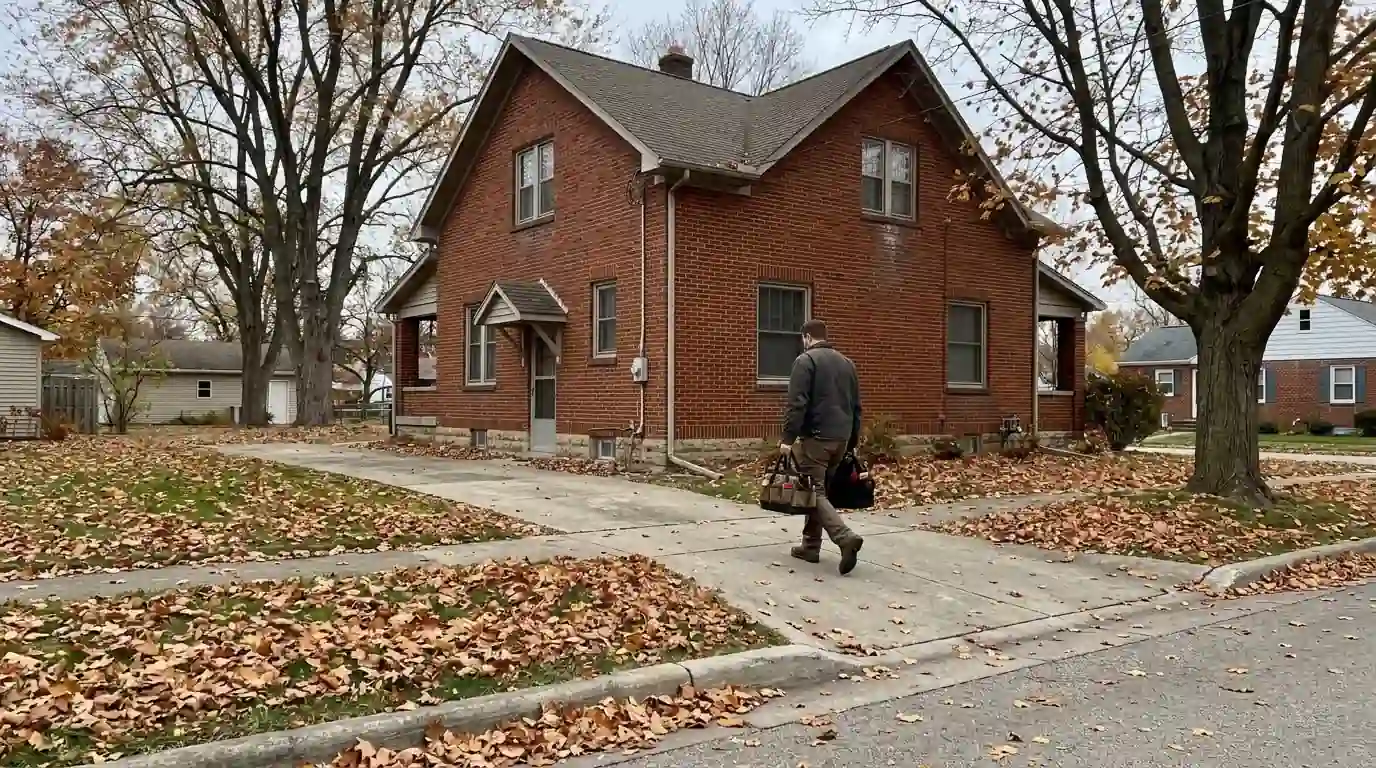
The historic homes close to downtown Auburn were built long before central air existed. Many started on coal or gravity heat, then picked up a gas furnace in the basement and later a condenser set beside the house. The ductwork in those homes was often added in stages, so the second floor may share one or two small supply runs and a single return at the bottom of the stairs. Some still run hot water boilers feeding cast iron radiators, which heat evenly but leave summer cooling to window units or a ductless system.
Newer neighborhoods on Auburn's south side are a different story. Those homes came with a high-efficiency furnace, PVC venting out the side wall, and an air conditioner sized by the builder. That equipment is now at the age where inducer motors, flame sensors and control boards start to fail, and older condensers may still hold R-22, which has not been produced since 2020. Out in the farm country around town, houses on propane tanks add another layer: propane furnaces need different orifices and pressure settings, and a low tank can look exactly like a broken furnace.
Problems that bring us up I-69 to Auburn
These are the calls we answer most from Auburn addresses, roughly in the order they arrive over a year.
Furnace lockout on the first cold night
A high-efficiency furnace that sat idle all summer often fails its first ignition try because of a dirty flame sensor or a clogged condensate trap. We clean or replace the sensor, clear the drain and check the inducer before we leave.
Builder air conditioners that fall behind
Original condensers on south side homes lose capacity as coils corrode and refrigerant leaks out slowly. When a repair approaches half the cost of a new system, we price both and show you the numbers side by side.
Cold bedrooms in older two-story homes
Undersized or missing upstairs ducts leave bedrooms cold in winter and stuffy in July. Fixes range from adding a return air path to a single ductless head in the worst room.
Boiler circulator and zone valve trouble
Radiator homes call when one zone stays cold or the circulator hums without moving water. Most of these are part swaps finished the same visit when the part is on the van.
Dry air and static shocks in January
Forced air homes often drop well under 30 percent indoor humidity in deep winter. A bypass humidifier mounted on the furnace plenum adds moisture without anyone carrying buckets.
Distance, after-hours calls and what to check while you wait
Because Auburn is about 20 miles from downtown, we plan the trip before the technician leaves. On the phone we ask about the furnace or condenser model, the fuel type and the age of the system, so the right igniter, sensor or capacitor is already on board. Night, weekend and holiday calls are handled the same way as weekday calls, because we answer 24/7.
While you wait on a no-heat call, look at the simple things first. Make sure the thermostat is set to heat and has fresh batteries, the furnace switch near the basement stairs is on, and the filter is not packed solid. If the house runs on propane, read the tank gauge. If you smell gas, leave the house and call the gas supplier first, then call us.
Auburn questions
How long does it take a Landcons technician to reach Auburn?
Auburn is about 20 miles north of our downtown office, nearly all of it on I-69. In normal conditions that is roughly half an hour once the technician is on the road. Snow and the call ahead of yours change that, so we give you a realistic arrival window when you call.
Is it worth repairing a 15-year-old furnace in an Auburn home?
Often it is, as long as the heat exchanger is sound and the fix is a part like an inducer motor, igniter or control board. A typical diagnostic visit runs $89 to $149, and the real price depends on what we find. If replacement makes more sense, we say so plainly.
Can you add central air to an older Auburn house that only has radiators?
Yes. The two usual routes are a ductless mini-split system with one indoor head per room or zone, or a small-duct high-velocity system that runs flexible tubing through closets and attic space. Both avoid tearing into plaster walls, and we walk the house first to tell you which one fits.
Do you service propane furnaces on farms outside Auburn?
We do. Propane furnaces use different gas valve settings and orifices than natural gas units, so we confirm the conversion was done correctly and the manifold pressure is right. We also look at venting, the heat exchanger and the regulator at the tank. If the real problem is an empty tank, we tell you that rather than selling a part you do not need.