In Marion we repair and replace gas furnaces, central air systems and heat pumps, fix tired ductwork in early 1900s and mid-century houses, and test older vented appliances for carbon monoxide. Marion is about 50 miles south-southwest of our downtown office, the farthest regular stop on our map, and we answer the phone 24/7 for breakdowns at any hour.
As the Grant County seat, Marion is a city of about 28,000 on the Mississinewa River, home to Indiana Wesleyan University and a long run of housing built across the first half of the last century and the decades after it. Two eras dominate what we see. Early 1900s homes, often two stories with full basements and plaster walls, sit alongside mid-century ranches and story-and-a-half houses built with forced air from the start.
Our office is at 121 W Wayne Street in downtown Fort Wayne, about 50 miles north-northeast of Marion, so we are upfront about the distance. A Marion call is a planned trip, and we schedule it that way: confirm the equipment and the symptom on the phone, load parts that match, and give you a real arrival window. The line is answered 24/7, so you can call the moment something stops, even at midnight in January.
Plaster walls, basement trunks and mid-century ranch layouts
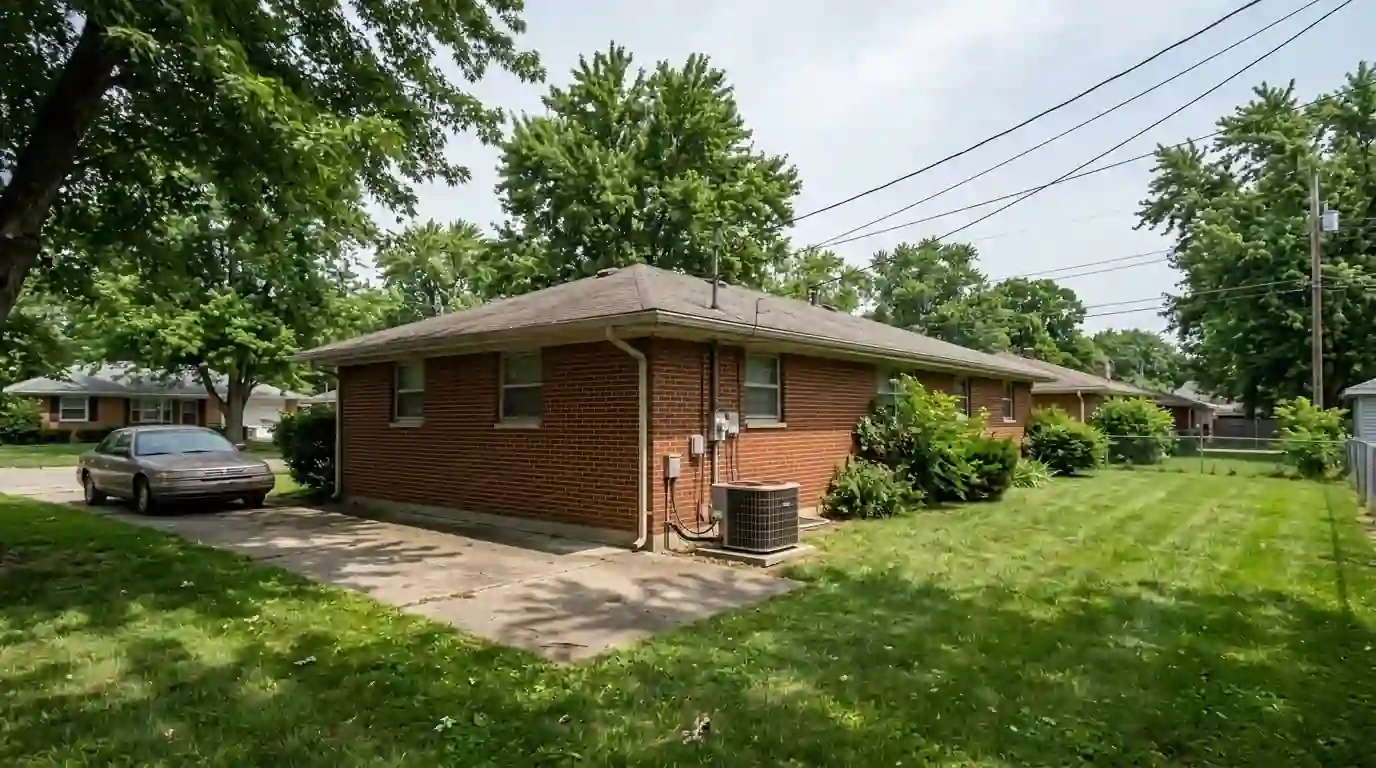
In Marion's early 1900s houses, the basement tells the story. Some still hold a hot water boiler and cast iron radiators. More often we find a gas furnace sitting where a coal or gravity unit once stood, feeding a mix of old round ducts and newer runs that were added during remodels. Plaster walls make it hard to add supply runs upstairs, so second floors tend to run warm in summer and cool in winter. Small-duct systems, ductless heads and a properly sized return upstairs are the usual fixes we discuss.
The mid-century homes are easier to work in but have their own habits. A ranch with a basement usually has one main trunk line down the center, short branch runs and returns in the hallway. Those layouts were designed for a heating-only furnace, so when central air was added later the ducts often came up short on airflow. Cold rooms at the far end of the house, iced evaporator coils and noisy registers all trace back to that. A duct check before any equipment replacement is time well spent.
Repairs and replacements Marion owners ask for
Marion's housing ages produce a familiar list of calls, and these make up most of our visits.
Furnaces past 20 years old
Many mid-century homes are on their second or third furnace, and that furnace is now aging out too. We test the heat exchanger and inducer, then lay out repair and replacement costs side by side so you can decide.
Central air that cannot keep up in July
Older condensers, many of them on R-22, lose capacity as coils foul and charge leaks away. Since R-22 production ended in 2020, recharging one gets expensive, and replacement often makes more sense.
Weak airflow through original ducts
Ductwork sized for a 1950s furnace with no cooling often chokes a modern blower. We check static pressure, open up returns and seal leaky joints in the basement.
Chimney-vented water heaters and furnaces
Early 1900s homes frequently vent gas appliances into old masonry chimneys. We test draft and carbon monoxide and explain liner or venting changes when the readings call for it.
Student rental heat and cooling
Houses rented near Indiana Wesleyan University need dependable equipment and quick fixes between semesters. Maintenance visits keep filters, drains and safety controls from being forgotten.
Getting help to Marion, 50 miles from our desk
Distance is the honest part of any Marion visit. We answer 24/7 and dispatch as quickly as the roads and other calls allow, but a technician coming from Fort Wayne needs travel time. To keep that trip productive, have the furnace or condenser model number ready when you call (260) 283-0173, describe any blinking status light and tell us whether the breaker has tripped. That way the right capacitor, igniter or control board comes along the first time.
If your furnace quits overnight, check the filter, the thermostat batteries and the service switch near the furnace before anything else. If the air conditioner stops on a hot afternoon, turn it off at the thermostat for half an hour so an iced coil can thaw. Anything that smells of gas, or a carbon monoxide alarm, means leave the house and call from outside.
Marion questions
Does Landcons really cover Marion from Fort Wayne?
Yes. Marion is about 50 miles from our downtown office and sits inside our regular service area. We answer 24/7 and plan Marion trips around the parts your equipment needs, so the technician can finish most repairs on the first visit. Expect a longer arrival window than in Fort Wayne, and we will tell you that window honestly when you call.
Should I repair or replace an old R-22 air conditioner in Marion?
If the unit needs only a capacitor or contactor, repair is usually sensible. If it is leaking refrigerant, R-22 has been out of production since 2020 and recharges are costly. A replacement condenser and matched coil typically runs $3,865 to $7,945 depending on size and efficiency. Those are typical ranges, and the real price depends on the visit.
How can I cool the upstairs of an early 1900s Marion house without tearing out plaster?
Two good options exist. Ductless mini-splits mount on a wall and need only a small hole for the line set. Small-duct high-velocity systems run flexible tubing through closets and attic space with small round outlets. We look at the attic, the closets and the electrical panel, then recommend the one that fits your house.
What does a furnace replacement cost in a Marion ranch home?
A typical high-efficiency gas furnace replacement in a Marion ranch runs about $3,875 to $6,945, including venting changes, the gas connection and the duct transition. Larger homes, two-stage or variable-speed models and chimney work cost more. These are typical ranges, and we confirm the actual price after seeing the house and ductwork.