
Small-duct, high-velocity central air pushes cooled air through flexible tubes about 2 inches across, so we can run them inside walls, closets and floor cavities without tearing out plaster. Outlets are round and about the size of a coffee can lid. A typical whole-house install runs $11,485 to $21,995 and takes three to six working days.
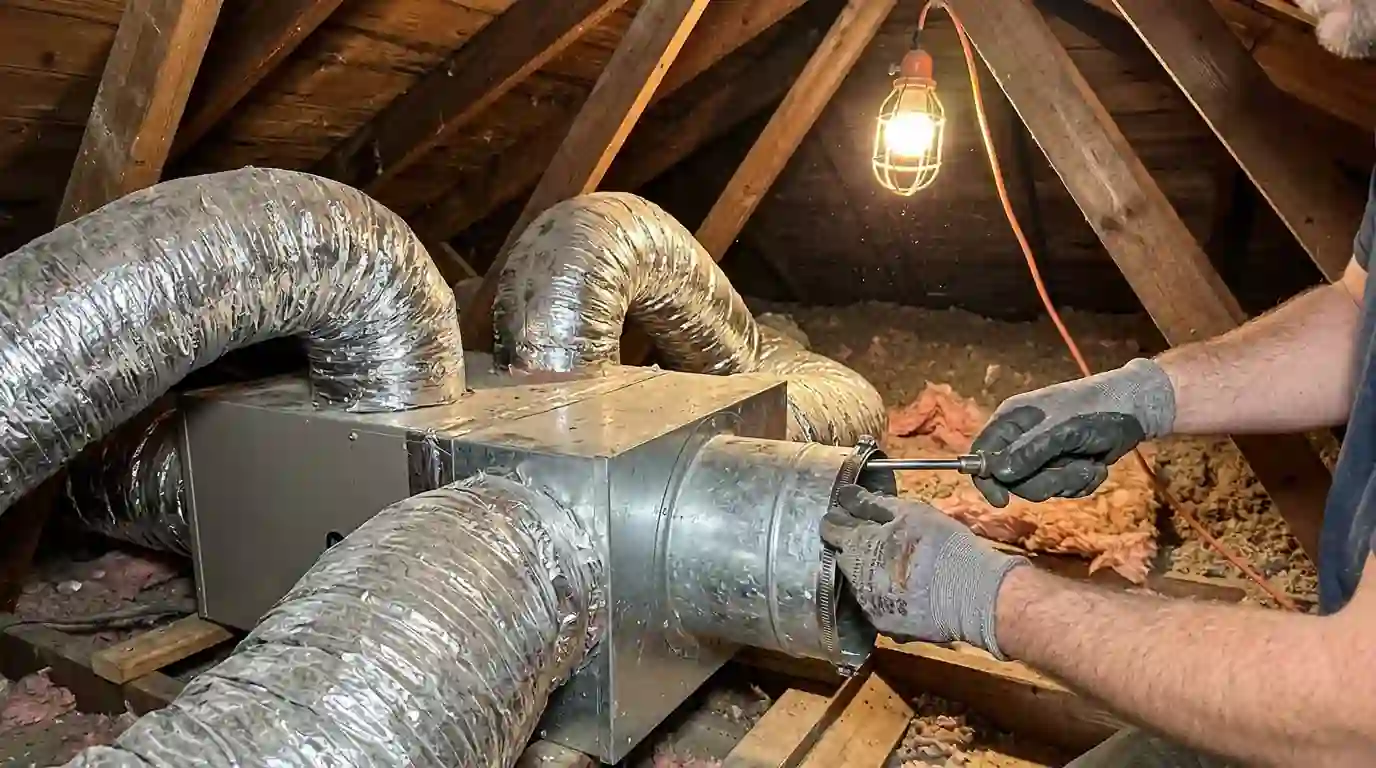
Conventional central air needs rectangular ducts 6 to 10 inches deep, and a 1915 house with lath and plaster simply has nowhere to hide them. A high-velocity system works differently. A compact air handler sits in the attic or a closet, a short insulated plenum leaves it, and flexible supply tubes branch off to each room. Because the air moves fast through a small tube, the system needs only a fraction of the space and we can fish most runs between joists and studs.
Most of the older homes we see in Allen County keep their boiler for heat and add small-duct air for summer. That split works well: the radiators stay, the plaster stays, and you get one quiet system cooling every room instead of four noisy window units. Landcons plans these jobs room by room with a load calculation, then walks the attic and basement with you to mark every tube route before anything is cut.
Small-duct air versus other ways to cool an older home
Here is how high-velocity air stacks up against the options we usually discuss with owners of pre-1940 homes.
| Option | Best for | Keep in mind |
|---|---|---|
| Small-duct high-velocity central air | Whole-house cooling in homes with plaster and no upstairs ducts | Higher upfront cost and needs attic or closet space for the air handler |
| Ductless mini-split, multi-zone | A few rooms or a finished attic, plus heat pump heating | A visible indoor head in each room and more units to service |
| Conventional central air with new ductwork | Homes with open basements and room for soffits or chases | Large ducts often mean boxing in corners and cutting plaster |
| Window units | Short-term or single-room cooling | Noisy, less efficient, block windows and must be stored each fall |
Is a small-duct system the right fit for your house?
High-velocity air is not the answer for every home, but it solves a specific set of problems better than anything else. These are the situations where it usually makes sense.
No ductwork above the first floor
Many central neighborhoods have a converted gravity furnace in the basement and nothing feeding the second story. Small tubes can reach those rooms from an attic air handler without boxing in a single corner.
Plaster and trim you want to keep
Original plaster, picture rails and oak trim are expensive to patch and impossible to match perfectly. Tube routes need a hole roughly 2.5 inches wide at most points, not a full chase.
Window units in every bedroom
If you run three or four window units each summer, you're paying for inefficient cooling and blocking light and egress. One central system replaces them all and you get the windows back.
Radiators you are happy with
Hot water heat is comfortable, quiet and long-lived. A small-duct system adds cooling alone, or it can carry a hot water coil fed by the boiler if you want air-side heat in a new addition.
Rooms that feel clammy, not just warm
High-velocity systems move air across the coil slowly enough to pull a good amount of moisture. In a humid July that dry, cool feel often matters more than the thermostat number.
Ductless heads would crowd the rooms
Some owners do not want a wall cassette in every bedroom of a period home. Small-duct outlets sit flush in the ceiling or floor and almost disappear.
How we install high-velocity air without wrecking your walls
Every house routes differently, so the planning visit matters as much as the install. This is the order we work in.
Room-by-room load calculation
We measure each room, note window size and orientation, and run a Manual J calculation. That sets the tonnage and tells us how many outlets each room needs, usually one per 120 to 160 square feet.
Route survey with you
We walk the attic, closets and basement with a flashlight and a stud finder and mark every planned tube path. You see where each outlet will land before we commit to anything.
Set the air handler and coil
The air handler usually goes in the attic or a second-floor closet, with an auxiliary drain pan and float switch under it. We set it level on isolation pads to keep vibration out of the ceiling.
Build the plenum and branch takeoffs
An insulated main plenum runs from the air handler, and each 2-inch branch tube taps into it. Every branch gets at least 10 feet of sound-attenuating tube before the outlet, which keeps the air rush quiet.
Fish tubes and cut outlets
We drop tubes through wall cavities and between joists, drill clean round holes, and protect floors and furniture under plastic. Outlets are aimed so the air mixes with the room instead of blowing on the bed.
Run the line set and condenser
Refrigerant lines run down an inside chase or a painted exterior cover to the outdoor unit on a pad. Newer condensers use R-454B or R-32, and that work follows EPA Section 608 rules.
Balance, test and walk through
We measure static pressure, check airflow at outlets, verify superheat and subcooling, and set the thermostat. Then we show you the filter, the drain safety switch and what normal sounds like.
Why so many Forest Park and West Central homes go this route
The historic districts around downtown were built before central air existed. West Central's Italianate and Queen Anne homes, the Craftsman houses along Forest Park Boulevard and the Tudors in Southwood Park mostly heat with boilers or with old gravity furnaces that were later converted to blowers. Upstairs, there is often no duct at all. Tall ceilings, plaster walls and finished attics leave little room for standard sheet metal, which is why small-duct air keeps coming up in these neighborhoods.
July afternoons in the city average about 84°F with real humidity, and a three-story house with a slate or asphalt roof holds that heat in the top floor well into the night. We see plenty of homes in Lakeside and Wildwood Park where the second floor runs 8 to 10 degrees warmer than the first. A small-duct air handler in the attic attacks that heat right where it collects, and it keeps the moisture down, which helps protect plaster and woodwork through a sticky northeast Indiana summer.
What small-duct central air costs in an older home
These systems cost more than standard central air because the tubing, outlets and labor are specialized. Here are typical ranges for this area.
| Item | Typical range |
|---|---|
| Complete high-velocity system, typical two-story home | $11,485 to $21,995 |
| Added outlet and tube run after the main install | $385 to $795 |
| Hot water heating coil tied to an existing boiler | $1,485 to $2,995 |
| Smart thermostat set up for the new system | $189 to $549 |
| Planning visit with load calculation | $89 to $149 |
What moves the price
- The number of outlets matters most, and a larger house with many small rooms needs more runs.
- Attic access sets the labor, since a walk-up attic is far faster than a shallow crawl space.
- Balloon-framed walls fish easily, while blocked or fire-stopped cavities take more drilling.
- Line set length and the path down to the condenser change both material and time.
- Adding a boiler-fed heating coil or a second air handler for a third floor raises the total.
These are typical ranges, not quotes. We set the real price after the planning visit, once we know your tonnage, outlet count and tube routes. See every range in one place in our HVAC price guide.
Get your house ready for a small-duct install
A little preparation keeps the job on schedule and protects your belongings.
- Clear a path to the attic hatch and empty closets we will route tubes through.
- Move fragile pieces off walls and shelves in rooms getting outlets.
- Tell us about any plaster cracks, ornamental ceilings or known wiring problems.
- Decide where you would accept an outlet in each bedroom before we arrive.
- Pick a spot for the outdoor unit that is at least a few feet from bedroom windows.
- Note any knob-and-tube wiring you know of so we can avoid it.
- Plan for some dust in the attic and closets even with plastic barriers up.
Brands we work on
We service Carrier, Trane, Lennox, Goodman, Rheem and every other major make, plus WaterFurnace geothermal units built here in Fort Wayne.
Areas we cover for this service
We run this work across Fort Wayne and the towns around it. These are the places we are called to most; if your town is not listed, call and ask.
Central Air for Older Homes questions we hear often
How loud is high-velocity central air in a bedroom?
With at least 10 feet of sound-attenuating tube on each branch, most people hear a soft rush near the outlet and little else. Noise problems usually come from short runs or too few outlets for the airflow. We size the outlet count so air leaves each one at a comfortable velocity, and we isolate the air handler so it does not hum through the ceiling.
Can small-duct central air also heat my older home?
Yes, in two ways. We can add a hot water coil fed by your existing boiler so the same tubes deliver warm air, which works well for an addition. Some systems also pair with a heat pump outdoor unit. Most owners with good radiators simply keep them for heat and use the small-duct system for summer cooling and dehumidifying.
How many wall holes does a high-velocity air install need?
Each outlet needs a round hole roughly 2 to 2.5 inches across in a ceiling or floor, and we drill some access holes along tube paths. In a typical two-story home we make far fewer and smaller cuts than conventional ductwork would require. Any access holes we make are patched, and we discuss each location with you before drilling.
How long does a small-duct central air install take?
Most whole-house jobs take three to six working days. Simple homes with an open attic and easy wall cavities go faster. Houses with fire blocking, a third floor or a long line set route take longer. We give you a day-by-day plan after the route survey so you know which rooms we need on which days.
Does high-velocity central air remove more humidity than regular AC?
It usually does. Air passes the coil at a lower volume per ton than a standard system, so the coil runs colder and condenses more moisture out of the air. In a humid Indiana July that means rooms feel drier at the same thermostat setting. You still want a properly sized system, since an oversized one short cycles and loses that benefit.