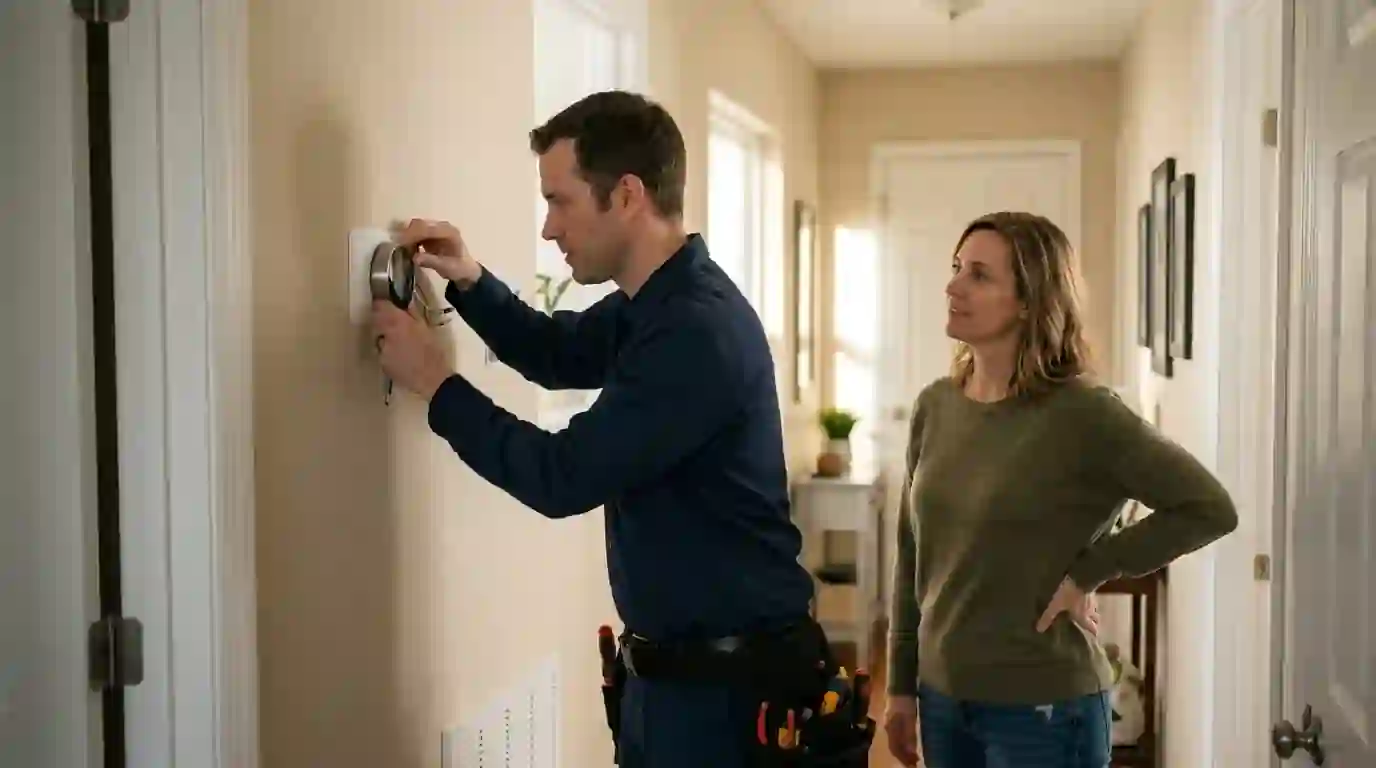
Smart thermostat installation means mounting a Wi-Fi or learning thermostat, adding a C-wire or adapter when the old wiring lacks one, and setting it up for your exact equipment. We usually find missing common wires, mislabeled heat pump terminals and wrong staging settings. A typical install runs $189 to $549 and takes one to two hours.
Smart thermostats look simple in the box, but they have to match the system they control. A single-stage gas furnace with central air uses four or five wires. A heat pump with auxiliary heat, a two-stage furnace or a dual fuel system can use seven or eight, and each terminal has to be set up correctly in the thermostat menus. Get one setting wrong and the heat pump may run backward, or the backup heat may kick on every morning and run up the electric bill.
Most smart thermostats also need steady power through a common wire, called the C-wire. Older homes often have only a thin two-wire or four-wire cable with no spare conductor. Without a C-wire, some thermostats try to steal power through the heating circuit, which can make the furnace click on and off or cause the screen to go dark. Our technician adds a proper C-wire, uses a spare conductor or installs a power adapter at the furnace. We also check the transformer on the furnace board, since a weak or overloaded one causes the same random resets.
Programmable, Wi-Fi or learning: which thermostat fits
More features do not always mean a better fit.
| Option | Best for | Keep in mind |
|---|---|---|
| Basic programmable | Steady schedules and simple single-stage systems | No phone control or alerts |
| Wi-Fi programmable | Remote control and alerts without automation | Usually needs a C-wire |
| Learning or sensor-based | Homes with changing schedules or uneven rooms | Automatic changes can confuse some households at first |
| Communicating thermostat from the equipment maker | Variable-speed and inverter systems | Only works with matching equipment |
Signs a smart thermostat is a good upgrade for you
A smart thermostat pays off most in homes where these apply.
Your schedule changes week to week
Shift work, travel or a home office make a fixed program useless. A smart thermostat lets you adjust from your phone.
You have a heat pump or dual fuel system
Smart models can manage when auxiliary heat or the furnace takes over. Set up properly, that cuts expensive electric strip heat on cold mornings.
The old thermostat is a mercury or dial model
Older dial thermostats drift by a few degrees. A digital replacement holds temperature more steadily.
You want alerts while you are away
Many smart thermostats warn you if the house drops too cold. That matters in a January cold snap when nobody is home.
You want humidity readings
Some models show indoor humidity and can control a whole-home humidifier or dehumidifier.
You are adding zones or new equipment
A new furnace, heat pump or zoning panel is the right time to choose a thermostat that matches it.
What we do during a thermostat installation
Most installs are done in an hour or two.
Identify the equipment
We look at the furnace, air handler and outdoor unit to confirm stages, heat pump type and any accessories. The thermostat setup follows from that.
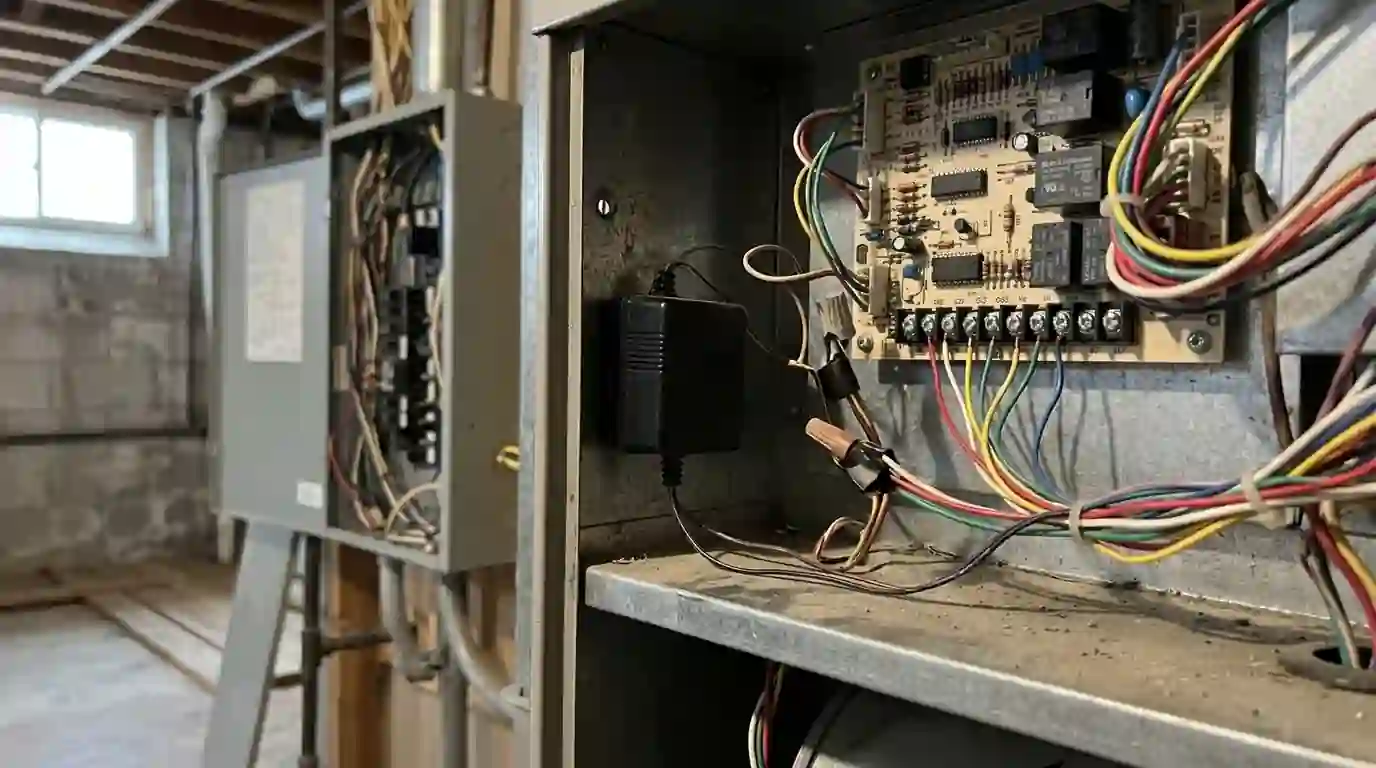
Check the wire at both ends
We compare the terminals at the wall with those at the furnace control board. Mismatched or unused conductors are labeled and sorted out.
Provide steady power
If there is no C-wire, we connect a spare conductor, pull a new thermostat cable or install a power adapter at the furnace.
Mount and configure
The base plate goes up level, the old wall marks get covered with a trim plate where needed, and we set stages, heat pump reversing valve, aux heat lockout and fan settings.
Test heat, cool and fan
We run each mode and stage and watch the equipment respond. For heat pumps we confirm the outdoor unit switches correctly between heating and cooling.
Connect and show you the app
We connect the thermostat to your Wi-Fi, set a starting schedule and show you how to change it from your phone. We also turn on cold-house and filter reminders if your model offers them.
Thermostat setup for Fort Wayne heat pumps, boilers and old wiring
Heat pumps and dual fuel systems are more common across Allen County than they used to be, and they need careful thermostat setup. On a 17°F January night, a heat pump paired with a gas furnace should hand off to the furnace at a balance point we set based on your equipment and NIPSCO gas versus Indiana Michigan Power electric rates. Many thermostats ship with settings that let electric strip heat run when it does not need to. We set the lockouts so the cheaper heat source does the work.
In older central neighborhoods like Lakeside, Southwood Park and North Anthony, the thermostat wire is sometimes cloth-covered or only two conductors. Boiler homes often use line-voltage or millivolt controls that most smart thermostats cannot run directly. We check the system type first and use a relay or a compatible model where needed, rather than forcing a thermostat onto controls it was never meant to handle. Newer homes in Huntertown and Aboite bring the opposite issue: builder thermostats tied to two-stage furnaces where the second stage was never wired. Hooking up that extra conductor lets the furnace run quietly on low fire most of the winter, saving high fire for the coldest nights.
Smart thermostat installation costs
The range depends on the thermostat model and whether wiring work is needed.
| Item | Typical range |
|---|---|
| Install a thermostat you already bought | $129 to $229 |
| Supply and install a programmable Wi-Fi thermostat | $189 to $349 |
| Supply and install a learning or sensor-based smart thermostat | $319 to $549 |
| New thermostat cable or C-wire adapter | $89 to $245 |
| Isolation relay for boiler or millivolt systems | $145 to $295 |
What moves the price
- Whether the wall has a usable C-wire or needs a new cable pulled.
- Heat pump, dual fuel or multi-stage equipment that needs more setup.
- Boiler or millivolt systems that require a relay.
- Wall repair or a trim plate to cover old thermostat marks.
- Remote room sensors added to other rooms.
These are typical ranges. The visit sets the real price once our technician sees the wiring and equipment. See every range in one place in our HVAC price guide.
Before you buy or install a smart thermostat
A quick look now avoids a return trip to the store.
- Take a photo of the wires behind your current thermostat with the labels visible.
- Note whether you have a furnace, heat pump, boiler or a combination.
- Check the furnace door for the model number so we can confirm staging.
- Make sure your Wi-Fi reaches the thermostat location with a decent signal.
- Look for a C or common terminal with a wire attached.
- Decide where you want remote sensors, if your model supports them.
- Keep the old thermostat until the new one has run a full heating or cooling cycle.
Brands we work on
We service Carrier, Trane, Lennox, Goodman, Rheem and every other major make, plus WaterFurnace geothermal units built here in Fort Wayne.
Areas we cover for this service
We run this work across Fort Wayne and the towns around it. These are the places we are called to most; if your town is not listed, call and ask.
Smart Thermostat Installation questions we hear often
Does a smart thermostat installation always need a C-wire?
Most Wi-Fi thermostats need steady power, and a C-wire is the best source. Some models claim to work without one, but they can cause furnace cycling or dead screens. If your cable has a spare conductor, we use it. If not, we pull new cable or add a power adapter at the furnace.
Can a smart thermostat control my heat pump and backup heat?
Yes, when it is set up for heat pump operation. We set the reversing valve terminal, auxiliary heat stages and an outdoor temperature lockout so strip heat or the furnace runs only when needed. Getting those settings wrong is the most common reason a heat pump bill jumps after a thermostat swap.
Will a smart thermostat work with my boiler and radiators?
Many boilers use simple two-wire controls, and some use millivolt or line-voltage circuits. A smart thermostat can work with a relay or a model designed for that type of system. We check what you have before recommending one, since connecting the wrong thermostat can damage it.
How much can a smart thermostat lower my heating bill?
It depends on how you use it. Setbacks while you sleep or are away trim run time, and heat pump owners often save the most by avoiding unneeded strip heat. If you already adjust a programmable thermostat carefully, the difference will be smaller.
What if my smart thermostat stops connecting to Wi-Fi?
The thermostat keeps running its schedule even when the Wi-Fi drops; you just lose phone control. Router changes and weak signal are the usual causes. If the screen goes blank or the furnace short cycles, that points to power or wiring, and our technician can check it.