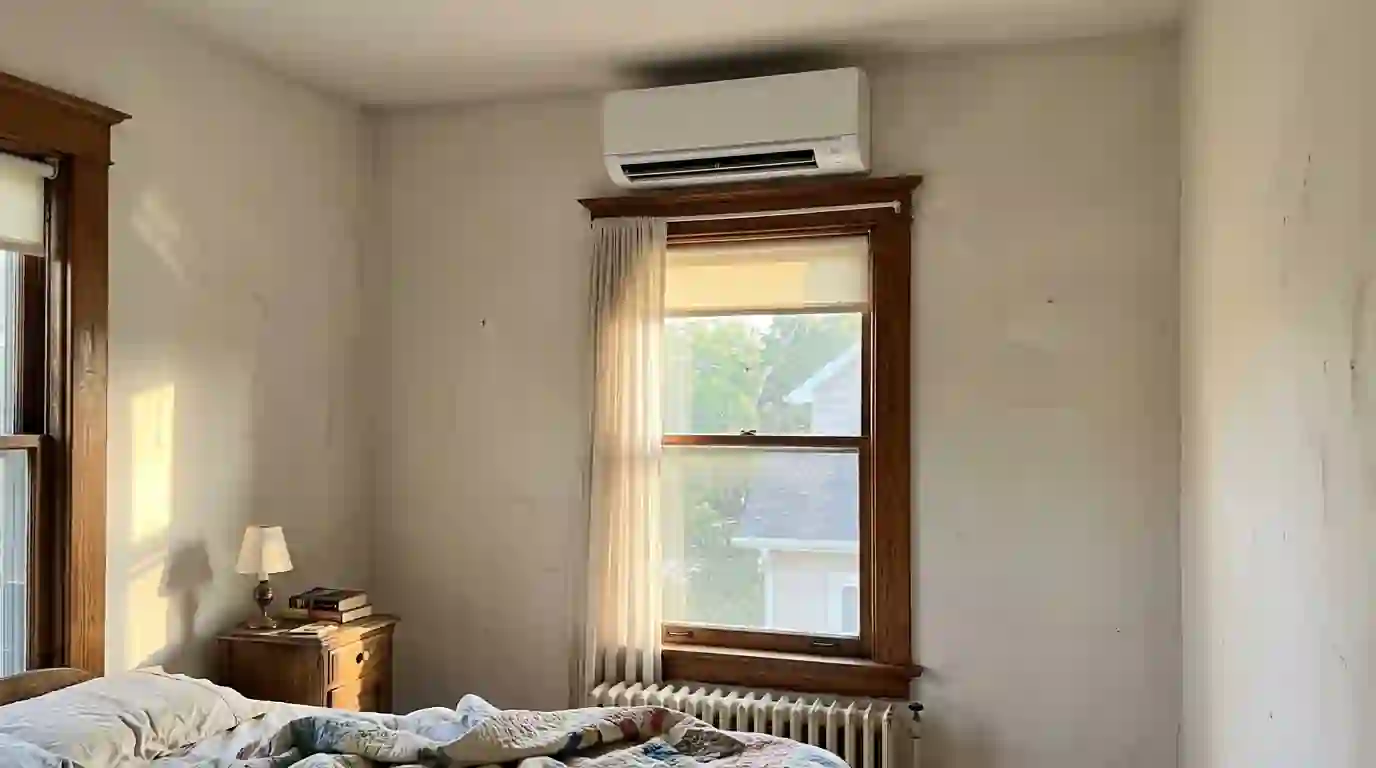
Ductless mini-split installation means mounting one or more indoor heads, connecting them to an outdoor inverter heat pump with a small line set through a 3 inch hole, and wiring a dedicated circuit. A single-zone system typically runs $3,485 to $6,295 and a multi-zone system $7,985 to $18,495. Most single-zone installs take one day.
A mini-split is a heat pump without ducts. Each indoor unit has its own coil, fan and remote or wall control, and refrigerant lines carry heat between it and an outdoor inverter compressor that ramps up and down instead of cycling on and off. That makes them very good at holding a steady temperature in one room or a group of rooms, and current cold-climate models keep producing useful heat well below zero.
Landcons plans mini-splits room by room. We calculate each space's heating and cooling load, pick the indoor style (wall mount, floor console, ceiling cassette or slim ducted unit), and work out where the line set, drain and wiring will run before anything is drilled. A head placed in the wrong spot or oversized for a small bedroom will short cycle and blow cold air at the bed, so those decisions are made on paper first.
Mini-splits compared with other ways to cool rooms without ducts
Ductless is not the only option for older homes, so here is how the choices stack up.
| Option | Best for | Keep in mind |
|---|---|---|
| Wall-mount mini-split heads | Bedrooms, living rooms and additions | Visible indoor unit, but quiet and efficient |
| Slim ducted mini-split | Two or three small rooms near an attic or crawl space | Hidden air handler with short ducts, needs access space |
| Small-duct high-velocity central air | Whole older homes where owners want no visible heads | Higher cost and more installation work through walls |
| Extending existing ductwork | Rooms close to the furnace trunk line | Can starve other rooms if the system is already at capacity |
Is a ductless mini-split the right fit for your home?
Mini-splits solve specific problems very well. These are the situations where we recommend them most often.
Older homes with no upstairs ductwork
Houses heated by boilers and radiators, or by converted gravity furnaces, often have no way to move cool air upstairs. A few wall or console heads add cooling without tearing open plaster walls.
Additions, sunrooms and garage conversions
Extending the existing ductwork to a new room often starves the rest of the house. A dedicated mini-split zone conditions the new space without touching the main system.
Finished attics and bonus rooms
Rooms over garages and under roofs swing the most in temperature. A head sized for that room keeps it in line with the rest of the house in July and January.
Replacing several window AC units
Window units block light, leak air, and are noisy and inefficient. A multi-zone system serves the same rooms through small wall penetrations and runs much more quietly.
Wanting heat pump heating without ducts
A cold-climate mini-split can carry most of the heating in a room through the shoulder seasons, letting an old boiler or electric baseboard rest.
How we lay out and install a mini-split system
Placement and line set routing decide how a mini-split looks and performs. Here is how we approach each install.
Size each zone separately
We figure the Btu load of every room or area to be served, so a 9,000 Btu head goes where it fits and a 12,000 or 18,000 Btu head where the load needs it. Oversized heads short cycle and leave rooms clammy.
Pick indoor styles and mounting spots
We match the indoor unit to the room: high wall heads for most bedrooms, floor consoles under windows in rooms with low knee walls, ceiling cassettes where you have attic access above. We aim the airflow along the room, not at beds or desks.
Route the line set, drain and wiring
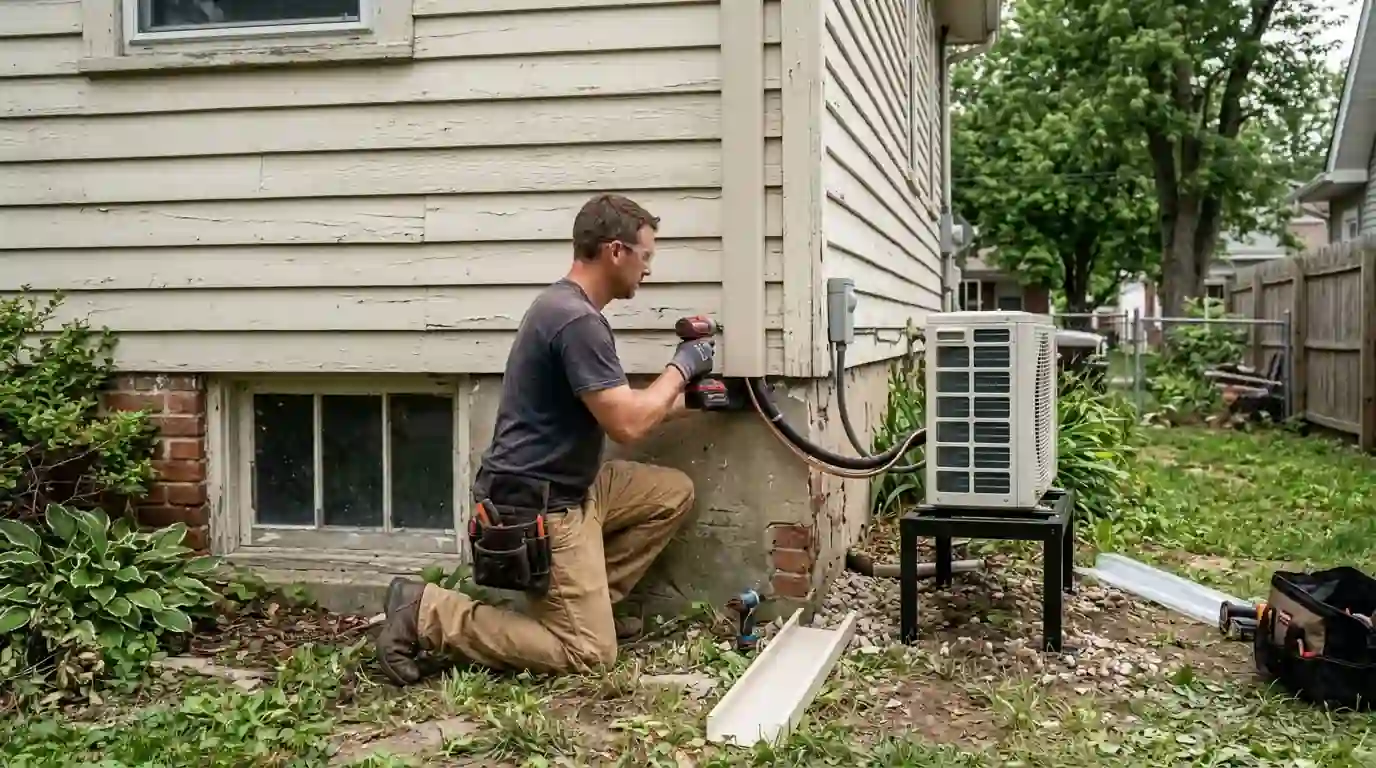
We find the shortest clean path to the outside, usually straight through an exterior wall behind the head. Lines run down the wall in a paintable line hide cover, and the condensate drain gets a continuous slope or a small pump where gravity will not work.
Set the outdoor unit on a raised stand
The condenser goes on a stand or wall bracket that keeps it above typical snow depth, so the coil can defrost and drain in winter. We keep it clear of roof drip lines and dryer vents.
Flare, pressure test and evacuate
Flare connections are torqued to spec with a torque wrench, then the system is pressure tested with nitrogen and pulled into a deep vacuum. Leaky flare nuts are the top cause of slow refrigerant loss on new mini-splits, so we take our time on them.
Commission and teach the controls
We release the factory charge, add refrigerant for long line runs if required, run each zone in heat and cool modes, and show you how to use the remotes, schedules and filter cleaning.
Ductless systems in Fort Wayne's older neighborhoods
The historic districts around downtown are where ductless systems make the most sense. Homes in West Central, Forest Park, Lakeside and Wildwood Park were built before central air, and many still heat with boilers and cast iron radiators. Adding ductwork means opening plaster walls and losing closet space. A multi-zone mini-split with two or three heads upstairs and one on the main floor adds summer cooling and supplemental heat with a few small holes and a single outdoor unit tucked beside the house.
Winter performance matters here too. January nights in Fort Wayne average around 17°F, with colder snaps most winters, so we install cold-climate models that keep producing heat at low outdoor temperatures and we mount the outdoor unit high enough to clear 30 inches of seasonal snow. In homes with an existing boiler or furnace, the mini-split usually handles heating in spring and fall while the main system takes over on the coldest nights.
Typical ductless mini-split installation costs
The number of zones and the style of indoor units drive most of the price.
| Item | Typical range |
|---|---|
| Single-zone mini-split installed | $3,485 to $6,295 |
| Multi-zone system, two to five indoor units | $7,985 to $18,495 |
| Condensate pump for an interior wall head | $185 to $395 |
| Dedicated electrical circuit, where none exists | $345 to $895 |
| Snow stand or wall bracket for the outdoor unit | $145 to $385 |
What moves the price
- Number of zones and the capacity of each indoor head.
- Indoor unit style, since ceiling cassettes and slim ducted units cost more than wall heads.
- Line set length and how hard the route is through finished walls or plaster.
- Electrical panel capacity and whether a new circuit is needed.
- Cold-climate rated equipment compared with standard models.
- Any utility rebate programs from Indiana Michigan Power that apply that year.
These are typical ranges for planning. Your price is set after we measure each room and confirm the routing and electrical. See every range in one place in our HVAC price guide.
Decisions to make before your mini-split installation
These questions shape the layout and the quote.
- Which rooms need cooling, heating, or both?
- Are you replacing window units, and in which rooms?
- Where would wall heads look acceptable to you?
- Is there attic or basement access above or below the rooms?
- Where can the outdoor unit sit away from bedroom windows?
- How much space is left in your electrical panel?
Brands we work on
We service Carrier, Trane, Lennox, Goodman, Rheem and every other major make, plus WaterFurnace geothermal units built here in Fort Wayne.
Areas we cover for this service
We run this work across Fort Wayne and the towns around it. These are the places we are called to most; if your town is not listed, call and ask.
Ductless Mini-Split Installation questions we hear often
Can a ductless mini-split installation heat my home through a Fort Wayne winter?
A cold-climate mini-split can heat a room well into the single digits and below, though capacity drops as it gets colder. In most local homes we pair it with an existing boiler or furnace so the mini-split carries spring and fall heating and the main system handles the deepest cold snaps.
How many indoor units can one outdoor unit serve in a mini-split installation?
Multi-zone outdoor units commonly serve two to five indoor heads, depending on the model and its total capacity. We size the outdoor unit to the combined load of the rooms, not just the number of heads, and avoid putting too many oversized heads on one condenser.
How big is the hole for a ductless mini-split installation?
Usually about 3 inches in diameter, behind the indoor head. The refrigerant lines, drain and control wire pass through it together. Outside, the lines run in a cover that can be painted to match your siding, which keeps the install neat on older homes.
Do mini-split indoor heads need regular cleaning?
Yes. Each head has washable filters you should rinse every month or two during heavy use. The coil and blower wheel inside should be professionally cleaned every year or two, because they can collect dust and mildew that reduce airflow and cause odors.
Is a ductless mini-split installation loud inside the room?
Indoor heads are among the quietest equipment we install, often comparable to a soft whisper on low speed. The outdoor inverter unit is also quieter than a typical central air condenser because it ramps up gradually instead of starting at full power.