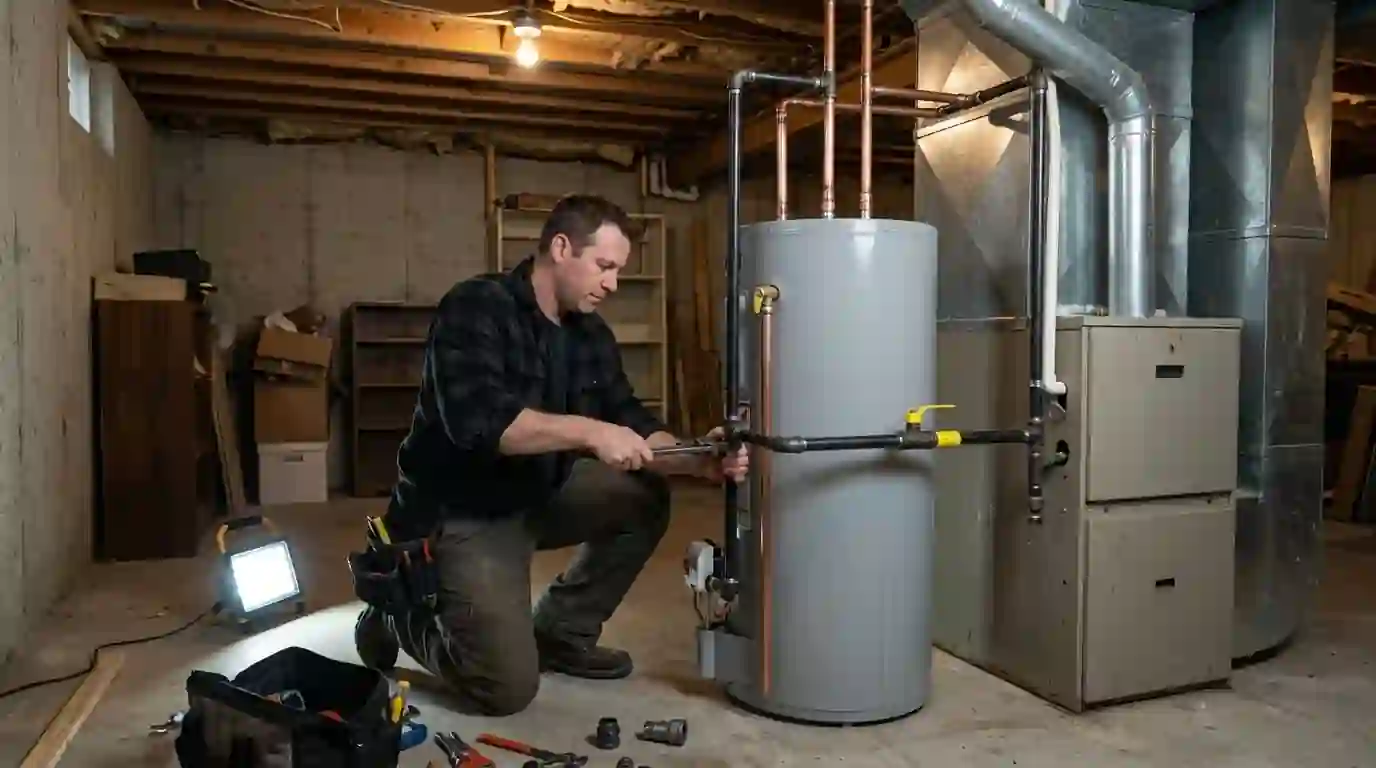
Water heater service covers repairs on gas and electric tanks and tankless units, plus full replacement when the tank is leaking or worn out. We usually find failed thermocouples, burned-out elements, sediment buildup and spent anode rods. A typical repair runs $189 to $495; a tank replacement runs $1,585 to $3,295, often the same or next day.
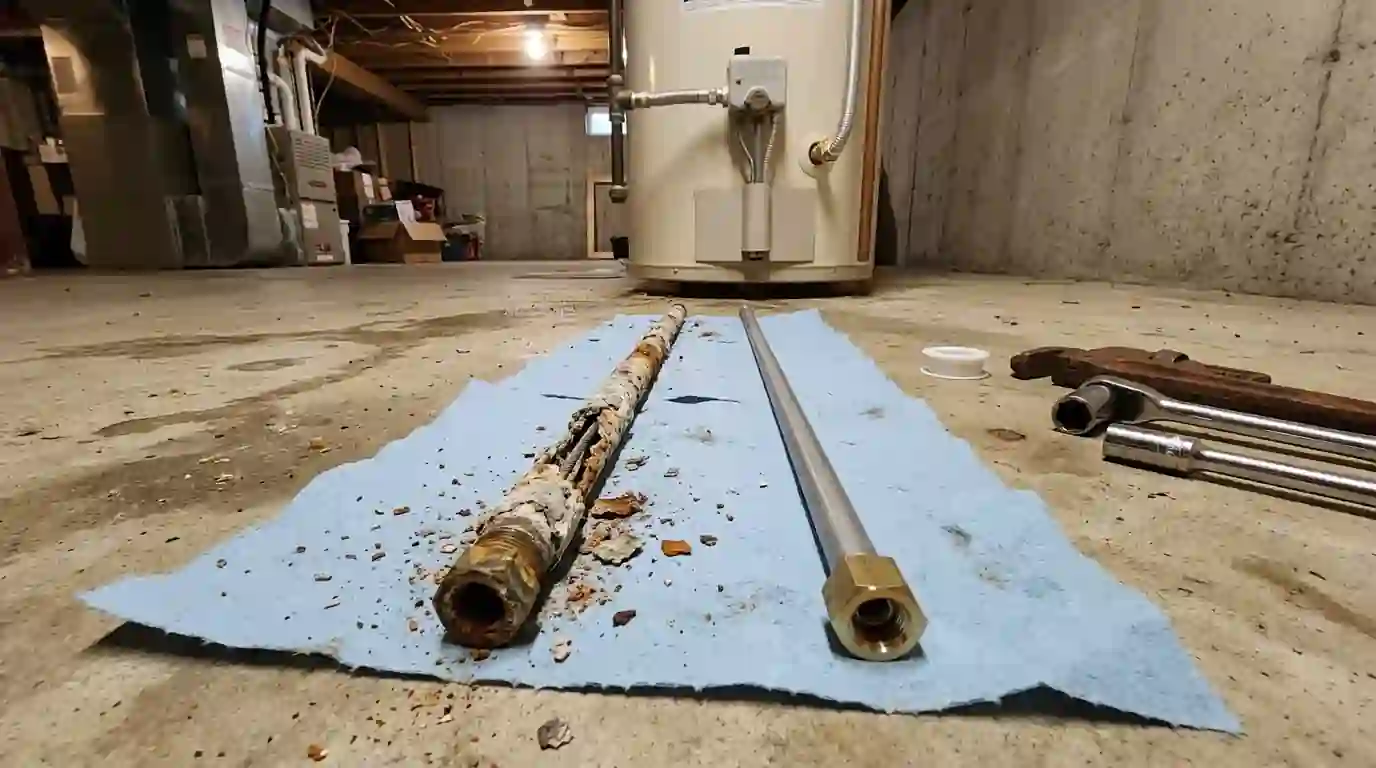
A tank water heater sits in the basement doing quiet, steady work until something gives. On gas models, the usual failures are the thermocouple or flame sensor, the gas control valve and draft problems in the flue. Electric tanks lose heating elements and thermostats. Both types slowly fill with sediment from hard water, which makes a rumbling or popping sound and shortens the tank's life. Inside every tank, a sacrificial anode rod corrodes so the steel does not, and once that rod is gone, the tank starts to rust from within.
Our technician starts by figuring out whether a repair makes sense. A ten-year-old tank with a rusty base and a leak at the seam needs replacing, and no part will change that. A six-year-old tank with a bad thermocouple is worth fixing. When replacement is the answer, we size the new heater to your household, check the venting and gas line, install a new expansion tank where needed and haul the old one away.
Water heater problems that need a call
Some of these can wait a day; leaks and gas smells cannot.
No hot water at all
On a gas tank, the pilot may be out or the thermocouple failed. On an electric tank, a breaker or upper element is the usual cause.
Hot water runs out fast
A failed lower element, a broken dip tube or a tank half full of sediment all cut usable hot water. Showers that went fifteen minutes now last five.
Rusty or brown hot water
If only the hot side is discolored, the anode rod may be spent and the tank lining is corroding. Catching it early can sometimes save the tank.
Popping or rumbling sounds
Sediment on the bottom of a gas tank traps water that boils as the burner fires. Flushing helps if it has not hardened.
Water around the base
Check the relief valve pipe and fittings first. Water coming from the tank body itself means the tank has failed.
Rotten egg smell in hot water
Bacteria reacting with a magnesium anode can cause a sulfur odor. A different anode rod usually fixes it.
Scorch marks or gas smell near the burner
These point to flue spillage or a gas problem. Leave the area, call NIPSCO if you smell gas, then call us.
How we diagnose and repair a water heater
We check safety first, then figure out whether the tank is worth fixing.
Safety and venting check
On gas units we check for spillage at the draft hood and carbon monoxide near the appliance. A heater sharing a chimney with an older furnace gets extra attention.
Find the failed part
We test thermocouples, flame sensors, gas valves, elements and thermostats with a meter rather than swapping parts on a guess.
Judge the tank's condition
We look at age from the serial number, rust at the base and fittings, and the relief valve. That tells us whether a repair is money well spent.
Repair or replace
Repairs are usually done in one visit from parts on the truck. Replacements include new connectors, a relief valve, a code-required expansion tank and proper flue or power vent piping.
Flush and test
We fill the tank, purge air from the lines, light or power the unit and confirm temperature at a faucet. We set the thermostat near 120°F unless you need otherwise.
What water heater repairs and replacements cost
These ranges cover the jobs we do most often.
| Item | Typical range |
|---|---|
| Diagnostic visit | $89 to $149 |
| Thermocouple, flame sensor or element replacement | $189 to $365 |
| Gas control valve or anode rod replacement | $245 to $495 |
| Gas or electric tank replacement, 40 to 50 gallons | $1,585 to $3,295 |
| Tankless water heater installation | $3,885 to $6,495 |
| Chimney liner or venting correction | $485 to $1,295 |
What moves the price
- Tank size, fuel type and whether it is atmospheric vent or power vent.
- Venting changes when the old chimney no longer works for the heater.
- Gas line upsizing for a tankless unit, which needs far more gas than a tank.
- Code items such as an expansion tank, drain pan or seismic straps.
- Nights, weekends and holidays, which carry a higher service call rate.
These are typical ranges for this area. Our technician confirms the actual price after inspecting the heater and its venting. See every range in one place in our HVAC price guide.
Water heaters in Fort Wayne basements: hard water and old chimneys
Many homes in the area deal with hard water, whether they are on city water or a private well out toward Leo-Cedarville or Churubusco. Hard water leaves calcium and magnesium scale on the tank bottom and the electric elements, which is why rumbling tanks and short element life are so common. Flushing the tank once a year and checking the anode rod every few years can add real time to a heater. A water softener helps, but it also wears the anode faster, so we check the rod more often on softened water.
In older central neighborhoods such as West Central, Wildwood Park and Southwood Park, the water heater often vents into a masonry chimney shared with the furnace. When the furnace is replaced with a 95% model that vents out the side wall, the water heater is left alone in a chimney too big for it, and it can spill exhaust back into the basement. We check for that every time and fix it with a chimney liner or a power-vent water heater. A cold January night near 17°F makes the problem worse, because a cold, oversized flue drafts poorly and condensation inside it can crumble the old mortar.
What to do while you wait for us
These steps keep a bad situation from getting worse.
- If the tank is leaking, shut the cold water valve at the top of the heater.
- Turn a gas heater's control to pilot or off, or switch off the breaker for an electric unit.
- If you smell gas, leave the house and call NIPSCO from outside before calling us.
- Move boxes and anything valuable away from the heater.
- Do not touch the relief valve pipe; the water inside can scald.
- Look for the model and serial number label on the side of the tank and take a photo.
Tank, tankless or power vent: choosing a replacement
The right replacement depends on your hot water use and how the old one was vented.
| Option | Best for | Keep in mind |
|---|---|---|
| Atmospheric gas tank | Homes with a working, properly sized chimney or metal flue | Lowest cost; cannot share an oversized chimney alone |
| Power vent gas tank | Homes where the furnace moved to side-wall venting | Needs an outlet and a PVC vent to the outside |
| Electric tank | Homes without gas or with limited venting options | Higher operating cost than gas in most cases |
| Tankless gas | Large families and homes with long showers back to back | Often needs a larger gas line and yearly descaling |
Brands we work on
We service Carrier, Trane, Lennox, Goodman, Rheem and every other major make, plus WaterFurnace geothermal units built here in Fort Wayne.
Areas we cover for this service
We run this work across Fort Wayne and the towns around it. These are the places we are called to most; if your town is not listed, call and ask.
Water Heater Repair & Replacement questions we hear often
How long should a water heater last in Fort Wayne?
Most tank water heaters here last about 8 to 12 years. Hard water, a spent anode rod and no flushing shorten that. Tankless units can run 15 years or more with yearly descaling. If your tank is past ten years and showing rust or leaks, replacing it on your schedule beats an emergency.
Is water heater anode rod replacement worth doing?
On a tank under about seven years old with no leaks, yes. A new anode rod gives the tank fresh protection against corrosion and can add years. On older tanks, the lining may already be damaged, so we look at the tank before recommending it.
Why does my water heater pilot keep going out?
The most common cause is a weak thermocouple or a dirty flame sensor. Drafts, a bad gas valve or flue spillage can also do it. A pilot that goes out repeatedly can point to a venting problem, so we check the flue draft along with the parts.
Do I need a permit for water heater replacement in Allen County?
Water heater replacements generally require a permit through the local building department, since they involve gas, venting and plumbing. We handle the permit as part of the job and make sure the installation meets the code inspectors look for, including the relief valve line and expansion tank.
Can a tankless water heater use my existing gas line?
Often not. A tankless unit can need roughly three to four times the gas flow of a standard tank at full fire. We measure the existing line, check its length and size, and upsize it if needed. Skipping that step leads to cold-water sandwiches and error codes.