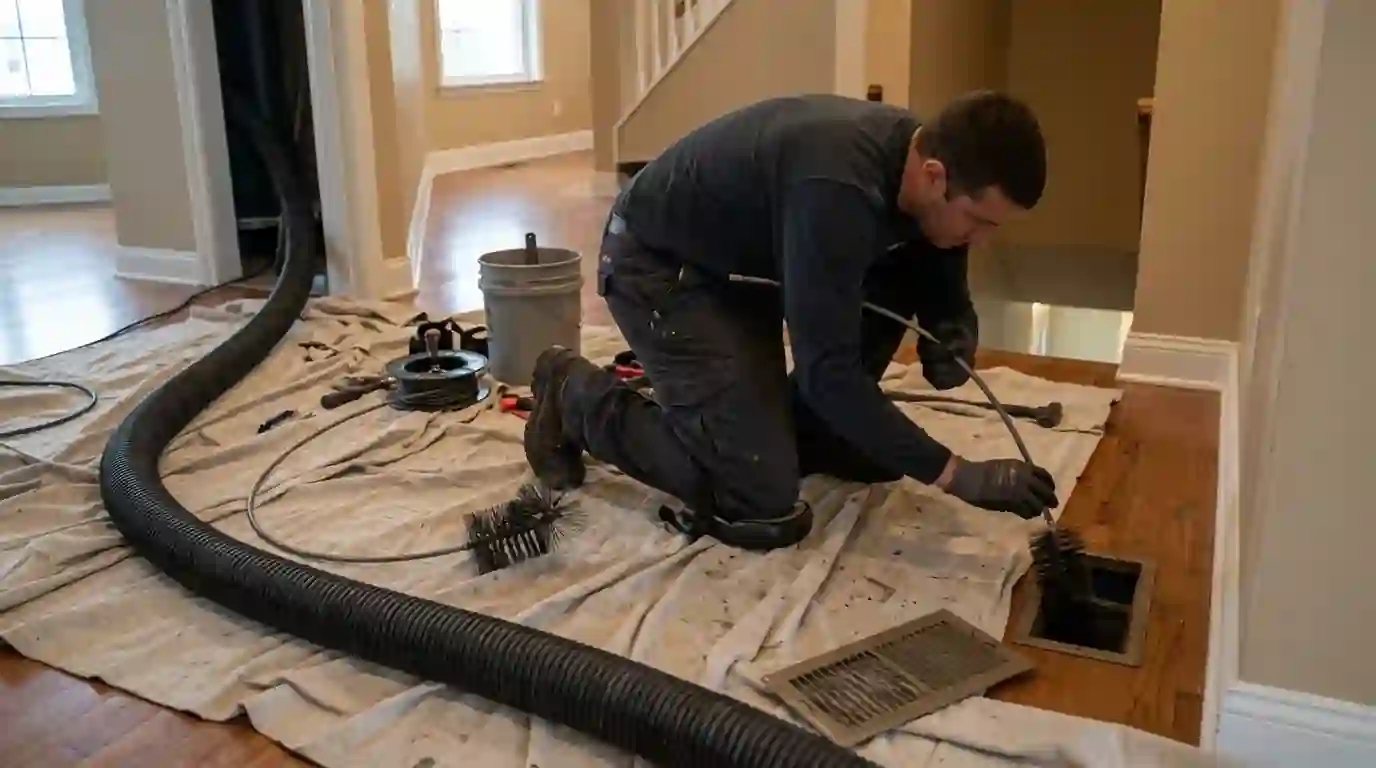
Professional duct cleaning puts the whole duct system under negative pressure with a large vacuum, then loosens debris with rotary brushes and air whips so it gets pulled out instead of blown into the house. Whole-home cleaning typically runs $385 to $795 and takes three to five hours for a typical home.
Duct cleaning has a mixed reputation, and some of that is earned. Cheap blow-and-go jobs with a shop vac at each register move dust around and do little else. Real cleaning means connecting a high-powered vacuum to the trunk, sealing off registers, and working each branch with agitation tools so the debris travels to the collector. It also means cleaning the blower, coil and plenums, since dirty equipment will recontaminate clean ducts.
We'll be straight about what to expect. Cleaning removes built-up debris, construction dust, rodent droppings and odors trapped in ducts. It doesn't cure allergies by itself, and the EPA does not recommend it as routine maintenance for every home. Most houses need it only after a specific event or once every several years. Landcons inspects first with a camera, shows you what's inside, and tells you if your ducts don't need cleaning at all.
Keep your ducts clean longer
Once the ducts are clean, these habits slow the buildup.
- Change the filter on schedule and check fit so air can't bypass it.
- Shut off the furnace and seal returns during drywall or sanding projects.
- Seal leaky return ducts in basements and attics.
- Vacuum register grilles and floor returns when you clean the rooms.
- Plug rodent entry points around pipes, dryer vents and foundation gaps.
- Hold indoor humidity under 50 percent in summer to discourage growth.
- Have the blower and coil checked during annual maintenance.
- Use a deeper media filter if you have several pets.
When duct cleaning is actually worth paying for
These are the situations where cleaning delivers a real, visible result.
Recent remodel or drywall work
Drywall dust is fine and gets everywhere, especially if the furnace ran during the project. It packs into returns and the blower wheel and can keep circulating for months.
Signs of rodents or insects
Droppings, nesting material or dead insects in ducts are a health concern and an odor source. We clean the ducts, but the entry points need sealing too or they'll be back.
Visible buildup you can see at the registers
If you can pull a register and see a layer of dust, hair or debris on the duct walls, there is enough there to remove. A camera shows what's further in.
Moving into a house with a smoker or many pets
Nicotine film and pet hair coat duct interiors and keep releasing odor. Cleaning plus a filter upgrade gives you a fresh start.
Visible mold growth inside the ductwork
Growth inside ducts needs the moisture source fixed first. Cleaning without fixing the cause only buys time. We find and stop the moisture, then clean the affected runs.
How our negative-pressure duct cleaning works
Every job follows the same sequence so debris is captured, not spread.
Camera inspection
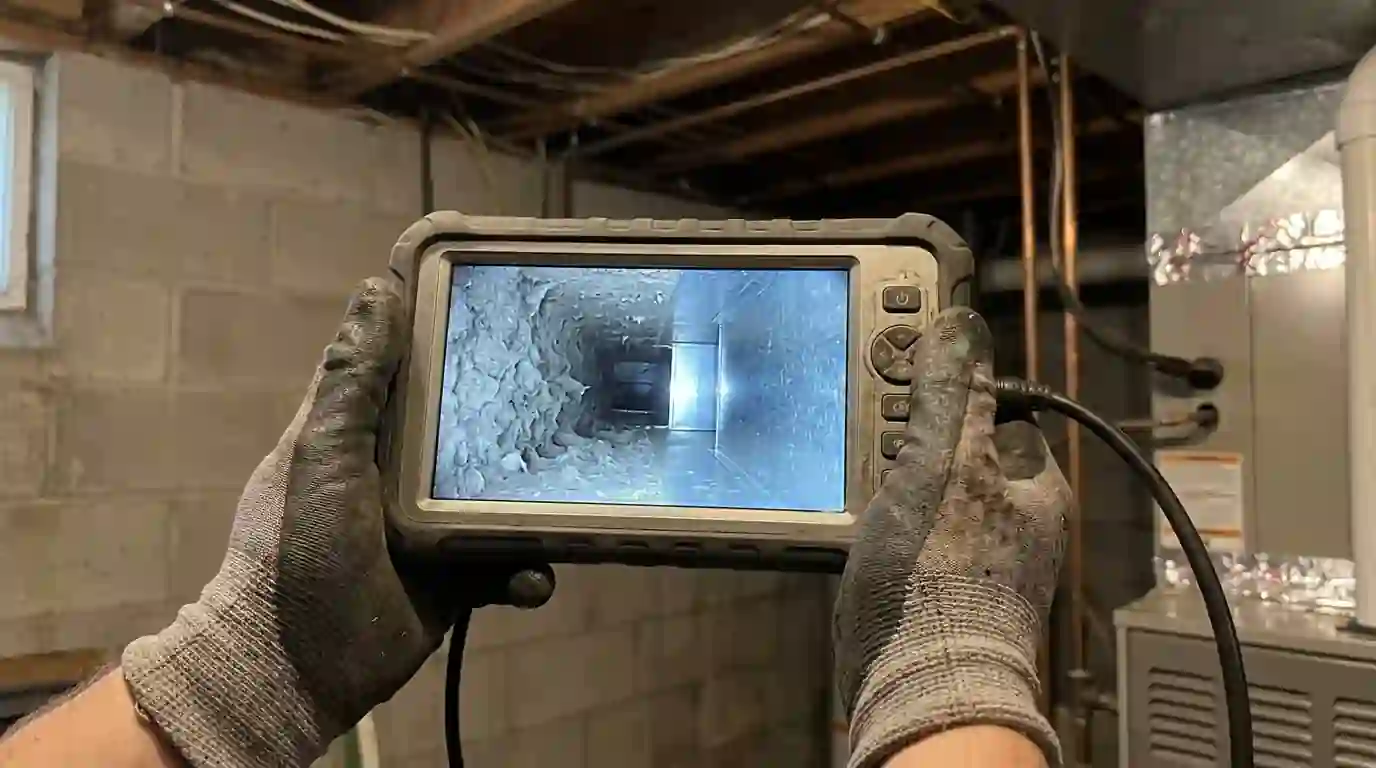
We look into several supply and return runs and the main trunks with a camera. If ducts are reasonably clean, we tell you and recommend a filter change instead.
Protect the house and seal registers
We lay drop cloths, cover registers with adhesive film and shut the furnace off. That makes the duct system a closed space the vacuum can pull on.
Connect negative-pressure equipment
A portable or truck-mounted vacuum with HEPA filtration connects to the main trunk through a cut access hole. It creates strong suction so everything loosened moves toward the collector.
Agitate each branch
We work one register at a time with rotary brushes or compressed-air whips and skipper balls. Debris breaks loose and is pulled down the duct to the vacuum.
Clean the equipment
The blower wheel, motor, cabinet and evaporator coil get cleaned or flagged for separate coil service. Dirty equipment is a common source of returning dust.
Seal access holes and finish
Access holes are closed with sheet metal patches and sealed with mastic. We install a new filter, run the system and show you before and after camera images.
Duct cleaning prices in the Fort Wayne area
Pricing depends on how many runs you have, how many floors and how dirty the system is.
| Item | Typical range |
|---|---|
| Whole-home duct cleaning, one furnace | $385 to $795 |
| Evaporator coil cleaning | $185 to $435 |
| Dryer vent cleaning | $119 to $229 |
| Media filter cabinet added after cleaning | $385 to $795 |
| Camera inspection only | $89 to $149 |
What moves the price
- More registers and returns mean more agitation time.
- Two furnaces or a separate upstairs system roughly doubles the work.
- Heavy debris from rodents or construction takes longer to clear.
- Duct board and fiberglass-lined ducts need gentler tools and cannot be scrubbed as hard.
- Very low-priced offers often skip the trunk, equipment and negative-pressure setup.
These are typical ranges. The real price is set after we inspect your ducts and count the runs. See every range in one place in our HVAC price guide.
What we find inside Fort Wayne duct systems
Basement remodels are the number one reason we clean ducts in the city. With the furnace and returns in the basement in most Allen County homes, sanding dust from a basement finish goes straight into the return and on to every room upstairs. Older homes in neighborhoods like Wildwood Park and Forest Park add another layer: panned joist returns and rough interior surfaces that collect decades of dust, plus the occasional relic from a gravity furnace conversion.
Rural and edge-of-town homes in Leo-Cedarville, Huntertown and the surrounding counties see more rodent intrusion in fall, when field mice look for warm basements as nights head toward freezing. Cottonwood fluff and harvest dust in the warmer months load returns in homes with leaky return ducts. Cleaning helps in each of these cases, but the lasting fix is sealing the return duct, closing rodent entry points and running a good filter afterward.
Duct cleaning versus other fixes for a dusty house
Dust complaints have several causes, and cleaning is only one tool.
| Fix | Best for | Keep in mind |
|---|---|---|
| Negative-pressure duct cleaning | Construction dust, rodent debris and heavy buildup already in the ducts | A one-time reset that does not stop new dust from entering |
| Return duct sealing | Basement or attic air being pulled into leaky returns | Stops the source of much new dust and moisture |
| Media filter upgrade | Ongoing dust, pollen and pet dander in the air | Catches what circulates but cannot reach dust already settled in ducts |
| Blower and coil cleaning only | Systems where the ducts look fine but the equipment is dirty | Often restores airflow at a lower cost than full duct cleaning |
Brands we work on
We service Carrier, Trane, Lennox, Goodman, Rheem and every other major make, plus WaterFurnace geothermal units built here in Fort Wayne.
Areas we cover for this service
We run this work across Fort Wayne and the towns around it. These are the places we are called to most; if your town is not listed, call and ask.
Duct Cleaning questions we hear often
Does duct cleaning help with allergies?
Sometimes a little, but not by itself. Studies have not shown that routine duct cleaning reduces allergy symptoms for most people. Cleaning removes dust that's already settled in the ducts, while most allergens you breathe come from bedding, carpet and outdoors. Pairing a cleaning with better filtration, humidity control and sealed returns does more for allergies than cleaning alone.
How often should ducts be cleaned in a Fort Wayne home?
Most homes don't need a regular schedule. Clean after a remodel, a rodent problem, visible mold, or when you can see buildup at the registers. Some households with many pets or a smoker benefit every five to seven years. Good filters and sealed returns stretch that interval a lot, and we'll tell you honestly when it isn't needed.
What is negative-pressure duct cleaning and why does it matter?
It means a large vacuum pulls on the whole duct system while we loosen debris inside. Air moves toward the vacuum, so everything we knock loose gets captured instead of puffing out of registers into your rooms. Without negative pressure, agitation just spreads dust around. It's the method recommended by industry cleaning standards like NADCA ACR.
Can duct cleaning damage my ductwork?
Done properly, no. Sheet metal handles brushing and air whips well. Flex duct and fiberglass duct board are more delicate, so we use softer brushes and air tools on them. Very old flex that's brittle or torn may not survive cleaning and is better replaced. We check duct type and condition during the camera inspection before we begin.
Do you spray sanitizers or sealants during duct cleaning?
Only when there is a clear reason, such as cleanup after rodent contamination, and only with your consent and a product registered for use in ducts. We don't spray chemicals as a routine add-on. The EPA suggests caution with biocides in ducts, and mechanical cleaning removes most debris without them.