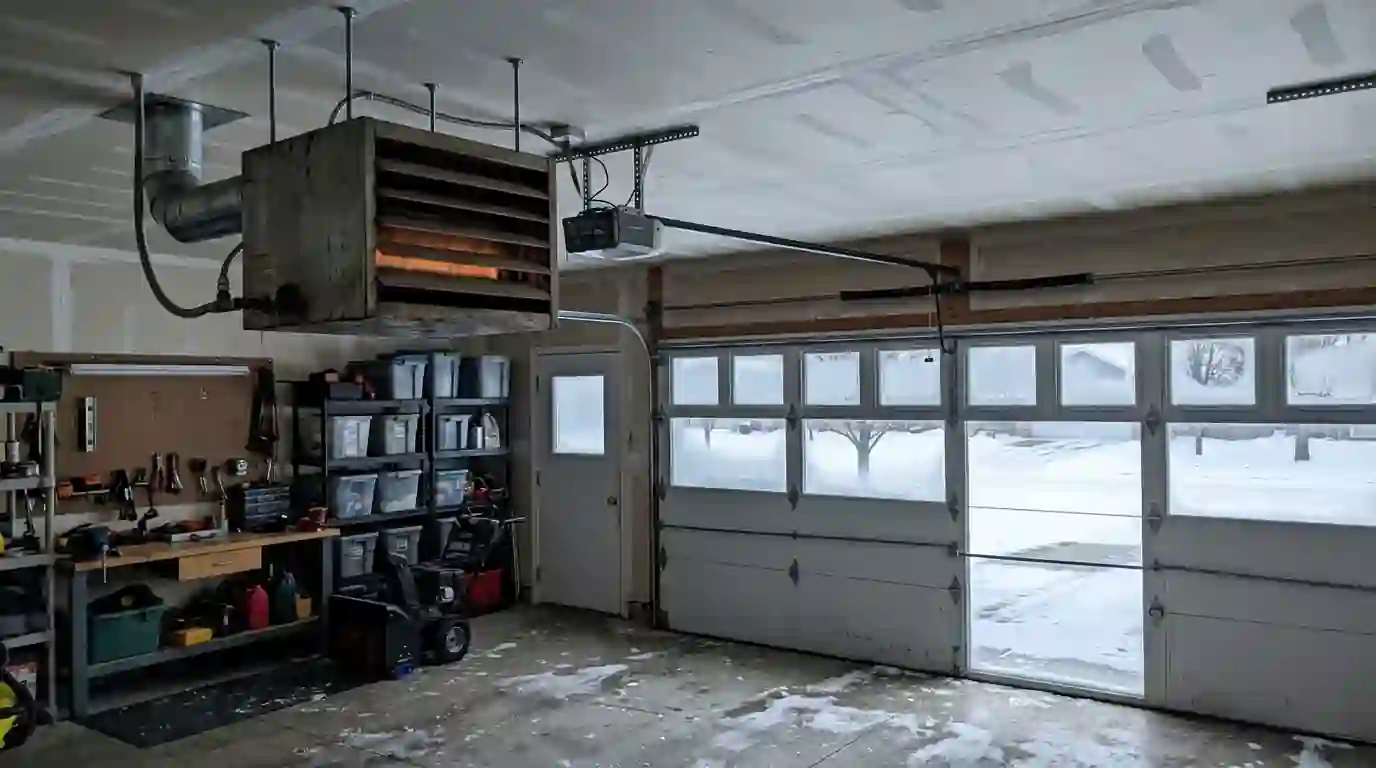
Garage heater installation means hanging a vented natural gas or propane unit heater from the ceiling, running a sized gas line to it and venting it outdoors. A typical attached or detached garage installation runs $1,685 to $3,895 installed. Most jobs take one day, or two when the gas line has to travel a long way to a detached building.
The heaters we install are vented gas unit heaters: a sealed burner and heat exchanger in a steel cabinet, with a fan that pushes warm air across the space and a flue pipe that carries combustion gases outside. That last part matters. Unvented propane torpedo heaters and catalytic heaters dump water vapor and carbon monoxide into the room, which rusts tools and is a real hazard in an enclosed garage with the door down.
Landcons sizes the heater to the building, not the box on the shelf. A two-car attached garage with insulated walls might need 30,000 to 45,000 Btu; an uninsulated pole barn with a tall roll-up door can need 75,000 Btu or more. We look at the insulation, door size, ceiling height and how warm you actually want it, then plan the gas line, venting route and clearances before anything is mounted.
Garage heating options side by side
Here is how a vented unit heater compares with the other choices people ask us about.
| Option | Best for | Keep in mind |
|---|---|---|
| Vented gas unit heater | Most attached and detached garages and shops | Needs a gas line, vent and 120 volt power |
| Separated combustion unit heater | Woodshops, paint areas, dusty or fume-prone spaces | Costs more, but keeps shop air out of the burner |
| Infrared tube heater | Tall pole barns and spaces with frequent door openings | Heats objects and floor, needs high ceilings and long clearances |
| Radiant floor in a new slab | New shops or pole barns being poured | Very even heat, but only practical when the slab is new |
When a garage or shop is ready for a real heater
Most people call us after a season of fighting the cold with portable heaters. These are the situations where a permanent unit heater pays off.
You work in the garage over the winter
Woodworking, car projects and home gym use all stop when the space drops below about 45°F. Glue, paint and finishes also will not cure properly in that cold.
You are running a portable propane heater
Unvented heaters add moisture and combustion gases to a closed room. Swapping to a vented unit removes that risk and the fog on every cold tool you pick up.
The room over the garage stays cold
A bonus room or bedroom above an unheated garage loses heat through the floor all winter. Holding the garage at 45 to 50°F often fixes that upstairs room for a lot less money than rerouting ductwork.
Water lines or a utility sink run through the garage
Pipes along an exterior garage wall can freeze on the coldest nights. A heater set to hold the space above freezing is cheaper than a burst line.
You have a detached shop or pole barn
Outbuildings on rural lots usually have no heat at all. A unit heater with a properly sized gas or propane line makes them usable year round.
Stored items are rusting or warping
Cold surfaces collect condensation on mild days, which rusts tools and damages stored furniture. Steady, dry heat cuts that cycle.
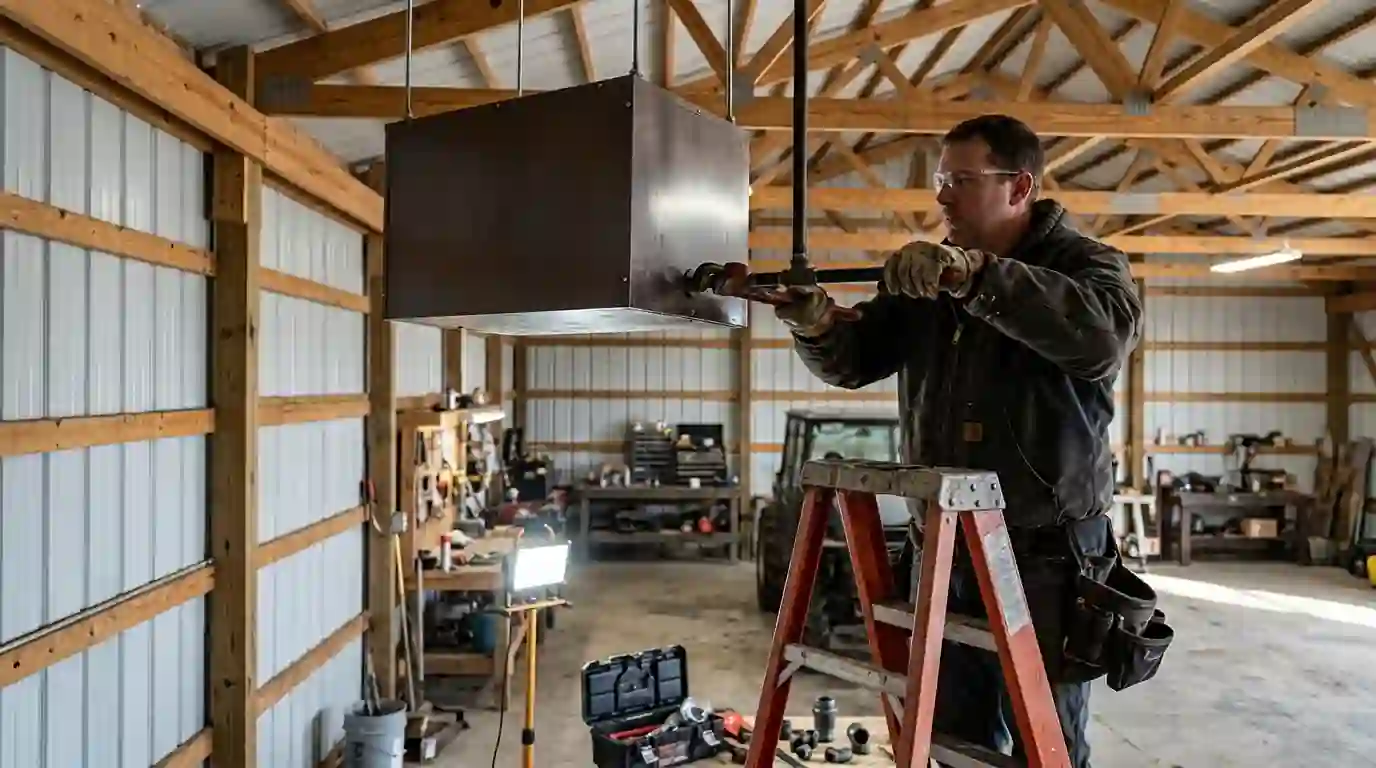
How we install a vented unit heater safely
Gas, venting and clearances are where garage heater jobs go wrong. Our process covers each one before the heater fires.
Measure the space and size the heater
We calculate the building's heat loss from wall and ceiling insulation, door area and the temperature you want to hold. Oversized heaters short cycle and waste gas; undersized ones run nonstop in January.
Choose standard or separated combustion
A standard vented heater draws combustion air from the garage. A separated combustion model pulls outside air through its own pipe, which we recommend in dusty woodshops or spaces with paint, solvents or gasoline fumes.
Plan mounting height and clearances
We hang the heater from joists or trusses with the manufacturer's clearances to the ceiling, walls and side panels, and high enough above the floor that cars, lifts and garage door tracks do not hit it. Fuel-burning equipment in a garage also has to sit above the floor level where gasoline vapor collects.
Run and size the gas line
We size the pipe for the heater's Btu input plus every other appliance on the line, and for the total length of the run. A 100 foot run to a detached shop often needs a larger pipe than people expect, and an undersized line starves the burner.
Vent through the wall or roof
The flue is run with the correct pipe type, slope and termination distance from windows, doors and the garage door opening. Separated combustion units get a concentric or two-pipe termination outside.
Fire, test and set the thermostat
We leak test every new gas joint, check manifold gas pressure and temperature rise, confirm the vent draws, and mount a thermostat away from the overhead door so it reads the room, not the draft.
Heating attached garages and rural pole barns around Fort Wayne
A Fort Wayne winter brings roughly 30 inches of snow and plenty of January nights near 17°F, which means a car parked in an unheated garage comes in coated in slush and stays that way. In the newer subdivisions in Aboite, Huntertown and Pine Valley, we install a lot of heaters in three-car attached garages, often with a bonus room above. Natural gas is usually close by in the basement, so the line run is short and the heater can vent straight out a side wall.
Out in the county it is a different job. Detached garages, workshops and pole barns in Whitley, DeKalb and Noble counties are commonly on propane, and the building may sit 80 to 200 feet from the tank or the house meter. That changes pipe sizing, may require a second regulator, and sometimes means a trench. Pole barns with steel siding and no insulation also need more heater capacity, so we talk through insulating the ceiling first if you want the space warm instead of just above freezing.
Typical garage heater installation costs
Your total depends on heater size, venting type and especially how far the gas has to travel.
| Item | Typical range |
|---|---|
| Vented unit heater installed, attached garage | $1,685 to $3,895 |
| Separated combustion upgrade over a standard unit | $345 to $895 |
| Gas line run to the heater | $285 to $1,195 |
| Thermostat wired for the garage heater | $129 to $249 |
| Service call on an existing garage heater | $89 to $149 |
What moves the price
- Distance from the gas meter or propane tank to the heater location.
- Whether the building is insulated, which decides the Btu size you need.
- Venting route through a sidewall or roof, and the pipe type the heater requires.
- Standard versus separated combustion, which costs more but suits dusty or fume-heavy shops.
- Mounting height and the structure available to hang the heater from.
These ranges are typical for planning. The real price comes after we see the garage, the gas supply and where the vent can exit. See every range in one place in our HVAC price guide.
Information that helps us size your garage heater
Have these ready when you call and the visit goes faster.
- Garage or shop dimensions, including ceiling height.
- Whether walls and ceiling are insulated and with what.
- Number and size of overhead doors.
- Fuel available: natural gas from NIPSCO or propane from a tank.
- Rough distance from the meter or tank to the garage.
- What you use the space for (parking, woodworking, painting, storage).
- The temperature you want to hold on a cold day.
- Whether there is an existing 120 volt outlet near the mounting spot.
Brands we work on
We service Carrier, Trane, Lennox, Goodman, Rheem and every other major make, plus WaterFurnace geothermal units built here in Fort Wayne.
Areas we cover for this service
We run this work across Fort Wayne and the towns around it. These are the places we are called to most; if your town is not listed, call and ask.
Garage Heater Installation questions we hear often
What size garage heater do I need for a two-car garage in Fort Wayne?
An insulated two-car attached garage usually needs about 30,000 to 45,000 Btu to hold 50 to 60°F on a cold January day. Uninsulated or detached garages need more. We calculate it from your wall and ceiling insulation, door area and target temperature rather than guessing from square footage alone.
Can a garage heater run on propane instead of natural gas?
Yes. Most vented unit heaters can be ordered or converted for propane with the correct orifices and gas valve spring. Propane lines are sized differently and need the right regulator setup, so we check the tank size and delivery pressure along with the distance to the garage before we choose pipe.
Is it safe to install a garage heater where I park my car?
Yes, when it is installed correctly. Gasoline vapor is heavier than air and settles near the floor, so fuel-burning equipment in a garage is mounted well above floor level, with clearances to the car and door tracks. A vented unit also sends combustion gases outside instead of into the space.
How much does it cost to run a gas garage heater each winter?
It depends on how warm you keep it and how well the building is insulated. Holding an insulated garage at 45 to 50°F costs far less than keeping it at 65°F every day. We show you the heater's input rating and help you set a thermostat schedule that fits how you use the space.
Do garage heaters need yearly service?
We recommend a yearly check, ideally in the fall. Garage heaters pull in dust, sawdust and spider webs that clog burners and fan blades. We clean the burner and heat exchanger, check the igniter and flame sensor, inspect the vent and test for gas leaks at the connections.