A whole-home dehumidifier is a ducted unit that pulls 70 to 130 pints of water a day out of your air and drains it automatically, holding the house near 45 to 50 percent humidity. Installed cost typically runs $1,985 to $3,495. Most installs take one day, including the duct connections and drain.
Your air conditioner removes some moisture, but only while it is running hard. On a mild, rainy 72°F day in June the AC barely runs, and humidity creeps past 60 percent. Basements are worse, because the concrete walls and floor stay cool and wick ground moisture all summer. A whole-home dehumidifier works independently of the cooling call, so it keeps drying the air on the days the AC would otherwise sit idle.
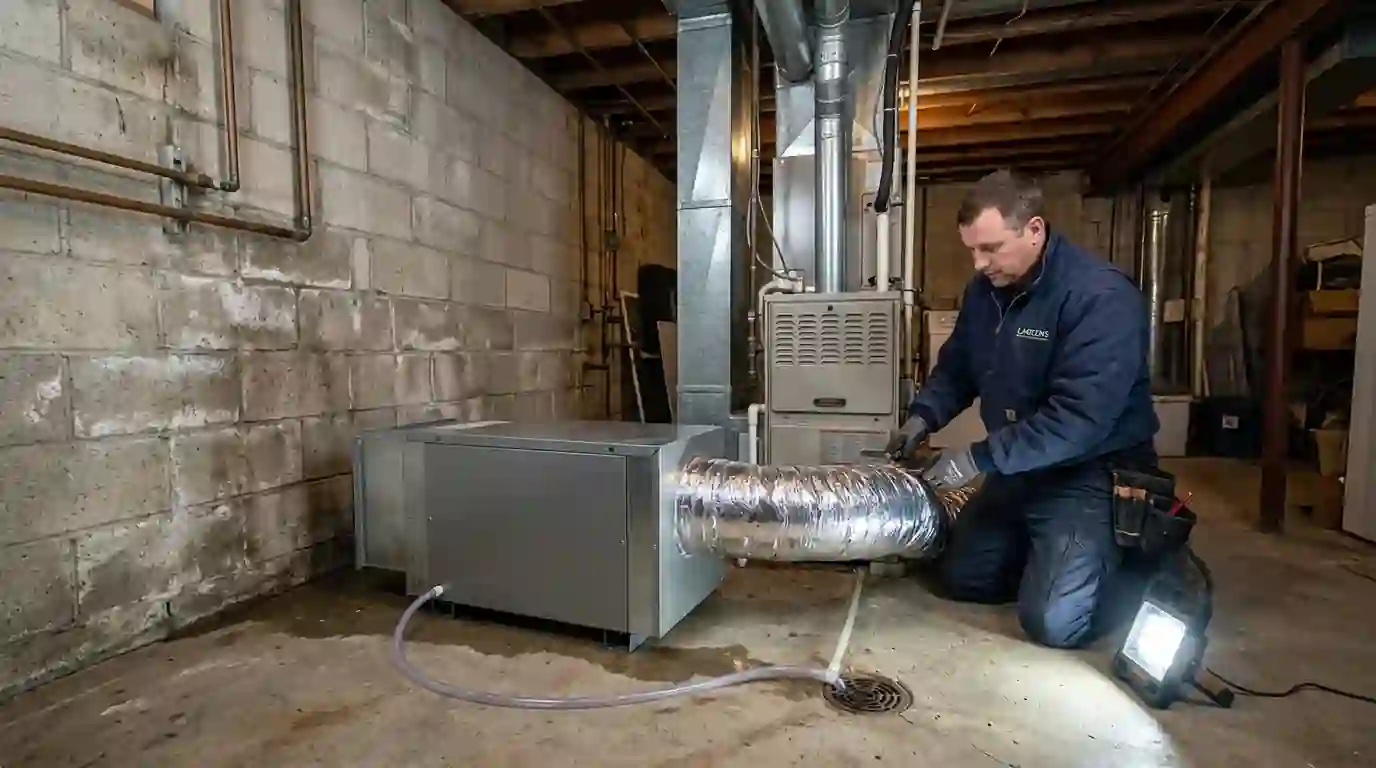
Unlike a portable unit, a ducted dehumidifier sits out of the way near the furnace, empties to a floor drain or pump, and treats the whole house through your existing ducts or its own small duct system. Landcons sizes each unit by pints per day at standard test conditions, square footage and how damp the space actually reads. We also look for the source of the water first, since a dehumidifier should not be fighting a leak in the foundation.
Whole-home dehumidifier, portable unit or just the AC
Each approach has a place, and the right one depends on how damp the house really is.
| Approach | Best for | Keep in mind |
|---|---|---|
| Ducted whole-home dehumidifier | Damp basements, finished lower levels and whole-house stickiness | Higher upfront cost but runs unattended and drains automatically |
| Portable dehumidifier | A single small room or a mild seasonal issue | Buckets to empty, noise in the room and shorter lifespan |
| Air conditioner alone | Homes that only feel humid on hot days | Removes little moisture on cool rainy days and in basements |
| Variable-speed AC with dehumidify mode | Upstairs comfort when replacing the AC anyway | Still does not treat the basement on days cooling is not needed |
Is a ducted dehumidifier the right fix for your house?
Moisture problems show up as smells, stains and discomfort long before anyone measures them. These are the patterns we see most in homes that benefit.
A musty smell that never fully leaves the basement
That odor comes from mold and mildew growing on organic material once humidity stays above about 60 percent. Drying the air below 50 percent stops most of that growth.
Portable dehumidifiers filling twice a day
If you empty a 50-pint bucket morning and night, the space needs more capacity and a drain. A ducted unit runs unattended and never shuts off on a full bucket.
Condensation on cold water pipes and ducts
Sweating pipes and supply ducts mean the dew point in the basement is above the surface temperature. Lowering the dew point stops the drips and the rust spots under them.
The house feels clammy at 74°F
When indoor humidity sits near 60 percent, 74 feels muggy and people turn the thermostat lower. Drier air lets you stay comfortable at a higher setting.
Warped paneling or stored boxes going soft
Cardboard, paneling and carpet pad soak up moisture and start to sag or smell. These are signs the damp has been going on for months.
A finished basement you actually use
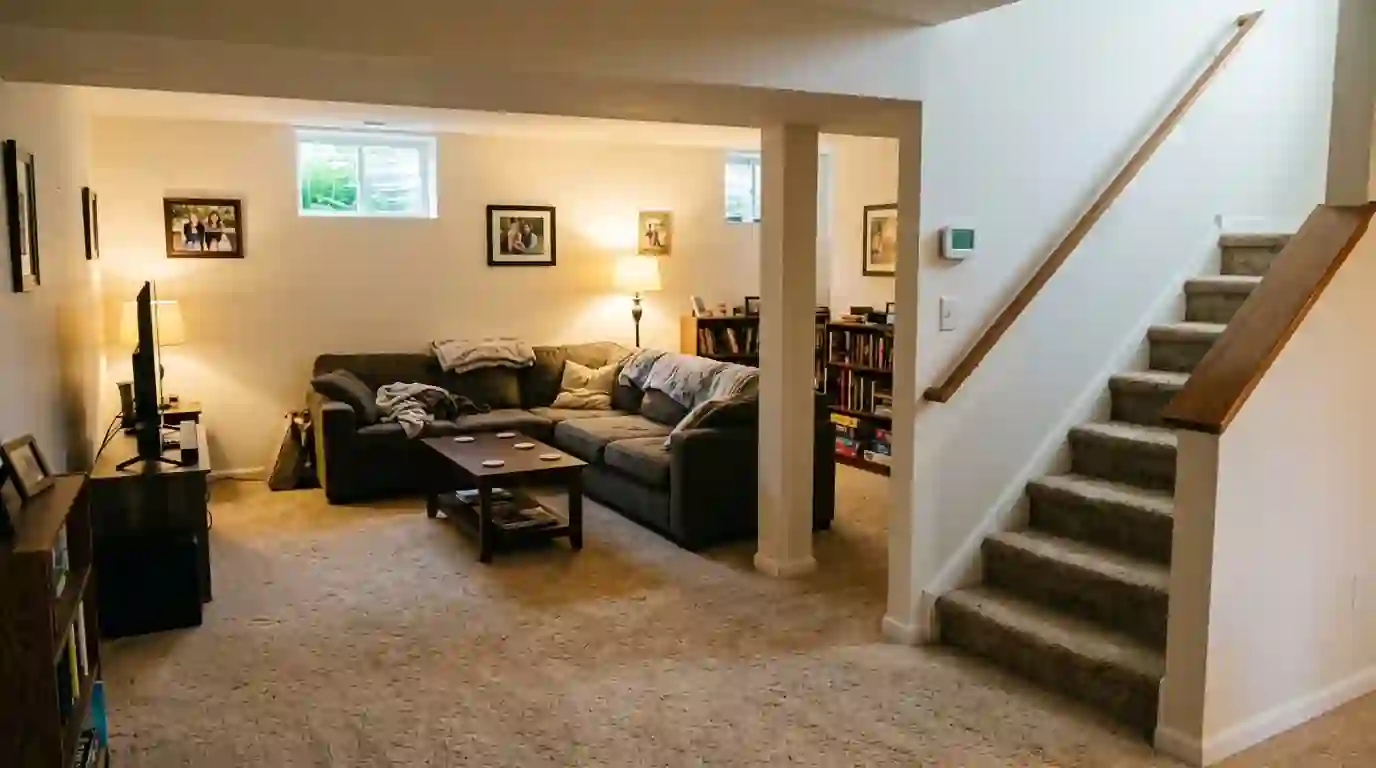
Bedrooms, offices and family rooms below grade need the same air quality as the rest of the house. A dehumidifier is often what makes a finished basement livable in July.
A closed-up lake cottage
Seasonal homes in Steuben and Noble counties sit sealed for weeks. A dehumidifier holds humidity down while nobody is there to open windows.
What a proper dehumidifier install looks like
The work is straightforward, but sizing and drainage decide whether it lasts. Here is how we handle it.
Measure humidity and find the water source
We log temperature and relative humidity, check the dew point and look at gutters, downspouts and foundation cracks. If water is entering as a liquid, we tell you before you spend money on equipment.
Size by pints per day
A tight 1,500 square foot basement may need a 70-pint unit, while a large, leaky house can call for 120 to 130 pints. Oversizing wastes money and undersizing leaves the musty smell behind.
Choose the duct configuration
Most units pull return air from the basement and discharge into the furnace supply plenum or a dedicated basement supply. Some installs use a standalone duct loop so the dehumidifier runs without the furnace blower.
Set the unit and connect ducts
We hang or set the dehumidifier on a stand, connect insulated flex or rigid duct with mastic at the joints, and install a backdraft damper so furnace air does not push backward through it.
Run the condensate drain
The unit drains by gravity to a floor drain or into a condensate pump with a safety switch. We trap and pitch the line so it never smells or backs up.
Wire the dehumidistat and test
We mount the control in the main living area or basement, set it near 45 to 50 percent, and verify water is coming off the coil within the first hour.
Recheck after the first month
Basements full of damp carpet, drywall and stored boxes take a few weeks to dry out. We confirm the readings have settled near the setpoint and adjust the control if the space needs a different target.
Why basements near the three rivers stay damp all summer
Fort Wayne sits where the St. Marys and St. Joseph rivers join to become the Maumee, and the ground near those rivers holds a lot of water. Homes around Foster Park, along the St. Joe corridor and in the older neighborhoods near downtown often have basements that never quite dry out between May and September. Poured and block foundation walls wick that moisture into the room, and the cool concrete keeps relative humidity high even when the air upstairs feels fine.
July afternoons here average about 84°F with heavy humidity, and summer storms can pass through several times a week. That moisture finds its way in through open doors, bath fans and every crack in an older house. Most homes across Allen County have the furnace and main trunk line in the basement, which makes a ducted dehumidifier easy to tie in. Treating the basement air also improves the air the furnace and AC circulate upstairs, since many returns pull from down there.
Typical prices for whole-home dehumidification
Most of the variation comes from unit capacity and how far the ducts and drain need to run.
| Item | Typical range |
|---|---|
| Whole-home dehumidifier, installed with controls | $1,985 to $3,495 |
| Condensate pump with overflow switch | $185 to $365 |
| Dedicated basement supply or return duct run | $385 to $795 |
| Annual filter and coil service | $89 to $159 |
| Moisture diagnostic visit before purchase | $89 to $149 |
What moves the price
- Capacity in pints per day sets the base price, with 120-pint units costing more than 70-pint units.
- A standalone duct loop costs more than tying into the existing furnace ducts.
- No nearby floor drain means adding a condensate pump.
- Tight basement ceilings or finished drywall can add labor for hanging the unit and ducts.
- Some homes need fresh-air ventilation added at the same time, which raises the total.
These are typical ranges for this area. We confirm the real price after measuring humidity and looking at your basement layout. See every range in one place in our HVAC price guide.
Help your dehumidifier do its job
Equipment works best when the house is not letting water in faster than it can remove it.
- Extend downspouts at least 6 feet from the foundation.
- Keep basement windows and doors closed on humid days.
- Run bathroom fans for 20 minutes after showers.
- Vent the clothes dryer outdoors, never into the basement.
- Replace the dehumidifier filter on the schedule in the manual.
- Check the condensate pump discharge every few months.
- Move stored cardboard off the floor and onto plastic shelving.
- Keep the setting between 45 and 50 percent rather than lower.
Brands we work on
We service Carrier, Trane, Lennox, Goodman, Rheem and every other major make, plus WaterFurnace geothermal units built here in Fort Wayne.
Areas we cover for this service
We run this work across Fort Wayne and the towns around it. These are the places we are called to most; if your town is not listed, call and ask.
Whole-Home Dehumidifiers questions we hear often
What humidity should a whole-home dehumidifier hold in a basement?
Aim for 45 to 50 percent. Below 50 percent, dust mites and mold struggle to grow, and the musty smell fades within a few weeks. Going much lower wastes electricity and can dry out wood in the house. We set the control near 50 and adjust once we see how the space responds over the first month.
How much electricity does a whole-home dehumidifier use?
A ducted unit typically draws about as much as a window air conditioner while running, and it runs fewer hours once the basement dries out. Energy-rated models remove more pints per kilowatt-hour than most portable units. Your actual cost depends on how damp the house is and your Indiana Michigan Power rate.
Will a whole-home dehumidifier fix water leaking into my basement?
No. A dehumidifier removes moisture from the air, not water coming through cracks or a failing foundation. If you see puddles, efflorescence lines or wet block after rain, the grading, gutters or foundation need attention first. Once liquid water is stopped, the dehumidifier handles the remaining dampness from the ground and the outdoor air.
Can a whole-home dehumidifier run in winter?
It can, but in most Fort Wayne homes it isn't needed from November through March, because cold outdoor air is already dry. We usually set it to come on only when the humidity rises above the setting. Some basements stay damp year round, and the unit simply runs when needed without any seasonal changes.
How loud is a ducted whole-home dehumidifier?
Because it sits near the furnace and moves air through ducts, most people never hear it upstairs. In the basement it sounds similar to a furnace blower on low speed. We mount the unit on vibration pads or hangers with isolators so it doesn't drum through the floor joists into the rooms above.