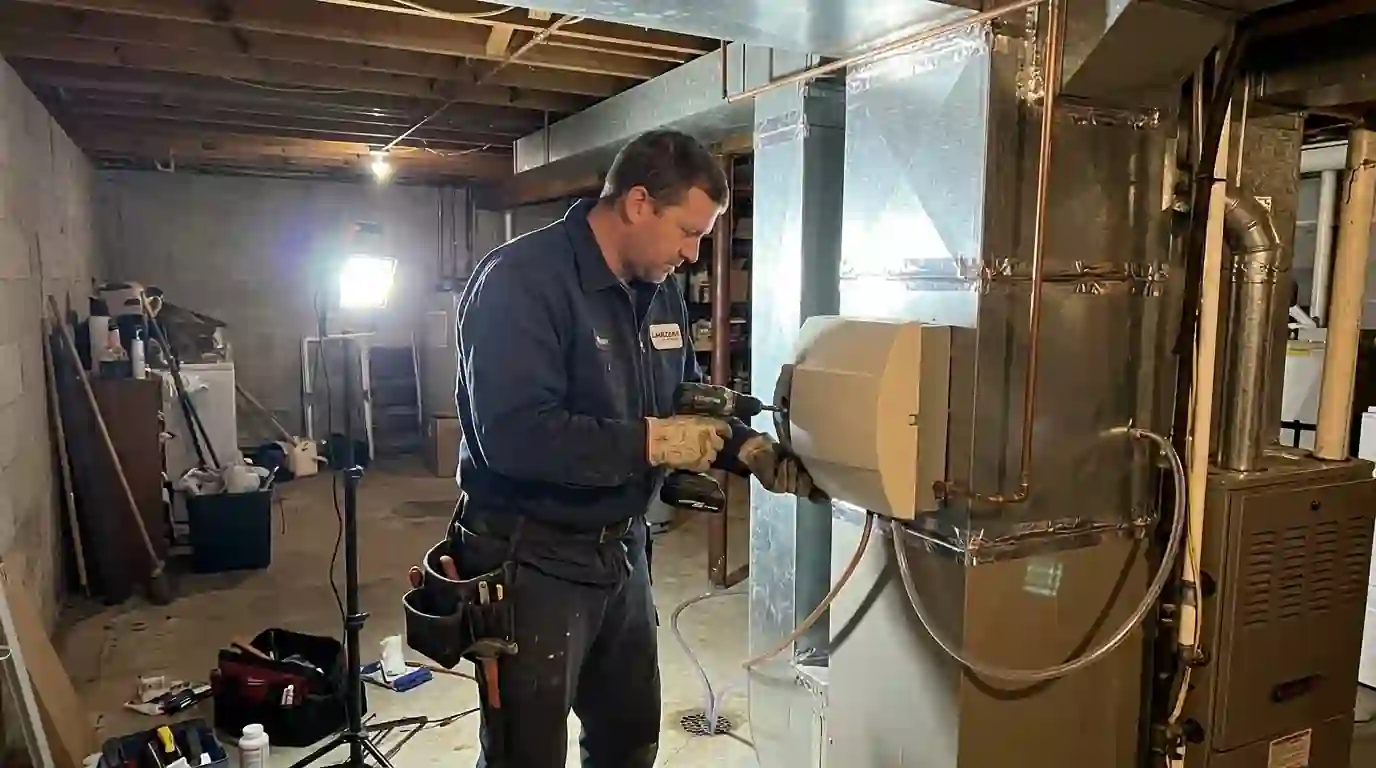
A whole-home humidifier mounts on your furnace and adds moisture to the warm air before it reaches the rooms, aiming for roughly 30 to 40 percent relative humidity in winter. A bypass unit runs $585 to $1,195 installed; a steam unit runs $1,385 to $2,495. Most installs take three to five hours.
When outdoor air at 17°F comes inside and warms to 70, its relative humidity can fall below 15 percent. That's drier than most deserts, and it's why January in northeast Indiana is hard on skin, sinuses, pianos and wood trim. Portable humidifiers help one room at a time, need daily refilling and often grow slime in the tank. A whole-home unit ties into the furnace, the water line and the drain, and treats every room the ducts reach.
The trick is control. Too little moisture and you notice no change; too much and you get frost on the inside of the windows and damp spots in cold corners of exterior walls. We install humidifiers with an outdoor temperature sensor or a thermostat that lowers the target automatically as it gets colder outside. That keeps the house comfortable without soaking the window sills on the coldest nights.
Bypass, fan-powered or steam: which humidifier fits your home
All three add water to your air, but they do it differently and cost differently to run.
| Type | Best for | Keep in mind |
|---|---|---|
| Bypass (flow-through) | Most gas furnace homes up to about 3,000 square feet | Uses a little drain water and only humidifies well while the burner runs |
| Fan-powered | Homes without room for a bypass duct | Slightly higher output, adds a small fan motor to service |
| Steam | Large homes, heat pumps, tight houses and precise control | Higher purchase price, uses electricity and needs canister care |
Signs your home needs added winter humidity
Dry air shows up in your body and your house at the same time. If several of these sound familiar from December through March, a humidifier is worth a look.
Static shocks every time you touch metal
Static builds when the air is too dry to bleed off charge. If the light switch bites you every morning, indoor humidity is likely under 25 percent.
Gaps opening in hardwood floors and trim
Wood shrinks as it gives up moisture, so seams between boards widen in winter and close in summer. Steady humidity keeps that movement small and protects stair treads and cabinet doors.
Dry eyes, cracked lips and nosebleeds
Mucous membranes dry out in very low humidity, especially overnight. Many families notice fewer winter nosebleeds once the house holds around 35 percent.
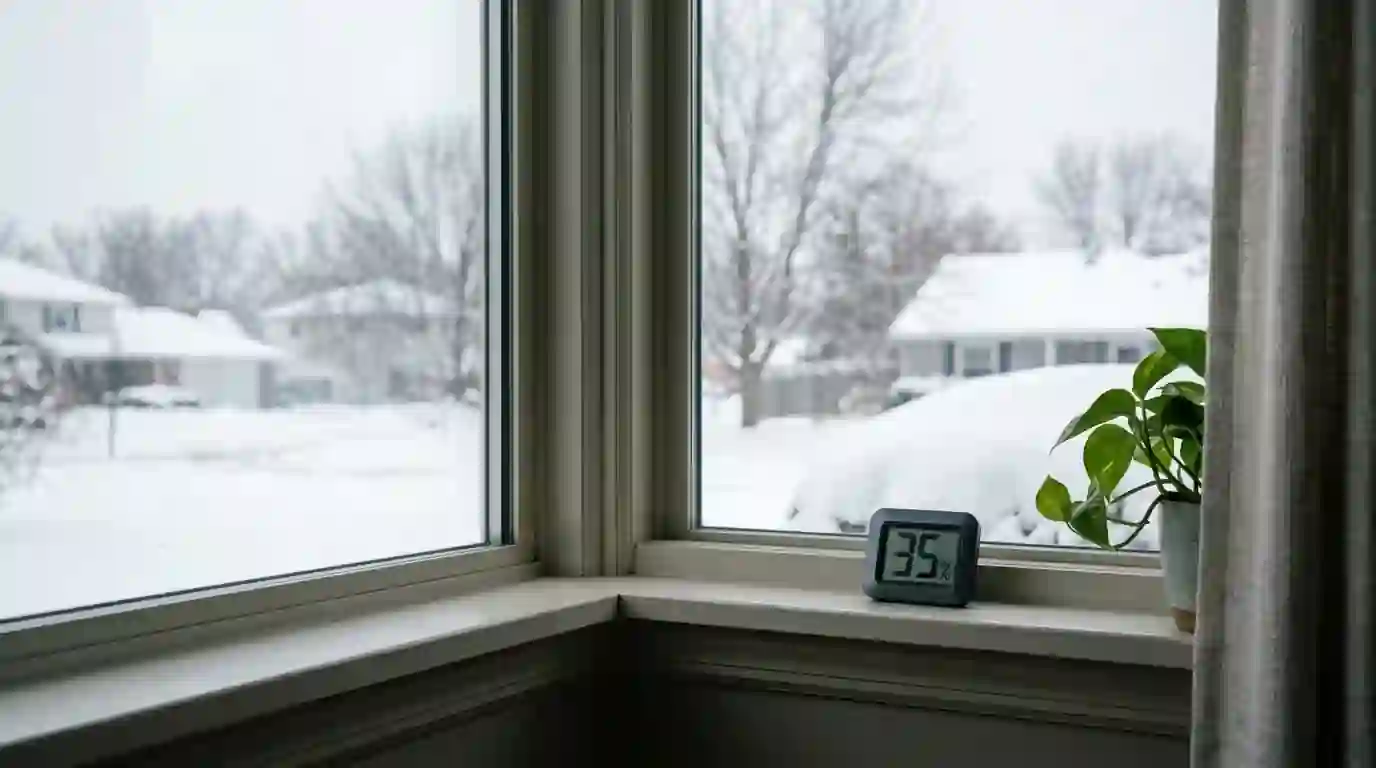
A hygrometer reading below 25 percent
An inexpensive digital hygrometer on a bedroom dresser tells you the real number. Readings in the teens and low twenties in January are common in homes without a humidifier.
Portable units that never keep up
A tabletop humidifier might add a gallon a day to one room. A whole-home unit can deliver 12 to 18 gallons a day across the house without refilling.
How we install a furnace humidifier that does not cause trouble
A humidifier touches water, electricity and your duct system, so we take care with each connection.
Choose bypass, fan-powered or steam
We look at your furnace, the size of the house and how tight it is. Bypass units suit most homes, while steam units fit large houses, heat pumps and owners who want the most precise control.
Pick the mounting spot
Bypass units mount on the supply or return plenum with a 6-inch bypass duct and damper between them. Steam units inject into the supply plenum or a duct run where the vapor can mix before it reaches a turn.
Tap the water supply
We run a quarter-inch line from a cold water pipe with a saddle or a proper tee and shutoff valve. Steam units may get a hot or softened water feed depending on the model.
Run the drain
Bypass pads flush a small stream of water to wash out minerals, so the drain line goes to a floor drain or a condensate pump. We pitch it so it never backs into the furnace.
Wire the controls and outdoor sensor
We wire the humidistat or smart thermostat and mount an outdoor sensor so the target humidity drops as temperatures fall. That automatic reset is what prevents window frost on a 5°F night.
Test and set your target
We run the furnace, confirm water flow and drain flow, and check for leaks at every fitting. Then we set a starting target, usually 35 percent, and explain how to adjust it.
Why Fort Wayne winters dry out a house so fast
Our heating season runs roughly October through April, and January nights average about 17°F. Cold air simply cannot hold much water, so every bit of outdoor air that leaks into the house drops the indoor humidity. A drafty 1950s ranch in Waynedale or Northcrest trades its air with the outdoors several times an hour in a wind, which is why those homes often read 15 to 20 percent without help. Furnaces run long cycles here, and each cycle reheats that dry air without adding any moisture back.
Tighter homes built in Aboite, Huntertown and Pine Valley since the 1990s lose less air, so they often need a smaller humidifier and a lower setting. Window type matters too. Older aluminum frames and single-pane storms frost up at 30 percent on a frigid night, while newer double-pane vinyl windows tolerate a bit more. That is why we set the outdoor reset to your actual windows instead of using one number for every house in Allen County.
Humidifier prices in the Fort Wayne area
Here is what homeowners typically pay for each type of system. The right one depends on your furnace and house size.
| Item | Typical range |
|---|---|
| Bypass humidifier, installed with humidistat | $585 to $1,195 |
| Steam humidifier, installed with controls | $1,385 to $2,495 |
| Annual pad or canister service on a maintenance visit | $89 to $159 |
| Condensate pump when no floor drain is nearby | $185 to $365 |
What moves the price
- Steam units cost more but put out moisture whether or not the furnace burner is firing.
- A heat pump or very large home usually points toward steam, since bypass units depend on hot supply air.
- Distance to a water line and drain sets the plumbing labor.
- Smart thermostats with built-in humidity control can replace a separate humidistat.
These are typical ranges. The price is set after we see your furnace, plenum space and drain options. See every range in one place in our HVAC price guide.
Running your whole-home humidifier the right way
A few habits keep a humidifier working well and out of trouble.
- Open the bypass damper in fall and close it in late spring.
- Replace the evaporator pad once a season, or twice with hard well water.
- Turn the water off at the saddle valve for the summer.
- Watch the inside of the windows on cold mornings and lower the setting if frost forms.
- Keep a hygrometer in a bedroom to confirm the real reading.
- Check the drain line for flow at the start of each heating season.
- Clean mineral scale from steam canisters as the manual directs.
- Call us if you see water around the furnace or a damp plenum.
Brands we work on
We service Carrier, Trane, Lennox, Goodman, Rheem and every other major make, plus WaterFurnace geothermal units built here in Fort Wayne.
Areas we cover for this service
We run this work across Fort Wayne and the towns around it. These are the places we are called to most; if your town is not listed, call and ask.
Whole-Home Humidifiers questions we hear often
What humidity should a whole-home humidifier hold in a Fort Wayne winter?
Most homes do well at 30 to 40 percent when it's above about 20°F outside, dropping to 25 to 30 percent on the coldest nights. The right number is the highest your windows can handle without frost or condensation. An outdoor sensor makes that adjustment for you automatically, so you don't have to remember to turn it down.
Can a whole-home humidifier cause mold?
It can if it's set too high or leaks. Condensation on cold exterior walls, in attics or on windows is the risk, not the humidifier itself. With an outdoor reset control, a proper drain and a setting around 35 percent, a humidifier is very unlikely to create mold. We check that the unit and its connections stay dry at every visit.
Does a bypass humidifier work with a heat pump?
Not very well. A bypass unit evaporates water using warm air, and a heat pump delivers air around 90 to 100°F instead of 120 or more from a gas furnace. Output drops noticeably. For heat pump and dual fuel homes we usually recommend a steam humidifier, which makes its own vapor no matter what the air temperature is.
How often does a whole-home humidifier pad need changing?
Once per heating season is typical on city water. Homes on hard well water in rural Allen, Whitley or Adams County often need a mid-winter change too, because mineral scale clogs the pad and cuts output. A crusty, stiff pad that no longer soaks water evenly is ready to replace.
Will a whole-home humidifier make my house feel warmer?
Many people feel more comfortable at a lower thermostat setting once humidity is up, because moist air slows evaporation from your skin. It does not change the furnace output, but you may be happy a degree or two cooler. Whether that saves money depends on your habits, so we don't promise a specific savings number.