In Garrett we mostly work on early 1900s homes: hot water boilers, gravity furnaces converted to forced air, chimney-vented gas furnaces, and central air added to houses never designed for it. We also handle water heaters and carbon monoxide checks on older vented appliances. Someone answers our line 24/7, and Garrett is about 20 miles north of our office.
Garrett grew up around the railroad, and a lot of its housing went up during the early 1900s for the families who worked there. Those homes were built tall and solid, with basements that held a coal boiler or a gravity furnace. Over a century the coal is long gone, but the layout it dictated often remains: big supply pipes, radiators under the windows, and a chimney that now vents a gas appliance it was never sized for.
From our office at 121 W Wayne Street in downtown Fort Wayne, Garrett is roughly 20 miles to the north, a drive we make regularly through DeKalb County. We answer every call 24/7, including the ones that come in at two in the morning when a radiator system goes cold. Calling (260) 283-0173 gets you a person who asks the right questions and sends a technician who has worked on houses of this age.
Why a century-old Garrett house heats the way it does
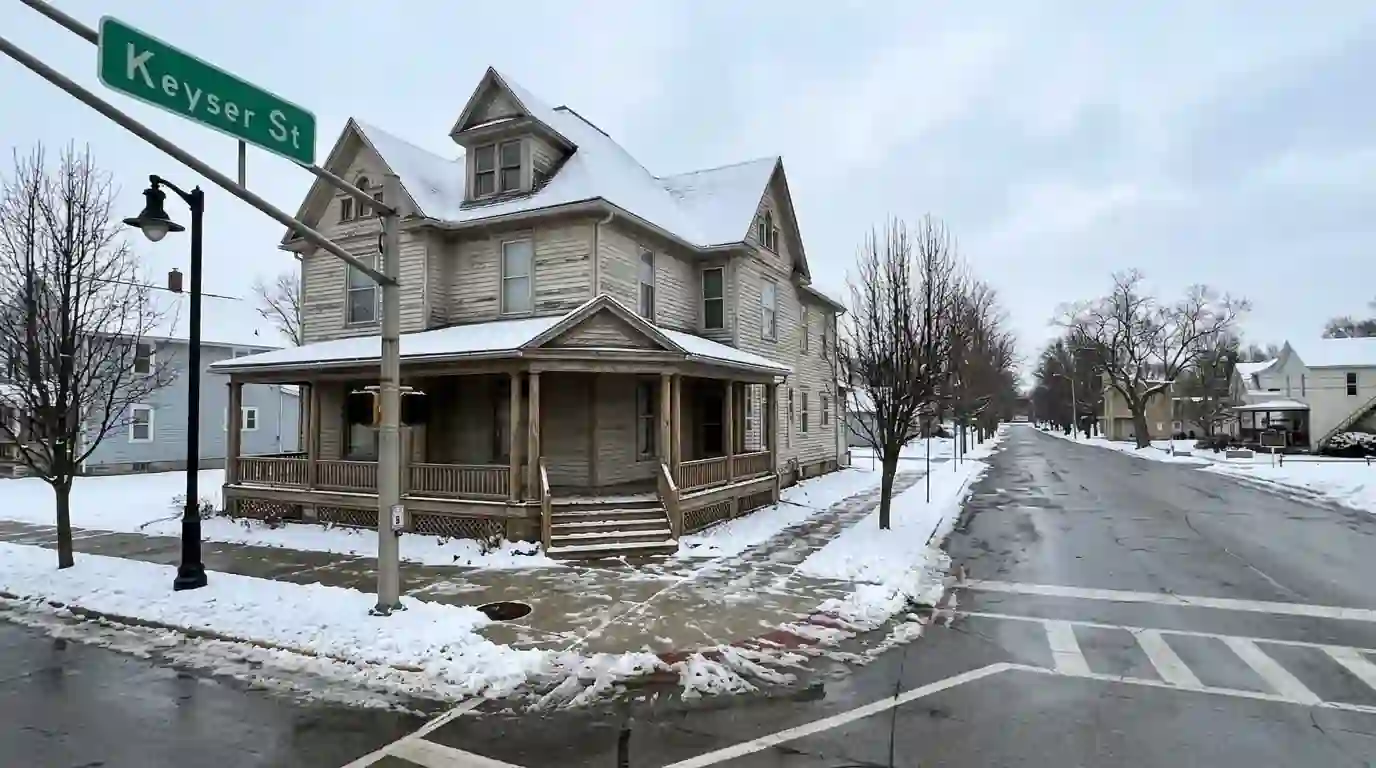
A railroad-era house usually has one of three setups in the basement. The first is a hot water boiler with cast iron radiators, often converted from steam decades ago. The second is an old gravity furnace layout, with big round ducts angling up from the center of the basement, that has since been fitted with a gas furnace and a blower. The third is a fully replaced forced air system where someone cut new ducts into the walls during a remodel. Each one fails in its own way, and knowing which you have tells us a lot before we walk in.
Chimneys are the other big factor. An unlined brick chimney that once carried coal smoke can corrode badly when it vents a mid-efficiency gas furnace and water heater, because the cooler flue gas condenses inside it. We check the draft, look at the base of the chimney for crumbled mortar and rust, and test for carbon monoxide at the appliances. When a homeowner moves to a high-efficiency furnace, the chimney is often left serving only the water heater, which can make an old liner problem worse unless it is resized.
Service calls Garrett homeowners make most often
Older houses produce a recognizable set of problems, and these come up again and again in Garrett.
Radiators cold at the top
Air trapped in a hot water system leaves the upper part of radiators cool. We bleed the system, check the fill pressure and look at the expansion tank, which is often waterlogged in older setups.
Converted gravity systems with weak airflow
Big old ducts and a modern blower do not always match, so some rooms roar while others barely get air. Balancing dampers, added returns and a properly set blower speed usually help.
Water heater and chimney draft trouble
A water heater that backdrafts into the basement is a carbon monoxide risk. We test draft and CO, then explain whether the fix is a liner, a power vent unit or a different venting route.
First central air in a house without ducts
Homes that kept their radiators have no ducts for cooling. Ductless heads or a small-duct high-velocity system add air conditioning without opening walls.
Getting a technician to Garrett at any hour
Garrett is close enough for routine work and far enough that planning pays. When you call, tell us what kind of system you have: boiler, converted furnace or newer forced air. A photo of the furnace or boiler data plate, if you can take one, helps us bring the right circulator, thermocouple or igniter. Calls are answered 24/7, holidays included.
If a boiler stops on a cold night, check that the power switch at the top of the basement stairs is on and that the pressure gauge reads somewhere near 12 to 15 psi when cold. Do not add water to a hot boiler yourself. If anything smells like gas or a CO alarm sounds, get everyone outside before you call.
Garrett questions
Should I keep the old boiler in my Garrett home or switch to forced air?
If the boiler is sound and the radiators heat well, keeping hot water heat is often the better choice. It is quiet and even. Replacing it with a high-efficiency boiler keeps the radiators. Switching to forced air means adding ducts through finished rooms, which costs far more. We look at the boiler's condition and tell you honestly which path fits.
Does my Garrett house need a chimney liner for a new furnace?
It depends on what stays connected to the chimney. A high-efficiency furnace vents through PVC, which can leave the water heater alone in a large masonry flue where it drafts poorly. We measure the flue, test draft with the water heater running and tell you if a liner is needed. Liner work typically runs $685 to $1,495 depending on height and access.
What does a boiler repair usually cost in Garrett?
Common repairs like a circulator pump, zone valve or expansion tank typically range from $285 to $865 installed. Diagnosis alone typically costs $89 to $149. Those are typical ranges, and the real price depends on the part, the age of the boiler and what we find once we are in the basement. We give you the price before any work starts.
Can Landcons check for carbon monoxide in an older Garrett home?
Yes. We test the furnace or boiler, the water heater and the gas range with a combustion analyzer and check ambient CO in the living areas. Older homes with masonry chimneys and appliances added over the years deserve this check. We also make sure you have working CO alarms near sleeping areas and on each level.