Around Portland we repair natural gas and propane furnaces, tune and fix central air conditioners, install heat pumps for rural homes trying to cut propane use and test older appliances for carbon monoxide. Most calls come from older town homes, ranch houses and farm properties. Portland is about 45 miles south of our office, and our phone is answered 24/7.
Portland is the Jay County seat, a town of about 6,000 on the Salamonie River with US 27 running straight through it. That highway is our route down from Fort Wayne, a drive of about 45 miles from our office at 121 W Wayne Street. Inside town you find older homes built close to the street and plenty of single-story ranches. Past the edge of town the land opens into farm country, where houses sit on their own lots with a propane tank in the yard.
That spread is why a Portland call starts with a few quick questions. Is it natural gas or propane? Furnace, boiler or heat pump? What is the thermostat showing? Your answers decide which parts ride along, and on a long drive that makes the difference between one visit and two. We answer the phone 24/7, every day of the year, and tell you plainly when to expect a technician.
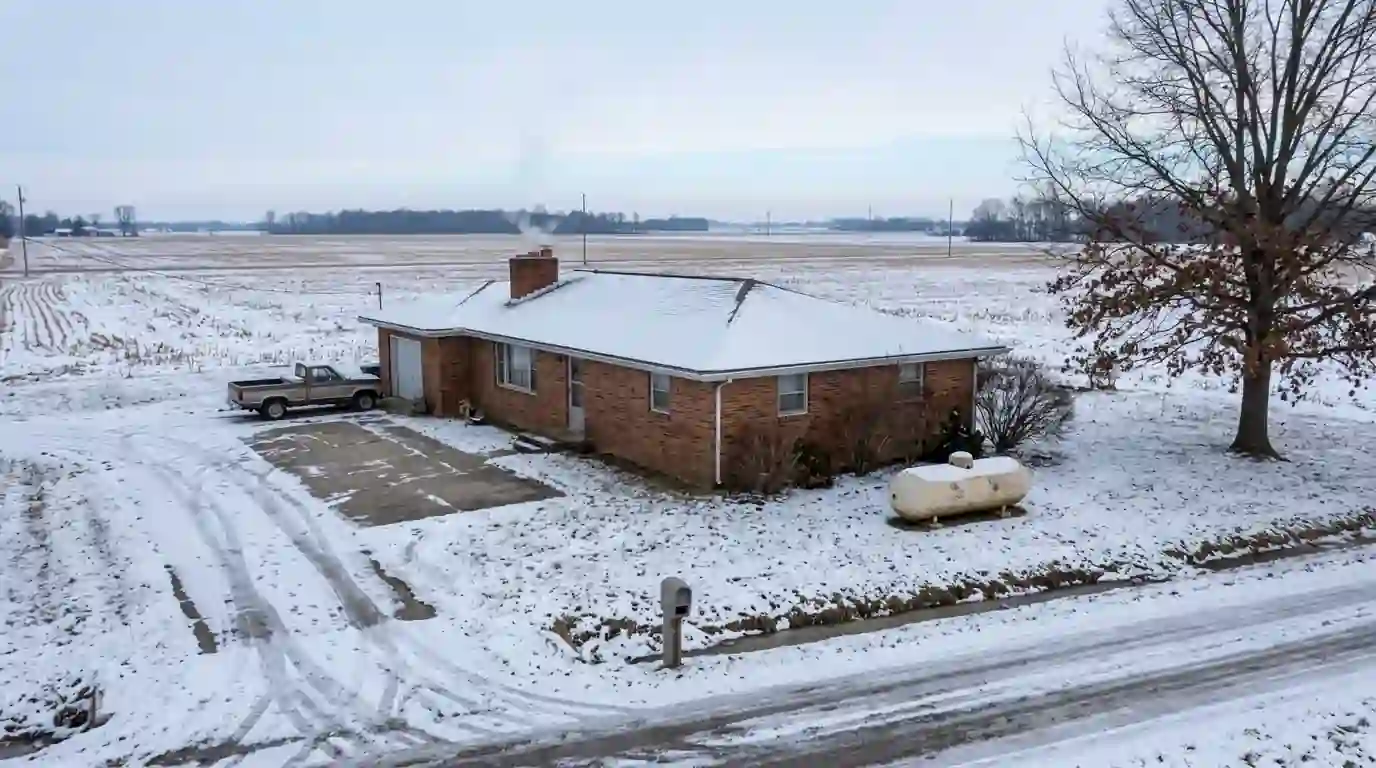
Older town houses, side-street ranches and farm places
The older homes in Portland usually have a basement furnace that replaced something much older, sometimes a boiler, sometimes a coal furnace. Ductwork in these houses was added or extended over the decades, and it often shows: long runs to a back addition, a single return and supply registers placed wherever they were easiest to cut in. Comfort problems in these homes are usually airflow problems. Fixing a disconnected run or adding a return can do more than any equipment change. We measure static pressure and register airflow so the fix is based on numbers, not guesswork.
Portland's ranch houses have simpler layouts, with a main trunk in the basement or crawlspace and a central return. Their weak points are the outdoor condenser and the aging furnace, both often 15 to 25 years old. Rural properties add propane to the picture. Propane furnaces work much like gas ones inside, but supply pressure, regulators and tank levels create a whole extra set of no-heat calls that we check before anything else, starting with a pressure reading at the furnace's gas valve.
What brings us down to Portland most often
These are the calls that come up most from Portland and the farms around it.
Propane furnace lockout
Low tank pressure, a frozen regulator or a dirty flame sensor will shut a propane furnace down after three tries. We measure supply pressure first, then work through the ignition sequence.
AC tune-up before the first heat wave
Condensers near fields pick up dust, chaff and grass clippings. A spring cleaning, a charge check and a capacitor test catch most summer breakdowns before they happen.
Heat pump to trim propane bills
Farm and rural homeowners ask about adding a heat pump to their propane furnace. The heat pump carries mild weather on electricity and the furnace takes the coldest nights.
Water heater trouble in older basements
Gas water heaters vented into old chimneys can backdraft. We test draft and carbon monoxide and replace or revent the heater when the readings are poor.
Open country, winter wind and a 45-mile drive down US 27
Rural homes around Portland take the full force of winter wind across open fields. Houses on exposed lots lose heat faster than the same house in town, so a furnace that seems large enough on paper can run nonstop on the coldest nights. Before recommending a bigger unit we look at the duct leakage, the attic insulation and the filter, because those usually explain the long run times better than the furnace size does.
When your heat goes out, call (260) 283-0173 and tell us your fuel, the equipment brand and anything the status light is doing. If you heat with propane, check the tank gauge first; an empty tank looks exactly like a broken furnace. We answer around the clock and plan the trip down US 27 so the technician arrives with what the repair is likely to need.
Portland questions
How long does it take Landcons to reach Portland on a no-heat call?
Portland is about 45 miles south of our downtown office down US 27, so travel time is real. We answer 24/7, tell you an honest arrival window and plan parts around your equipment so the repair can usually be finished in one visit. Weather and the number of calls already waiting both affect the window.
My Portland farmhouse furnace runs on propane and keeps shutting off. Why?
The most common causes are low tank pressure, a regulator problem, a dirty flame sensor or a failing pressure switch. Check the tank gauge first. If the tank has fuel, note the blinking light code on the furnace and call us. We test gas pressure at the furnace before replacing any parts.
Is a dual fuel heat pump worth it for a rural home near Portland?
Often, yes. A heat pump paired with your propane furnace runs on electricity during mild weather, which is a large part of the season, and the furnace handles the coldest stretches. Adding one typically runs $5,985 to $10,945 depending on size and electrical work. Those are typical ranges, and the visit sets the real price.
When should I book an AC tune-up for my Portland home?
Book in April or May, before the first hot week. A tune-up typically runs $109 to $189 and covers a coil cleaning, refrigerant check, electrical tests and a drain line flush. Homes near fields often need the outdoor coil cleaned every spring because dust and chaff build up quickly.