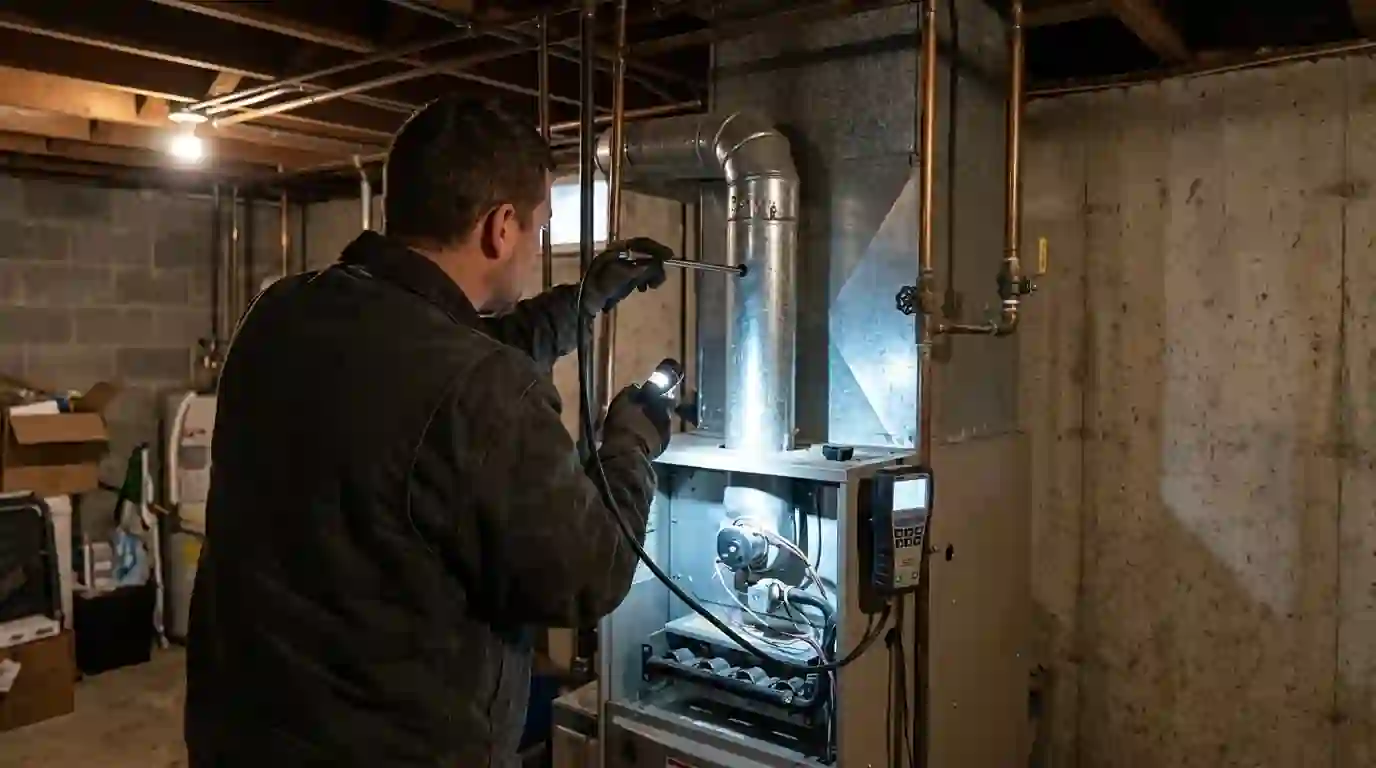
Carbon monoxide testing measures CO in the flue gas and in the living space with a calibrated combustion analyzer, then checks draft, venting and the heat exchanger on every gas appliance. A test typically costs $89 to $169 and takes about an hour. If your alarm is sounding now, leave the house and call 911 first.
Carbon monoxide comes from incomplete burning of natural gas, propane, oil or wood. You can't see it or smell it, and at low levels the symptoms look like the flu: headache, fatigue, nausea, dizziness. A gas furnace, boiler, water heater, range or fireplace that is burning cleanly and venting properly makes very little CO. Problems start when the flame is starved of air, the burners are dirty, or the exhaust has nowhere to go.
A CO alarm tells you there is a problem in the room. Our testing tells you where it is coming from and why. Landcons technicians sample the flue gas of each appliance with a combustion analyzer, measure ambient CO near the equipment and in living areas, and test draft with the house set up for worst case. Then we show you the numbers and explain what each one means, so you are not left guessing about safety.
Carbon monoxide safety steps for your household
Testing is one layer of protection; these habits are the rest.
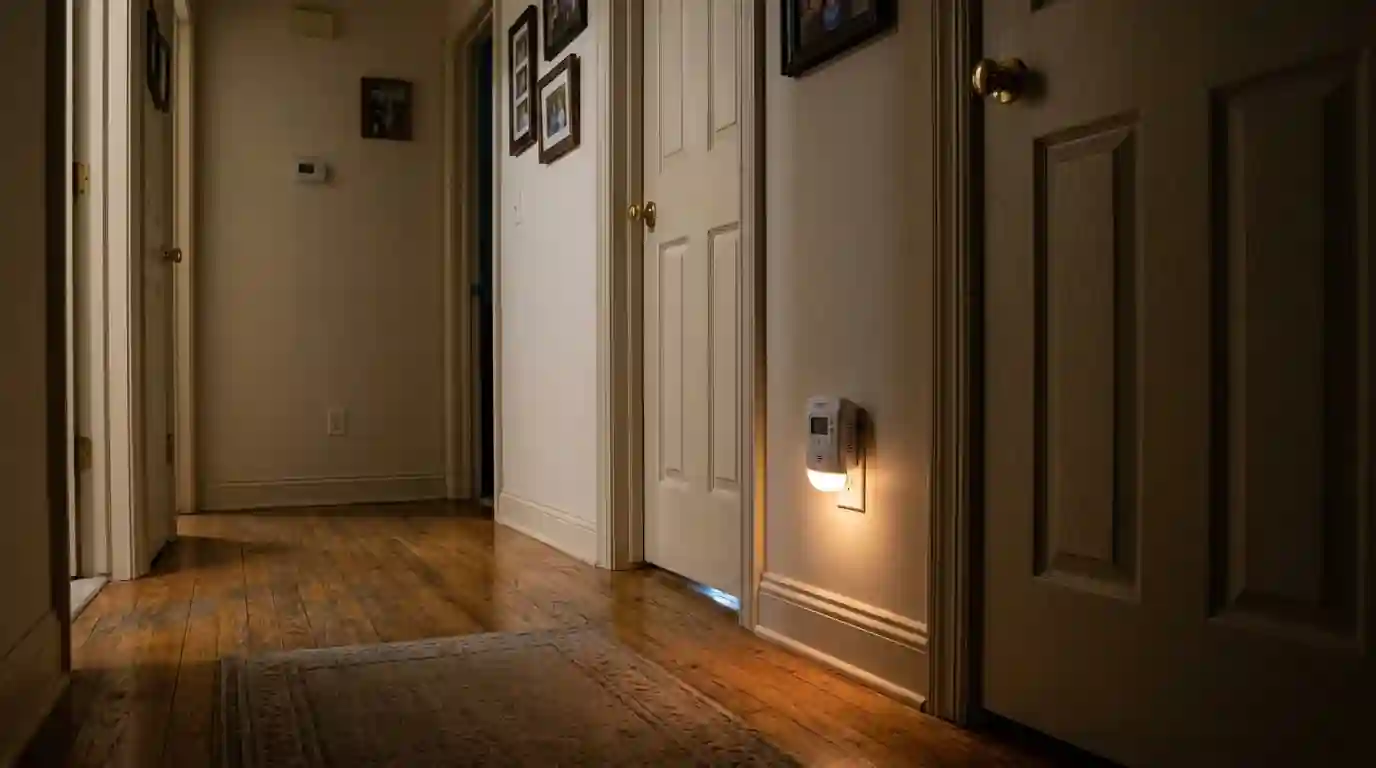
- Install a UL 2034 listed CO alarm on every level and outside each sleeping area.
- Replace CO alarms on the date printed on the back, usually 7 to 10 years.
- If an alarm sounds, get everyone outside first, then call 911.
- Keep furnace intake and exhaust pipes outside clear of snow and ice.
- Never run a generator, grill or car in an attached garage, even with the door open.
- Have gas appliances tested after any remodel or new exhaust fan.
- Do not use a gas oven or range to heat the house.
- Schedule a combustion check with each fall furnace tune-up.
Warning signs of a carbon monoxide problem
Some signs are physical, some are on the equipment. Any one of them is reason enough to have the appliances tested.
Headaches or nausea that ease when you leave
If symptoms fade at work or school and return at home, especially in heating season, treat it as possible CO exposure. Several people or pets feeling ill at once is a stronger warning.
A CO alarm that sounds or shows a peak reading
Many UL 2034 alarms store the highest reading even if they never went into full alarm. A stored peak above 30 ppm is worth a test.
Yellow, lazy or lifting burner flames
Gas burners should show a crisp blue flame with small inner cones. A tall yellow or orange flame often means poor combustion and higher CO output.
Soot or scorch marks around the furnace or water heater
Black streaks near the burner door or rust and melted plastic at the draft hood point to spillage. Combustion gases are coming back into the room.
Heavy condensation on windows near the appliance
Flue gases carry a lot of water vapor. When they spill into the house, nearby windows and walls get wet in winter.
Furnace near the end of its life
Heat exchangers crack with age, and a 20-year-old furnace deserves a closer look. Cracks don't always produce CO, but they need to be found and judged.
Recent remodel, new range hood or new windows
Strong exhaust fans and tighter houses can pull flue gas backward down a water heater vent. Testing under those conditions catches the problem.
What we measure during a carbon monoxide test
Our process follows the same logic as an energy auditor's combustion safety test, appliance by appliance.
Ambient CO check on arrival
We walk in with a calibrated meter and read CO in the entry, living areas and near each appliance. If ambient levels are high, we ventilate and shut down equipment before anything else.
Set the house to worst case
We close exterior doors and windows, turn on the range hood, bath fans and dryer, and set interior doors to make the furnace room as negative as possible. That's when venting is most likely to fail.
Test draft and spillage
On atmospheric water heaters and older furnaces, we check draft at the draft hood with a gauge and a smoke pencil. Spillage that lasts more than a minute or two after startup is a fail.
Sample flue gas with a combustion analyzer
We read CO, oxygen and stack temperature in the flue. Many manufacturers want oxygen-corrected CO under 100 ppm, and readings well above that call for burner cleaning, gas pressure adjustment or repair.
Inspect the heat exchanger and venting
We use a camera and mirror where access allows, and check vent connectors for proper pitch, sealed joints and rust-through. Chimney liners and high-efficiency PVC vents get looked at end to end.
Review alarms and write up findings
We check that you have working CO alarms on each level and near sleeping areas. You get each reading in writing, with any repair options and prices.
Carbon monoxide test pricing
The test itself is inexpensive. Repairs depend on what the readings show.
| Item | Typical range |
|---|---|
| Carbon monoxide and combustion test, all gas appliances | $89 to $169 |
| Night, weekend or holiday response | $149 to $229 |
| Burner cleaning and gas pressure adjustment | $119 to $235 |
| Water heater vent connector replacement | $185 to $435 |
| Chimney liner for an orphaned water heater | $685 to $1,495 |
What moves the price
- Each additional gas appliance adds a little time to the test.
- A cracked heat exchanger often points toward furnace replacement rather than repair on an older unit.
- Chimney condition and height decide whether a liner or a power vent is the better fix.
- After-hours calls are priced higher than daytime visits.
These are typical ranges. The actual price depends on the number of appliances and what our readings find during the visit. See every range in one place in our HVAC price guide.
Why CO testing matters in Allen County homes
Furnaces in this area carry the load for six or seven months a year, and many basements also hold an atmospheric gas water heater sharing an old masonry chimney. In North Anthony, Indian Village and other neighborhoods built before 1950, those chimneys were sized for coal or early gas furnaces. When a homeowner swaps the old furnace for a 95 percent unit that vents through PVC, the water heater is left alone in an oversized, cold flue that may draft poorly. That orphaned water heater is one of the most common CO findings we see.
Snow adds a local twist. About 30 inches fall in a typical winter, and high-efficiency furnace intake and exhaust pipes on the side of the house can drift over or ice up. A blocked exhaust usually shuts the furnace off on its pressure switch, but a blocked intake or a partly iced vent can affect combustion. Rural homes on propane in DeKalb, Whitley and Adams counties should get the same checks, since propane appliances produce CO the same way natural gas does.
Brands we work on
We service Carrier, Trane, Lennox, Goodman, Rheem and every other major make, plus WaterFurnace geothermal units built here in Fort Wayne.
Areas we cover for this service
We run this work across Fort Wayne and the towns around it. These are the places we are called to most; if your town is not listed, call and ask.
Carbon Monoxide Testing questions we hear often
What should I do if my carbon monoxide alarm goes off?
Get everyone, including pets, outside into fresh air right away and call 911 or the gas utility emergency line from outside. Don't open windows to clear it first, and don't go back in to find the source. Once the fire department clears the house, call us and we'll test every appliance to find the cause before you use them again.
What CO reading in a furnace flue is considered unsafe?
There's no single number for every appliance, but many manufacturers and industry guidelines treat oxygen-corrected CO above 100 ppm in the flue as a reason to adjust or repair, and above 400 ppm as a reason to shut down. Any measurable CO in living spaces from an appliance is a concern. We read both and explain what yours mean.
Can a cracked heat exchanger cause carbon monoxide in my home?
It can, though not every crack leaks CO into the airstream. The danger depends on where the crack is, how much pressure difference there is, and how clean the flame burns. We look at the crack, test flame behavior when the blower starts and measure CO at the supply registers. A confirmed crack on most furnaces means replacement.
Are plug-in CO alarms good enough or do I need carbon monoxide testing too?
You need both. Alarms protect you around the clock but only warn once levels rise in the room. Testing finds problems at the appliance before they reach that point, like a water heater spilling on startup or burners making high CO. UL 2034 alarms on each level plus an annual combustion test is the setup we recommend.
Do propane appliances need carbon monoxide testing in rural Allen County?
Yes. Propane furnaces, water heaters, ranges and space heaters produce carbon monoxide the same way natural gas equipment does when combustion goes wrong. Rural homes often have older appliances or unvented heaters in shops and basements. We test propane equipment with the same analyzer and draft checks we use on natural gas homes in the city.