In Southwood Park we repair and replace hot water boilers, service gravity systems that were converted to forced air, and add cooling to period homes with plaster walls and little room for ducts. Typical calls are cold radiators, noisy circulators, uneven heat on the second floor and owners ready to replace window AC units. We answer the phone 24/7.
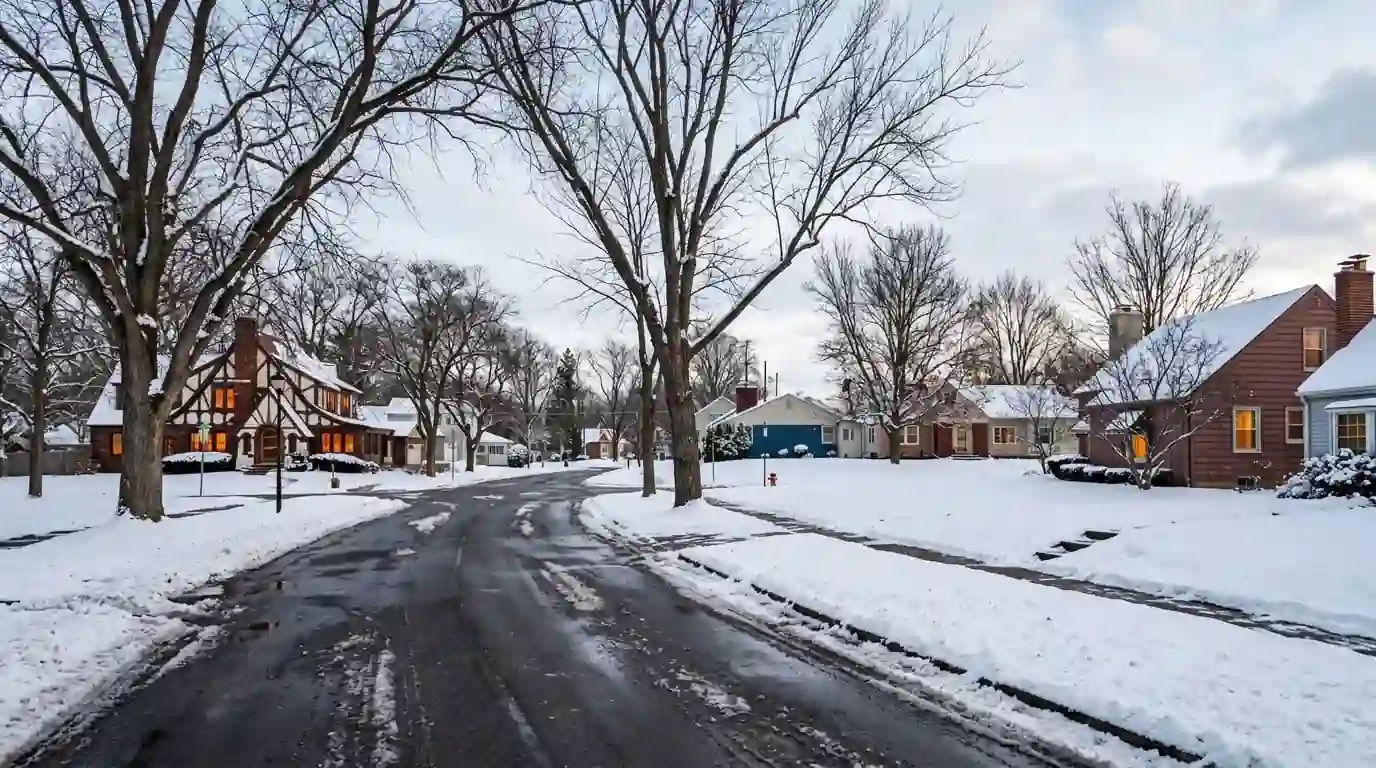
Southwood Park is a south-central historic district of curving streets lined with Tudor Revival and Colonial Revival homes, close to Foster Park. Most went up between the 1920s and the 1940s, when coal and then oil boilers were standard and gravity warm air furnaces were the modern choice. Many of those original systems shaped the house: radiators under the windows, big floor grilles, thick plaster walls and no thought given to air conditioning.
Today the homes here split roughly into two groups. Some still heat with a hot water boiler and cast iron radiators, often on a newer boiler. Others had the gravity furnace replaced with a forced air unit that reuses the oversized original ducts, which works on the first floor and less well upstairs. Landcons works on both kinds, and we take care around the woodwork, plaster and floors that make these houses worth living in.
Radiators, converted gravity ducts and steep Tudor rooflines
Hot water boiler systems are quiet and even when they work right. Trouble starts with air trapped in radiators, a failing circulator pump, a waterlogged expansion tank or a zone valve stuck closed. Older cast iron boilers are slow to warm and wasteful compared to a modern unit, so many owners eventually replace the boiler while keeping every radiator in place. That keeps the look of the house and the comfortable radiant heat.
Converted gravity homes have a different set of trade-offs. The original ducts are large round or rectangular pipes sized for slow, warm convection, and they rarely reach upper rooms tucked under steep Tudor gables. Returns are often a single floor grate. For cooling, a high-velocity small-duct system or ductless heads fit through closets and attic spaces without opening plaster walls, which is usually the cleanest choice.
Service requests that come in from near Foster Park
Older heating systems give clear signs when they need attention. These are the ones we hear about most in this district.
Cold radiators on the second floor
Trapped air is the common cause, along with low system pressure. We bleed the radiators, check the fill valve and expansion tank, and confirm the circulator is moving water.
Banging or gurgling pipes
Air in the system or a failing expansion tank causes noise as water heats and expands. We purge the air and replace the tank if it has lost its charge.
Replacing an old boiler
We size the new boiler from the radiators actually in the house, not from the old boiler's label, which was often oversized. A high-efficiency condensing boiler may also need a new venting path.
Weak heat upstairs on a converted system
Upper rooms on a converted gravity system often have no dedicated return. We look at adding returns and adjusting the blower before suggesting anything bigger.
Adding central air without tearing into plaster
We plan small-duct or ductless routes through closets, attics and chases, then show you where every outlet will go before any cutting begins.
Costs to expect in a south-central historic home
Typical boiler repairs, such as circulator pumps, zone valves, expansion tanks and relief valves, fall between $245 and $895. A high-efficiency boiler replacement typically runs $7,985 to $14,495, depending on size and venting. A small-duct central air system in a period home is usually $9,485 to $16,895. These are typical ranges, and the real price depends on the visit. We work tidily, lay drop cloths and protect floors and trim.
For homes that also have a gas water heater sharing the old chimney, we check its draft whenever we change the boiler venting.
Southwood Park questions
Can a Southwood Park home keep its radiators with a new boiler?
Yes, and most owners do. Cast iron radiators last for generations. We replace the boiler, pumps and controls and keep the existing piping and radiators, bleeding and balancing the whole system after the swap. Radiant heat from radiators is one of the reasons people love these houses.
How do you add air conditioning to a Southwood Park Tudor without ducts?
Small-duct high-velocity systems run flexible tubing through closets and attic spaces to small round outlets, and ductless mini-splits mount a head in each room with a line set to the outdoor unit. We walk the house with you and choose the option that fits its layout and plaster.
Why is my Southwood Park radiator cold at the top?
That almost always means air is trapped in it. Bleeding the radiator lets the air escape so hot water can fill it. If it happens again quickly, the system may have a leak, low pressure or a failing expansion tank, and we can trace the cause.
Do you handle boiler emergencies in Southwood Park overnight?
Yes. Our line is answered 24/7, and we dispatch technicians for no-heat boiler calls at any hour. While you wait, check that the boiler has power and that the pressure gauge reads somewhere near 12 to 15 psi.