How the estimate is worked out
Fort Wayne sees roughly 6,000 heating degree days in a normal year, which is why the furnace carries most of the load here. The calculator starts from about 0.40 therms of delivered heat per square foot per year for a house built from 1980 to 1999, then scales it up for older homes, which leak more air, and down for newer ones.
That heat need is divided by the efficiency of each furnace to get the gas it burns, then multiplied by your price per therm. A furnace rated 80% AFUE turns 80 cents of every gas dollar into heat in the house; a 96% furnace turns 96 cents into heat.
What the number does not include
- Electricity for the blower motor. Variable-speed motors use much less than older ones, which adds to the savings.
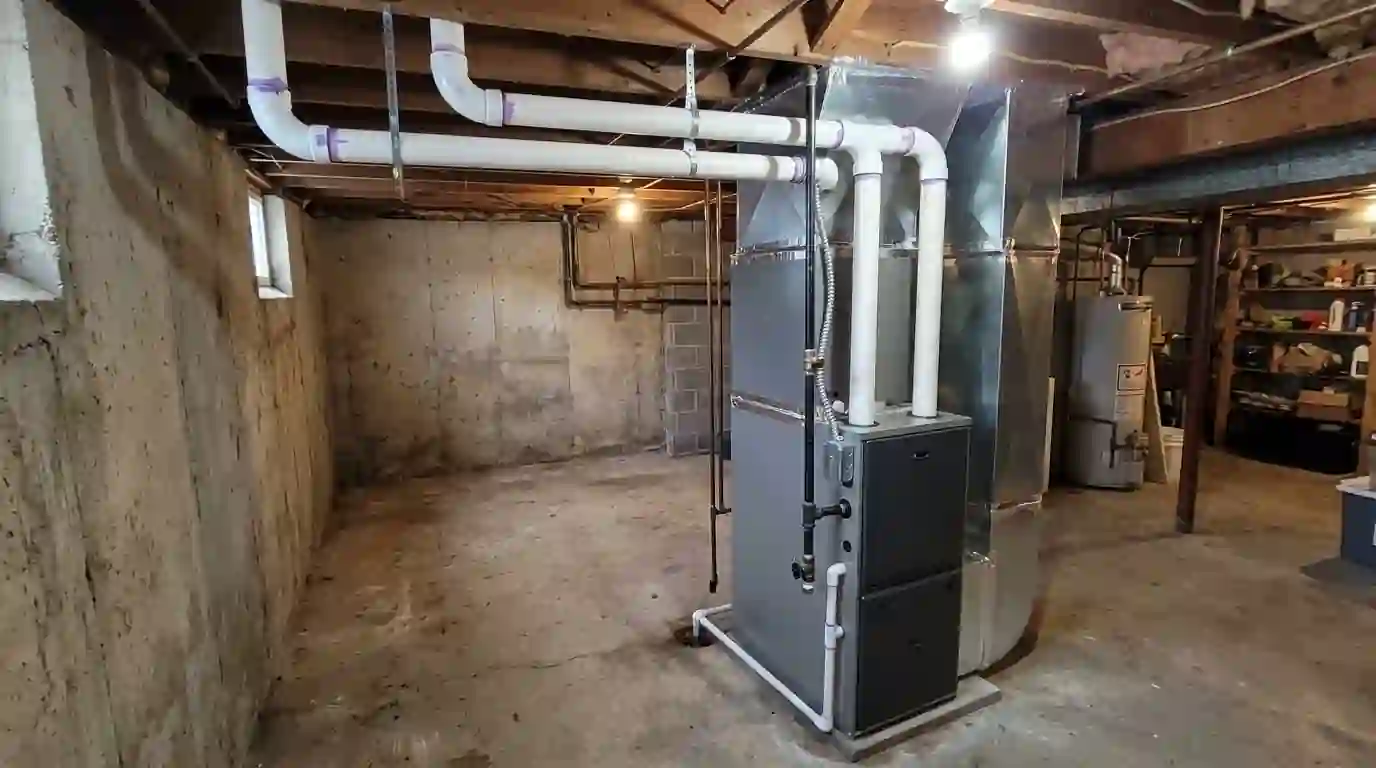
- Installation cost. A 95%+ AFUE furnace replacement typically runs $4,385 to $8,945 here, including PVC venting and a condensate drain.
- Utility rebates from NIPSCO, which change from year to year. We will tell you what is current when you call.
- Comfort. Two-stage and modulating furnaces run longer at low fire, which evens out temperatures between floors.
Questions about the calculator
How accurate is the Landcons furnace savings calculator?
It is a planning estimate. It assumes a northeast Indiana house needs about 0.40 therms of delivered heat per square foot per year, adjusted for the age of the house. Your real use depends on insulation, air sealing, thermostat settings and the winter.
Where do I find my gas price for the furnace calculator?
Divide the total on a winter NIPSCO bill by the therms used that month. That gives an all-in price per therm including delivery charges, which is the right number to use here.
Does a 96% furnace always make sense in a Fort Wayne home?
Not always. If the house is small, well insulated and the current furnace is a healthy 80% unit, the savings may take many years to pay back. A high-efficiency furnace also needs PVC venting and a condensate drain, which adds cost in some basements.