We repair, replace and maintain furnaces, central air, boilers, heat pumps, ductless systems and water heaters in every Fort Wayne neighborhood, from the downtown historic districts to the newer subdivisions on the north and southwest sides. The calls we take most are no heat, short cycling, warm air from the vents and rooms that never get comfortable. Our phone is answered 24/7, holidays included.
The Summit City grew outward from the spot where the St. Marys and St. Joseph rivers join as the Maumee, and its heating systems grew the same way. Close to the confluence you find 1840s through 1930s houses with radiators and converted gravity furnaces. Ride a few miles out and the basements hold post-war furnaces on their second or third replacement. Keep going to Aboite or the north side and the equipment is a 1990s or 2000s system in a finished basement.
That range is why we ask a few questions before we send a technician. Knowing the age of the house, whether it heats with a boiler or a furnace, and whether the upstairs has ductwork tells us which parts to load on the truck. Landcons runs out of an office at 121 W Wayne Street, right downtown, and we answer around the clock. Whether it is a cracked heat exchanger near Lakeside or a frozen coil in St. Joe, you get the same plain answer about what failed and what it costs.
How the age of your house decides what is in the basement
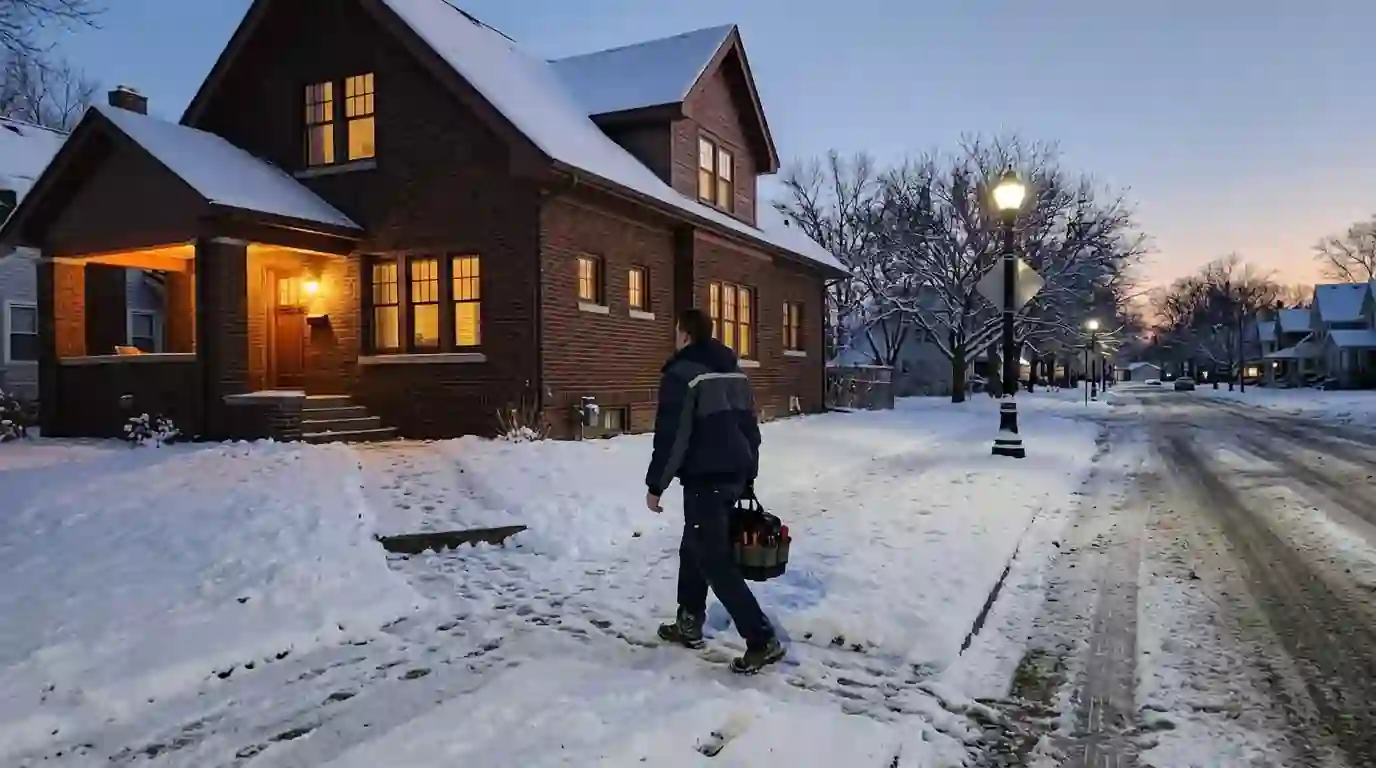
The oldest homes sit in the historic districts: West Central, Forest Park, Southwood Park, Lakeside and Wildwood Park. Many still heat with steam or hot water boilers, and plenty of others had a gravity furnace converted to forced air decades ago. Those conversions often left the second floor without supply ducts and the whole house short on return air. Cooling usually means window units, a small-duct high-velocity system or ductless heads, because cutting new chases through plaster is rarely the best answer.
Post-war ranches with full basements fill much of the north, east and south sides, in places like Northcrest, Georgetown, Waynedale and Indian Village. Their duct layouts were drawn for furnaces that have since been swapped once or twice, so airflow problems are common. Farther out, the 1970s to 2000s subdivisions in Aboite, Pine Valley and St. Joe have two-story floor plans, bigger square footage and original equipment that is now aging out all at once.
What homeowners across the city call us about most
These six problems account for most of our phone calls from October through April and again once the summer humidity settles in.
No heat on the coldest nights
Failed igniters, dirty flame sensors, stuck pressure switches and tripped limit switches cause most no-heat calls. Our technician carries the common parts, so many of these are fixed on the first visit.
AC running but blowing warm
A dead capacitor, a refrigerant leak or a coil packed with cottonwood and dust is usually behind it. We test before we add refrigerant, because topping off a leak only delays the next breakdown.
Boiler and radiator trouble
Cold radiators, banging steam pipes and circulator pumps that hum but won't move water are routine in the older districts. We bleed, balance and repair before talking about replacement.
Hot upstairs, chilly basement
Two-story homes and converted older houses often have one return for the whole second floor. Balancing dampers, added returns or a zoning system can close a gap of several degrees.
Repair or replace an aging system
Furnaces installed in the 1990s are reaching the end of their service life across the city. We give you a repair price and a replacement range side by side so the choice is yours.
Carbon monoxide and venting worries
Allen County homes keep windows shut half the year, so a cracked heat exchanger or a blocked flue matters. We run combustion and CO tests on furnaces, boilers and water heaters.
Working from downtown out to the edges of Allen County
Our office is a short walk from Promenade Park and the riverfront, which puts every part of the city within easy driving distance. We cover the Electric Works redevelopment on Broadway and the streets around it, the neighborhoods near Parkview Field and Lincoln Tower, and every ZIP from 46802 through 46845. When you call, a person answers, asks what the system is doing and gives you a realistic arrival window instead of a vague promise.
Electricity here comes from Indiana Michigan Power and natural gas from NIPSCO, and both run rebate programs on qualifying equipment that change from year to year. We will tell you what is current when you are pricing a replacement. Allen County also sits in EPA radon zone 1, so homes that have been sealed up tight sometimes benefit from an ERV or HRV, which we can size and install alongside a new furnace.
Fort Wayne neighborhoods with their own page
Fort Wayne questions
How quickly can a technician reach a no-heat call in Fort Wayne?
We answer the phone 24/7 and send the next available technician. Arrival depends on the hour, the weather and how many homes lost heat that night, so we give you an honest window on the call. While you wait, check that the furnace switch is on, the filter is not clogged and the thermostat has fresh batteries.
Which Fort Wayne neighborhoods and nearby towns does Landcons serve?
All of them. We work in the historic districts near downtown, the post-war ranch neighborhoods on the north, east and south sides, and the newer subdivisions in Aboite, Pine Valley and St. Joe. Outside the city limits we cover the rest of Allen County plus DeKalb, Whitley, Huntington, Wells, Adams, Noble and Steuben counties and Warsaw.
What does a typical furnace replacement cost in Fort Wayne homes?
A standard gas furnace replacement in a city home typically runs about $3,875 to $7,945. Two-stage or variable-speed models, new venting, a chimney liner or duct changes push it higher. Those are typical ranges only; the real price depends on what our technician finds at the visit, and we put it in writing before any work starts.
Are there utility rebates for new HVAC equipment in the Fort Wayne area?
Indiana Michigan Power and NIPSCO both offer rebate programs on qualifying furnaces, heat pumps, air conditioners and thermostats, but the amounts and rules change from year to year. When you call about a replacement, we check which programs are open and tell you which equipment qualifies before you decide.