On the east side around Georgetown we repair furnaces and central air in 1960s and 1970s ranches and split-levels, and we correct the airflow problems those layouts create: poor returns, uneven levels and ducts that leak into crawl spaces. Common calls include a cold family room, a hot bedroom level and a furnace that cycles too often. We answer 24/7.
Georgetown grew up around Georgetown Square on East State Boulevard during the 1960s and 1970s, and the housing reflects that era: brick ranches, plenty of split-levels and a few bi-levels. The split-level was popular because it fit more house on a modest lot, but it is a tricky shape to heat and cool. A half flight up sits the bedroom level, a half flight down sits the family room, and the furnace is somewhere in between.
That staggered layout means one thermostat on the main floor reads one level well and the others poorly. In winter the lower family room stays chilly, while in summer the bedrooms over it run warm. Most original duct systems here had few returns, often just one big grille on the main level, so air struggles to circulate. When Landcons works in Georgetown, we bring a static pressure gauge and a thermometer for every room, because the fix starts with measuring.
Why split-levels near East State Boulevard run uneven
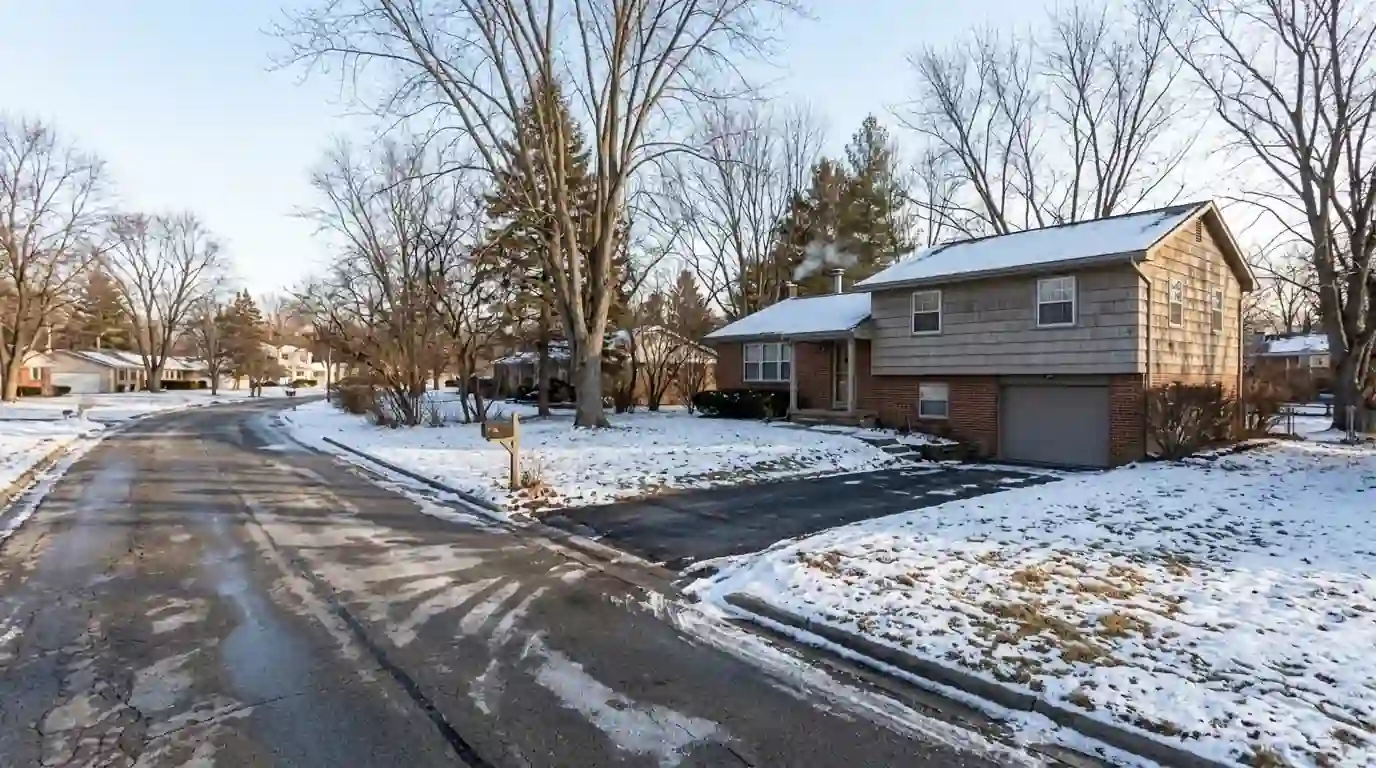
In many of these houses, the furnace sits on the lowest level or in a partial basement, with ducts running up through walls to the bedrooms and out under the slab or through a crawl space to the family room. The upper level depends on long vertical runs. The lower level often has supply registers but no return at all, so cool air settles there and stays put. Doors closed at night cut bedrooms off from the single return and pressurize them.
Duct leakage adds to the problem. Crawl space ducts from the 1960s were often joined with cloth tape that has long since dried out and fallen off. Every leaky joint dumps heated or cooled air where nobody lives. Sealing with mastic, adding returns on each level and fitting balancing dampers on the main branches are often worth more than a bigger furnace or AC.
Georgetown problems we diagnose most weeks
Each one ties back to the age and layout of these houses.
Lower family room stays cold
We check whether that level has a return and whether its supply ducts are leaking into a crawl space. Adding a return low on the wall and sealing those runs usually warms the room several degrees.
Bedroom level hot in summer
Cool air from the main trunk rarely makes it up with full force. We measure airflow at each bedroom register, adjust dampers and look at adding a return high on that level.
Furnace short cycling
A furnace that runs a few minutes and stops may be oversized, overheating from low return air or misreading a dirty flame sensor. We test each before changing anything.
Dust and stale air
Leaky return ducts pull air from crawl spaces and wall cavities, carrying dust into the house. Sealing those returns and upgrading to a media filter cuts the dust you see on furniture.
Replacing a second-generation furnace
Many Georgetown homes are on their second furnace, often from the late 1990s. When we replace it, we fix the return side at the same time so the new unit is not strangled.
Typical costs for east side airflow work
Duct sealing in a split-level, where we can reach the joints, typically runs $485 to $1,295. Adding a return air run on one level is usually $395 to $945, and a two-zone damper system for an upper and lower level typically runs $1,885 to $3,295. These are typical ranges, and the real price depends on access and what we find. We put the number in writing before any work begins.
Airflow work pairs well with a fall tune-up, when we already have the furnace open and the blower running.
Georgetown questions
Can zoning fix the uneven levels in a Georgetown split-level?
Often, yes. A two-zone system with motorized dampers and a thermostat on each level lets the bedrooms and family room call for heat or cooling separately. We first make sure each level has adequate returns, because zoning works poorly on a starved system.
Why is there no return vent in my Georgetown family room?
Many 1960s and 1970s split-levels were built with one central return on the main level to save cost. It was common practice then. Adding a return to the lower level is usually practical through a wall cavity or from the crawl space.
How long does duct sealing take in a Georgetown home?
Most split-levels take most of a day, depending on how much ductwork is reachable in the crawl space and basement. We test before and after so you can see how much leakage was closed. There is no need to leave the house while we work.
Will you come out to Georgetown at night for a furnace failure?
Yes. We answer the phone 24/7 and dispatch technicians around the clock for no-heat calls on the east side. A person answers, asks what the furnace is doing and gives you an arrival window.