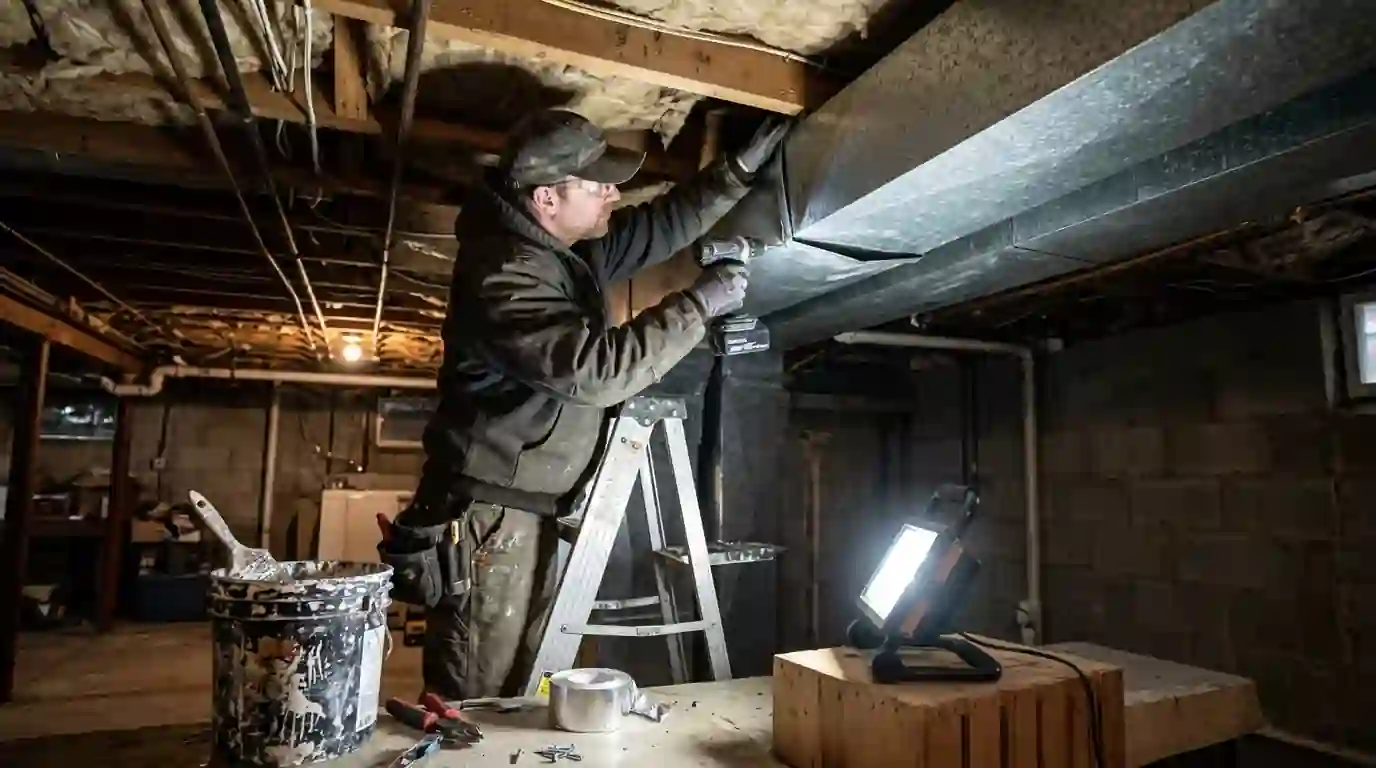
Ductwork repair fixes the specific spots where air is lost or blocked: disconnected joints, crushed flex duct, rusted boots, collapsed returns and dampers stuck shut. We find them with static pressure readings, airflow measurements and a camera. Most repairs cost $245 to $1,185 and are done in a single visit.
Ducts are out of sight, so problems can run for years. A flex run in the attic gets stepped on during a cable install. A basement panning return pulls loose when someone hangs drywall. A boot behind a bedroom register rusts through after a decade of summer condensation. The furnace and AC keep running, but part of the air they make ends up in the attic, crawl space or wall cavity instead of the room.
We start by measuring, not guessing. A static pressure reading tells us if the system is choked, airflow at each register shows which rooms are short, and a camera on a flexible cable lets us see inside runs we can't reach. Landcons fixes what's actually broken and seals it with mastic so the repair lasts. If the measurements show the whole layout is undersized, we'll tell you that too rather than patching around it.
Warning signs of damaged or failing ductwork
Duct problems usually show up as comfort complaints or odd noises before anyone sees the damage.
One room much colder or warmer than the rest
A room that runs 5 or more degrees off from the others often has a disconnected or crushed supply. Check that the register is open first, then call.
Weak airflow at a register you used to feel
A sudden drop at one outlet suggests a joint pulled apart or a damper slipped shut. A slow drop over years points to a flex run sagging or kinking.
Rattling, booming or whistling in the ducts
Booming when the blower starts is often oil-canning sheet metal from high static pressure. Whistling points to a gap or an undersized return grille.
Dust or insulation puffing out of registers
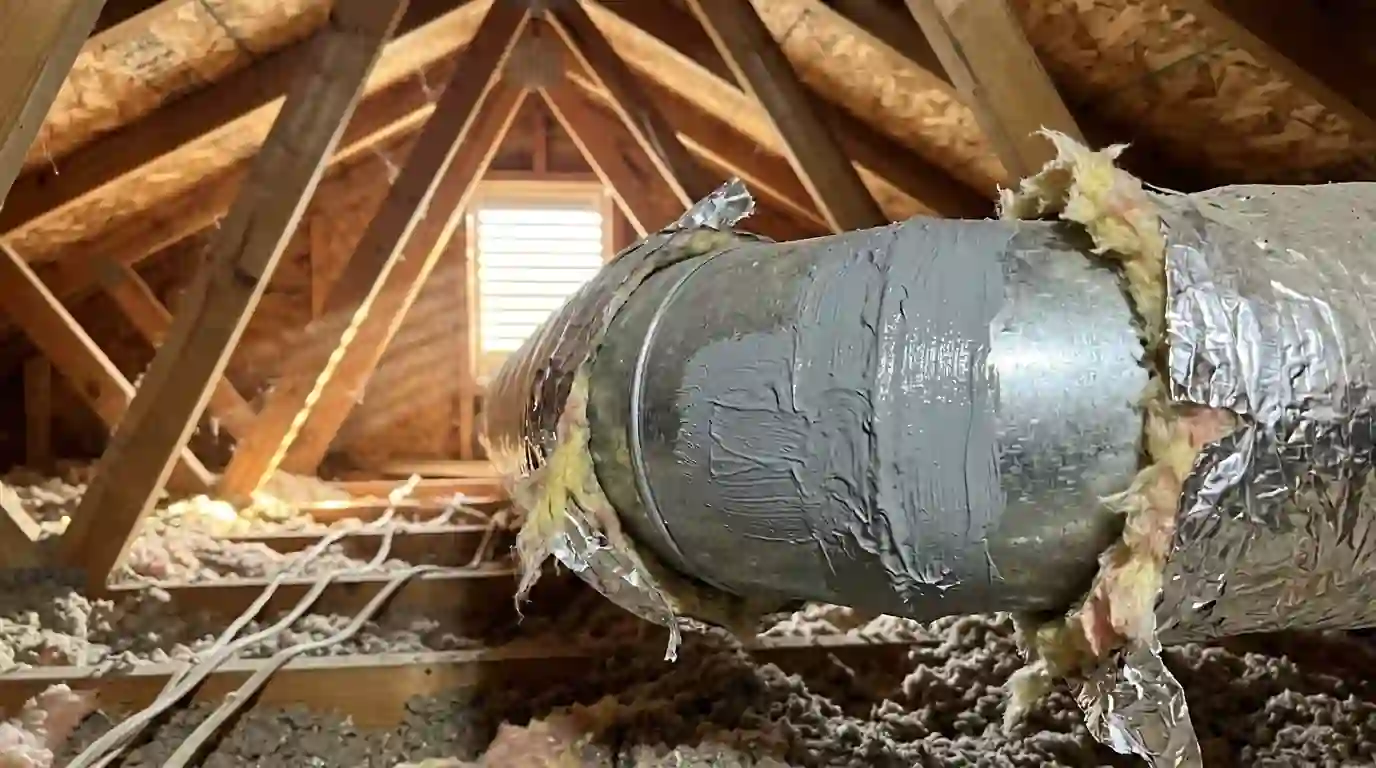
Fiberglass bits or attic dust at a register mean a duct is torn or disconnected in an attic or wall. That air is being pulled from places it shouldn't.
Higher bills with no change in habits
Leaky ducts in an unconditioned attic or crawl space can waste a large share of heating and cooling. Rising bills with steady usage are worth a look.
Condensation or rust on duct surfaces
Sweating supply ducts in a humid basement or attic drip on drywall and rust boots. Missing insulation or a leak is usually behind it.
Furnace overheating or AC coil icing
A crushed return or closed-off section can drop airflow enough to trip the furnace limit switch or freeze the coil. The duct is the cause, not the equipment.
How we track down and repair duct problems
A good duct repair starts with numbers and ends with the same numbers improved.
Read static pressure and airflow
We measure total external static pressure at the furnace and take airflow readings at problem registers. High return-side pressure points to a restricted return, while low supply pressure suggests a big leak.
Trace the run to the trouble spot
We follow the duct from the trunk to the room in the basement, attic or soffit. Where we can't reach, a camera shows disconnected joints, crushed flex or debris.
Reconnect, replace or reroute
Loose joints get reattached with sheet metal screws and draw bands. Crushed flex is replaced and pulled tight with proper support, and bad boots are swapped for new ones.
Seal joints with mastic
We brush water-based mastic over seams and joints, and use UL 181 foil tape where mastic isn't practical. Cloth duct tape is never used, because it dries out and falls off.
Insulate and verify
Ducts in attics and crawl spaces get insulation wrap rated for the location. Then we retake static pressure and airflow so you can see the improvement.
Ductwork repair costs
Most duct repairs fall into a few common price ranges depending on access and materials.
| Item | Typical range |
|---|---|
| Typical duct repair, one to three trouble spots | $245 to $1,185 |
| Replace a crushed or torn flex run | $385 to $795 |
| Rebuild a panned basement return with sheet metal | $485 to $1,185 |
| Duct sealing of accessible ducts | $685 to $2,495 |
| Diagnostic visit with static pressure readings | $89 to $149 |
What moves the price
- Easy basement access costs far less than tight attics or runs behind finished drywall.
- Rigid sheet metal repairs cost more than flex but last longer and leak less.
- Adding insulation in attics and crawl spaces raises the price but stops condensation.
- Drywall patching after we open a ceiling is usually left for a painter or the homeowner.
- Several small leaks spread through the house may make whole-system sealing the better value.
These are typical ranges. The actual price is set once we find the problem and see how hard it is to reach. See every range in one place in our HVAC price guide.
Duct trouble common in Fort Wayne's older and mid-century homes
Many houses in the older central neighborhoods started with gravity furnaces, which used huge round ducts and no blower. When those were converted to forced air, installers often reused parts of the old layout, added short runs and used basement joist cavities as returns. Those panned returns in homes around North Anthony and Lakeside leak at every edge and pull damp basement air. Fixing and sealing them is one of the most common repairs we make in the older parts of the city.
Post-war ranches in Northcrest, Georgetown and Waynedale have a different issue. Their original trunks and branches were sized for smaller, single-speed furnaces, and many have been through two or three equipment changes since. Add finished basements where someone boxed in a run or closed a damper behind drywall, and rooms start losing air. In the attic-ducted bonus rooms of Pine Valley, flex runs sag, crush and lose insulation in summer heat, which is when we get the hot upstairs calls.
Quick checks before you call about duct airflow
Some airflow complaints have simple causes you can rule out in a few minutes.
- Make sure every register in the room is open and not blocked by furniture or rugs.
- Check that return grilles are clear and not covered.
- Look at the filter and replace it if it's packed with dust.
- Find any damper handles on basement ducts and see if one was turned closed.
- Listen for new rattles or rushing air near the furnace while it runs.
- Peek into an accessible attic for flex duct lying flat or disconnected.
- Note which rooms are worst and when, so we can start there.
Brands we work on
We service Carrier, Trane, Lennox, Goodman, Rheem and every other major make, plus WaterFurnace geothermal units built here in Fort Wayne.
Areas we cover for this service
We run this work across Fort Wayne and the towns around it. These are the places we are called to most; if your town is not listed, call and ask.
Ductwork Repair questions we hear often
Is it worth repairing old ductwork or should I replace it?
If the trunk and most branches are solid sheet metal sized for your equipment, repairs and sealing usually make more sense. Replacement becomes the better choice when runs are rusted through in many places, badly undersized for the furnace, or laid out so poorly that rooms can't be balanced. Static pressure and airflow readings help us give you a clear answer.
Can I seal my own ductwork with duct tape?
Standard cloth duct tape is a poor choice for ducts. Its adhesive dries out with heat cycles and the tape peels within a few years. Water-based mastic brushed over joints or UL 181 foil tape holds up for decades. If you want to seal accessible basement joints yourself, mastic is inexpensive and easy to apply, just keep the furnace off until it skins over.
Why does my ductwork make a loud bang when the furnace starts?
That's usually sheet metal flexing as pressure builds, sometimes called oil canning. It often means static pressure is high from an undersized return, a dirty filter or closed registers. Sometimes adding a cross break or bracing quiets the panel. If the bang is new, we check the return side first, since a restriction there also strains the blower.
How long does a typical ductwork repair take?
Most single-room or single-run repairs take two to four hours, including diagnosis and sealing. Rebuilding a basement return or replacing several attic runs can take a full day. We give you a time estimate once we've found the problem, and we keep the heat or air running whenever possible while we work.
Will ductwork repair lower my heating and cooling bills?
It often helps, especially when the leaking ducts run through an unconditioned attic or crawl space, where lost air is truly wasted. Leaks inside a heated basement waste less, but they still pull dusty, damp air into the system. We'll show you before and after airflow readings, but we don't promise a specific savings figure.