Wildwood Park homes on the west side date mostly from the 1910s to the 1930s. We service their boilers, converted gravity systems and the attic duct systems that cool second floors. Typical calls are cold radiators, noisy circulators, attic air handlers that sweat or leak, and bedrooms that never cool. We answer 24/7 and arrive ready for plaster walls and finished woodwork.
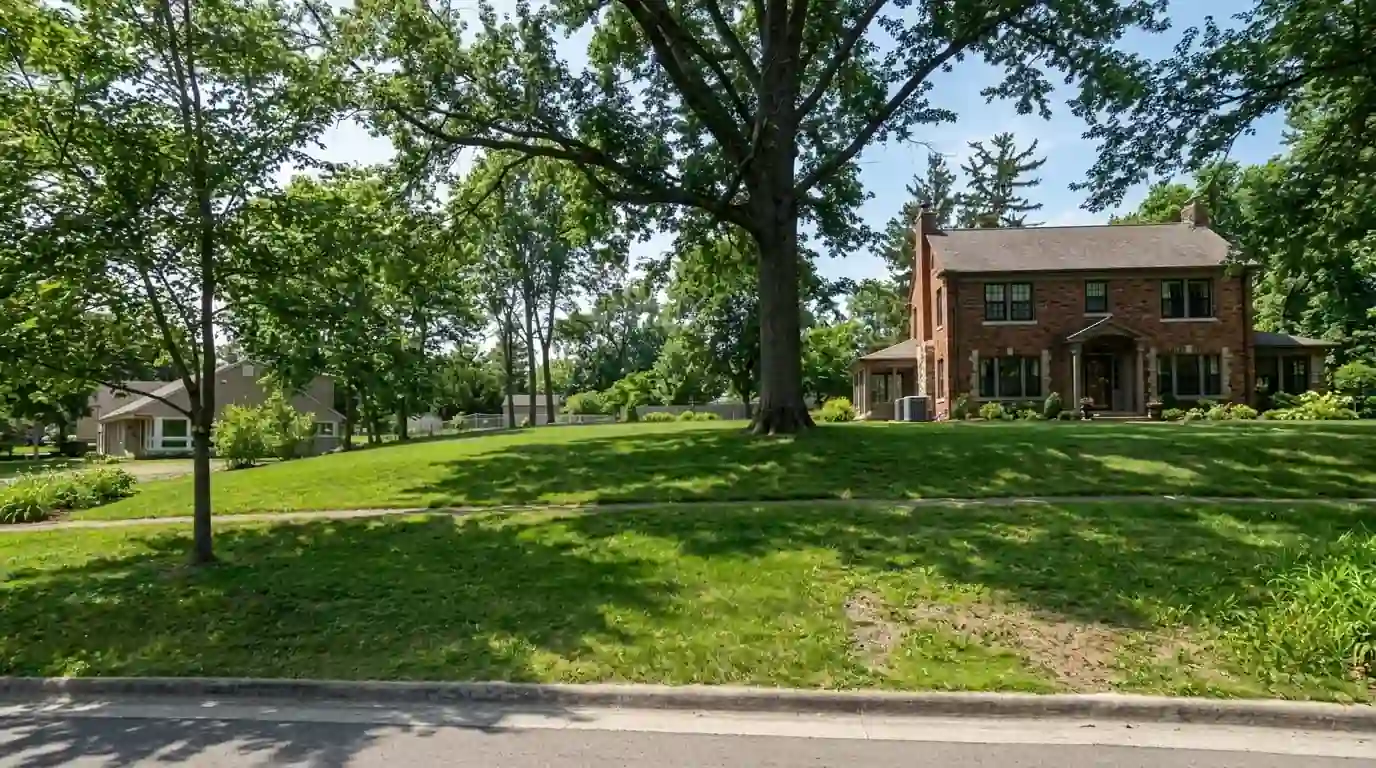
Drive west on West Jefferson Boulevard past Lindenwood Cemetery and the side streets of Wildwood Park open up: larger period houses on deep lots, many with original trim and leaded glass still in place. Owners here tend to care about keeping that character, and that shapes how heating and cooling work gets done. A new system has to fit around stairways, built-ins and plaster, not through them.
Most of these homes started with a boiler or a gravity furnace in the basement. Some still run that boiler, now with a newer burner or a modern replacement in the same spot. Others were converted to forced air years ago, often with only first-floor registers. For cooling, the usual answer has been a separate air handler in the attic feeding the upstairs rooms. We work on all three setups regularly.
Two systems, one house: how Wildwood Park homes are usually set up
The most common arrangement we find is split by floor. Heat comes from a basement boiler through cast iron radiators on both levels, while summer cooling comes from a condenser in the side yard tied to an air handler in the attic. Each part has its own weak spots. The boiler side tends to have aging zone valves, air trapped in upstairs radiators and expansion tanks that have lost their charge. The attic side has ducts running through a space that hits well over 120°F in July.
Converted gravity homes are a different puzzle. The big round ducts that once carried warm air by convection were cut down and fed by a blower, but the returns are often too small and the second floor barely gets heat. Homeowners compensate with space heaters, which is a fire and breaker problem waiting to happen. Fixing it might mean adding a return, balancing dampers, or running a heat pump through the attic system so it heats the upstairs in mild weather.
What brings us to Wildwood Park most often
These come up again and again in the larger west side period homes.
Attic air handler leaking through the ceiling
A clogged condensate line or a rusted drain pan sends water into the plaster below. We clear the line, add a secondary pan with a float switch, and check the coil for ice that points to low refrigerant or poor airflow.
Upstairs bedrooms still warm at night
Attic duct runs lose cooling through thin insulation and leaky joints. Sealing and insulating the attic ducts often drops bedroom temperatures several degrees without touching the equipment.
Radiators cold on one floor
Air locks, a stuck zone valve or a failing circulator are the usual causes. We bleed the system, test the valve motors and confirm the circulator is actually moving water.
Boiler replacement questions
When an old boiler starts leaking, owners want to know whether a high-efficiency condensing boiler will work with their radiators. Often it will, with lower water temperatures and an outdoor reset control, though venting through a masonry chimney needs a liner or a new sidewall vent.
Space heaters tripping breakers
Cold back bedrooms and sunrooms lead to plug-in heaters on old circuits. A ductless head or a short added duct run is a safer permanent answer.
Working carefully in a west side historic neighborhood
Houses in Wildwood Park were built with materials you cannot easily replace, so we plan our routes before we cut anything. Attic and closet chases carry most new runs, and we use drop cloths, floor protection and dust control whenever we open a wall or ceiling. If a radiator has to come off for a valve repair, we cap the lines and protect the floor finish underneath.
Old houses also leak air, and in a January cold snap with nights near 17°F that matters. Before recommending a bigger boiler or furnace, we look at whether the existing one is simply losing heat through open attic hatches and gaps around old windows. Sometimes the right size is smaller than what is there now, which saves fuel every winter after.
Wildwood Park questions
Can a Wildwood Park home keep its radiators and still get central air?
Yes, and many do. The usual approach is an attic air handler serving the second floor, with ductless heads or a small-duct system for the first floor if needed. Your boiler and radiators stay as they are for heat. We map out where ducts can run before quoting so plaster and trim stay intact.
What does attic duct sealing cost in a Wildwood Park house?
Sealing and insulating the attic duct system in these homes typically runs about $685 to $1,845, depending on how many runs there are, how easy the attic is to reach and whether any ducts need replacing. We confirm the price after looking in the attic, since access varies a lot.
Why does my Wildwood Park attic AC drip water into the ceiling?
Usually the condensate drain has clogged with algae or the primary pan has rusted through. In a hot attic the coil makes a lot of water, so even a small blockage overflows fast. We clear the drain, add a float switch that shuts the system off before it overflows, and check the coil.
Do you handle no-heat calls for Wildwood Park boilers overnight?
We do. Landcons answers 24/7, and boiler no-heat calls are common on the west side once the first hard freeze arrives. Tell us the pressure reading on the boiler gauge and whether the burner is firing, and we will start troubleshooting with you on the phone while a technician is on the way.