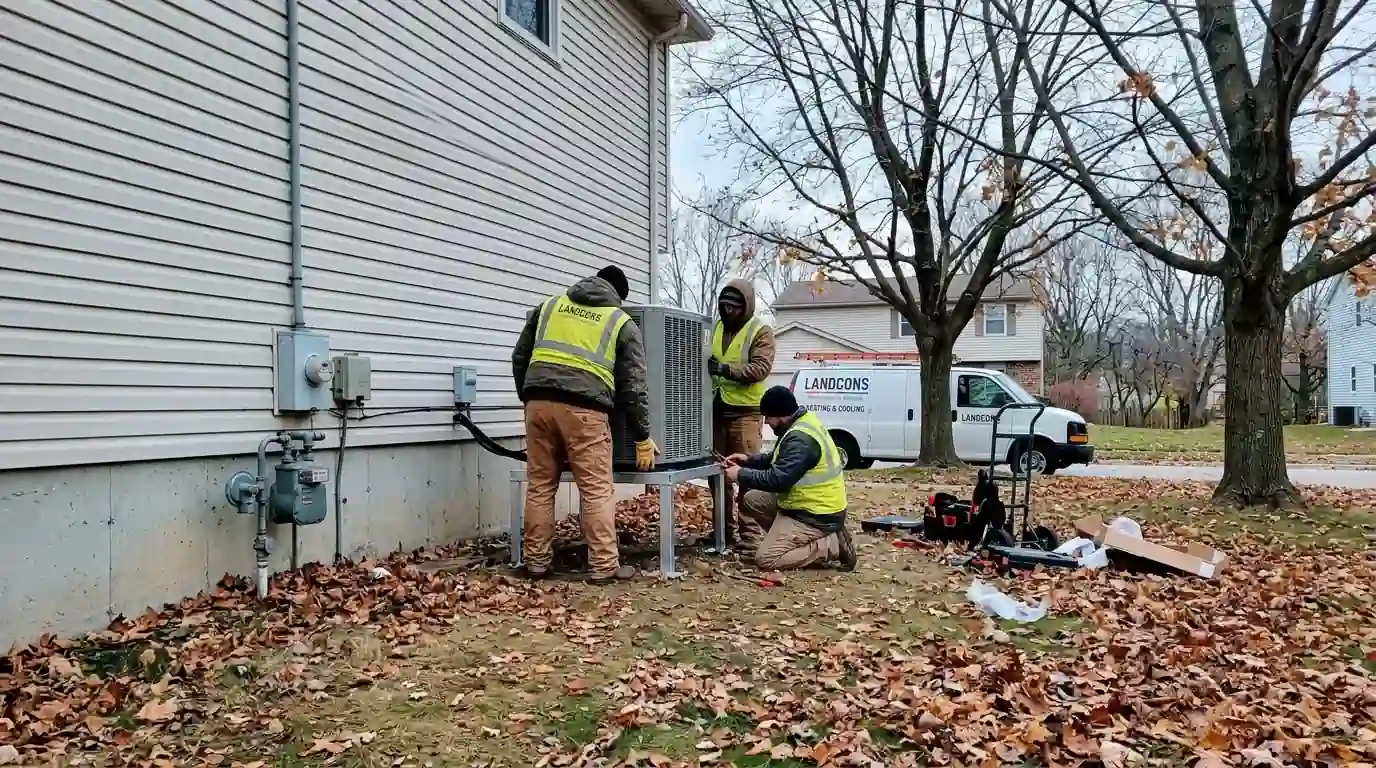
Heat pump installation means replacing an AC or older heat pump with an electric system that both heats and cools, sized by a load calculation and paired with backup heat for the coldest nights. Installed prices here typically run $6,485 to $14,895. Cold-climate inverter models keep heating well below 20°F, and most installs take one to two days.
Heat pump technology has changed a lot in the last decade. The older single-speed heat pumps many people remember lost most of their heating output once outdoor temperatures dropped below freezing, then leaned on electric strip heat. Today's cold-climate models use variable-speed inverter compressors and improved refrigerant circuits that keep producing useful heat well into single digits. Several are rated to run at 5°F with most of their capacity intact. That makes a heat pump a realistic primary heat source for many homes in northeast Indiana, not just a cooling system that helps in shoulder seasons.
The key is the design, not just the box. We size the system from a room-by-room heat loss calculation, check that your ducts can move the higher airflow a heat pump needs, and plan the backup: electric heat strips in the air handler for all-electric homes, or an existing gas or propane furnace for a dual fuel setup. We also review your electrical panel, since a heat pump and its strip heat may need a larger circuit than the old air conditioner had.
Heat pump options for northeast Indiana homes
These are the most common setups we install and where each fits.
| Option | Best for | Keep in mind |
|---|---|---|
| Standard ducted heat pump with strip backup | Mild-winter homes or budget AC replacements | Leans on costly strip heat below about 30°F |
| Cold-climate inverter heat pump | All-electric and propane homes wanting a primary heat source | Higher price; needs good duct airflow |
| Dual fuel: heat pump plus gas furnace | Homes with a healthy furnace and NIPSCO gas | Two systems to maintain; setup of switchover temperature matters |
| Ductless mini-split heat pump | Older homes, additions, rooms without ducts | Wall units are visible; one head per room or zone |
| Geothermal heat pump | Larger lots and long-term owners | Much higher upfront cost for the ground loop |
Is a heat pump the right fit for your home?
A heat pump works well in many homes here, but not every one. These are the situations where it makes the most sense.
Your central AC is due for replacement
If the AC is 12 to 15 years old, a heat pump costs only modestly more and adds efficient heating. You get a new cooling system and a second heat source at once.
You heat with propane or electric baseboard
Rural homes on propane and older electric-heat homes see the biggest drop in heating cost. A heat pump usually beats both fuels on cost per unit of heat for much of the season.
Your furnace is fine but you want lower bills
Adding a heat pump to a working gas furnace creates a dual fuel system, using electricity in mild weather and gas on the coldest nights.
You are building an addition or finishing a basement
New space often needs both heat and cooling. A heat pump, ducted or ductless, can serve it without overloading the existing furnace.
Your home is reasonably tight and insulated
Heat pumps deliver lower-temperature air for longer cycles, so they shine in homes without major drafts. Leaky older homes may need air sealing first to feel comfortable.
Your panel has room or can be upgraded
A heat pump with backup strips may need a 60 amp or larger circuit. Our estimate checks the panel so there are no surprises.
You want one system for both seasons
A single outdoor unit replaces both the AC condenser and much of the furnace's work. One maintenance visit each spring and fall covers it.
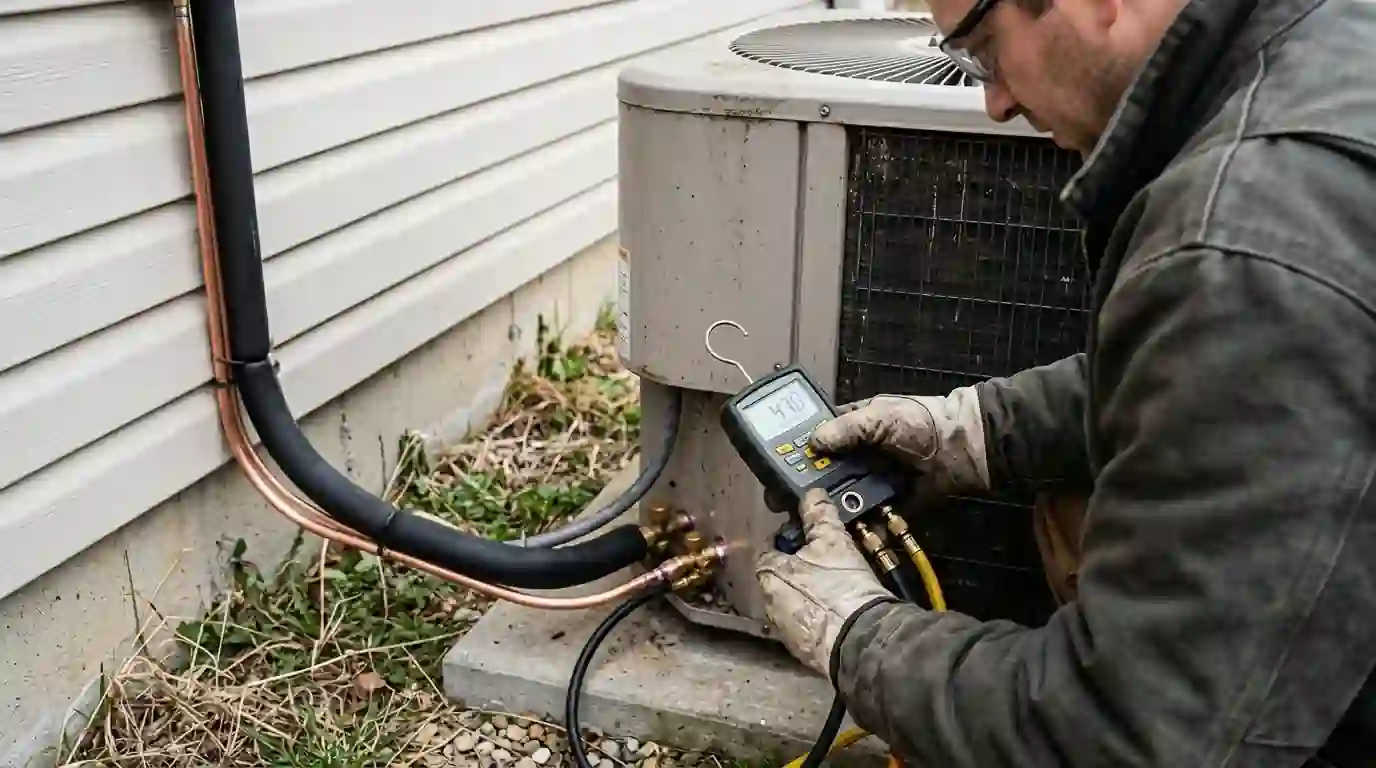
How a heat pump installation comes together
Most replacements take one to two days. Here is how we approach it.
Heat loss calculation and balance point
We calculate the home's heating load at a design temperature appropriate for this area and find the balance point where the heat pump alone can no longer keep up. That determines the equipment size and how much backup heat you need.
Duct and airflow review
Heat pumps need roughly 350 to 450 cubic feet per minute of airflow per ton. We test static pressure and check return sizing so the new system does not run noisy or underheat.
Electrical and pad preparation
We confirm breaker capacity and wire size, and set the outdoor unit on a raised stand or pad so defrost water drains and snow does not bury the coil.
Set equipment and run new line set
We install the outdoor unit and the indoor air handler or coil, then run new insulated copper line set where the old one is undersized or contaminated. Flushing old lines is an option only when they are in good condition and sized correctly.
Pressure test, evacuate and charge
Brazed joints are tested with nitrogen, then the system is pulled into a deep vacuum measured with a micron gauge. We charge the refrigerant by weight and confirm with superheat and subcooling readings.
Controls, defrost and startup
We configure the thermostat for heat pump staging and backup lockout temperatures, force a defrost cycle to verify it, and walk you through what normal winter operation looks and sounds like.
Planning heat pump heat around Allen County winters and power rates
The question we hear most is whether a heat pump keeps up in January. With nights averaging about 17°F and occasional subzero stretches, the answer is that a cold-climate model will carry most of the season by itself, and backup heat covers the remaining hours. For an all-electric home, that backup is usually 10 to 15 kilowatts of strip heat in the air handler. For a home with gas or propane, the furnace becomes the backup and the thermostat switches between them at a set outdoor temperature. Either way, we size the backup so a frigid week never leaves you cold.
Operating cost depends on fuel prices. Indiana Michigan Power supplies electricity across most of the region and NIPSCO supplies natural gas, and each runs rebate programs that change from year to year. When you call, we will tell you which programs are current for heat pumps and what they require. Homes on propane, common on rural lots outside the city, tend to see the biggest savings because propane heat is usually the most expensive per unit. In older central neighborhoods without ductwork, a ductless heat pump is often the more practical route.
What heat pump installation costs in this area
Price depends mostly on capacity, efficiency tier and how much ductwork or electrical work the home needs.
| Item | Typical range |
|---|---|
| Ducted heat pump system replacement | $6,485 to $14,895 |
| Heat pump added to an existing furnace (dual fuel) | $5,885 to $11,495 |
| Ductless mini-split heat pump, single zone | $3,485 to $6,295 |
| Ductless mini-split heat pump, multi-zone | $7,985 to $18,495 |
| Duct repair to support heat pump airflow | $245 to $1,185 |
| Smart thermostat with heat pump staging | $189 to $549 |
What moves the price
- Cold-climate inverter heat pumps with higher HSPF2 ratings cost more than standard single-stage models but hold capacity better in deep cold.
- Electrical panel or circuit upgrades for strip heat add cost if the existing service is near its limit.
- A new line set is needed when the old one is undersized, damaged or contaminated from a burned-out compressor.
- Homes needing larger return ducts or a new air handler location take more labor.
- Utility rebate programs from I&M or NIPSCO may offset part of the cost when they are active.
These are typical ranges for this area, not quotes. Your written price follows the load calculation and a look at your ducts and electrical service. See every range in one place in our HVAC price guide.
What to ask about before you sign a heat pump quote
These questions separate a heat pump that works in January from one that disappoints.
- What is the rated heating capacity at 5°F, not just at 47°F?
- What are the HSPF2 and SEER2 ratings of the matched system?
- What backup heat is included, and at what outdoor temperature does it engage?
- Will the outdoor unit sit on a raised stand above snow line?
- Is the line set being replaced, and if not, how is it being cleaned and tested?
- Does the thermostat support heat pump staging and outdoor temperature lockouts?
- Does the electrical circuit and breaker need upgrading?
Brands we work on
We service Carrier, Trane, Lennox, Goodman, Rheem and every other major make, plus WaterFurnace geothermal units built here in Fort Wayne.
Areas we cover for this service
We run this work across Fort Wayne and the towns around it. These are the places we are called to most; if your town is not listed, call and ask.
Heat Pump Installation questions we hear often
Can a heat pump installation be my only heat source in Fort Wayne?
Yes, with a cold-climate model and properly sized electric backup. The heat pump carries most of the season and the strip heat covers defrost cycles and the coldest nights. For homes with gas, many owners prefer keeping the furnace as backup instead, since a dual fuel setup lets the system choose the cheaper fuel.
How long does a heat pump installation take?
A straightforward replacement of an AC and air handler or coil usually takes one long day. If the job adds a new air handler, running a new line set through finished space, or upgrading electrical service, plan on two days. Ductless installations vary with the number of indoor heads.
Will a heat pump installation lower my bills if I heat with propane?
In most cases, yes. Propane is typically one of the more expensive ways to heat a home in this region, and a cold-climate heat pump produces heat for considerably less per unit for most of the season. Keeping the propane furnace as backup for the coldest nights often gives the best balance of cost and comfort.
What efficiency ratings matter for heat pump installation in a cold climate?
Look at HSPF2 for heating efficiency and SEER2 for cooling. More important for this area is the capacity the unit keeps at 5°F or 17°F, which shows how well it heats on a January night. A high SEER2 number alone says little about winter performance.
Does heat pump installation require new ductwork?
Usually not, but heat pumps need more airflow than many older furnaces delivered. If static pressure is high or returns are undersized, adding a return or enlarging a trunk may be needed to avoid noise and weak heat. We test the ducts before quoting so this is part of the price.