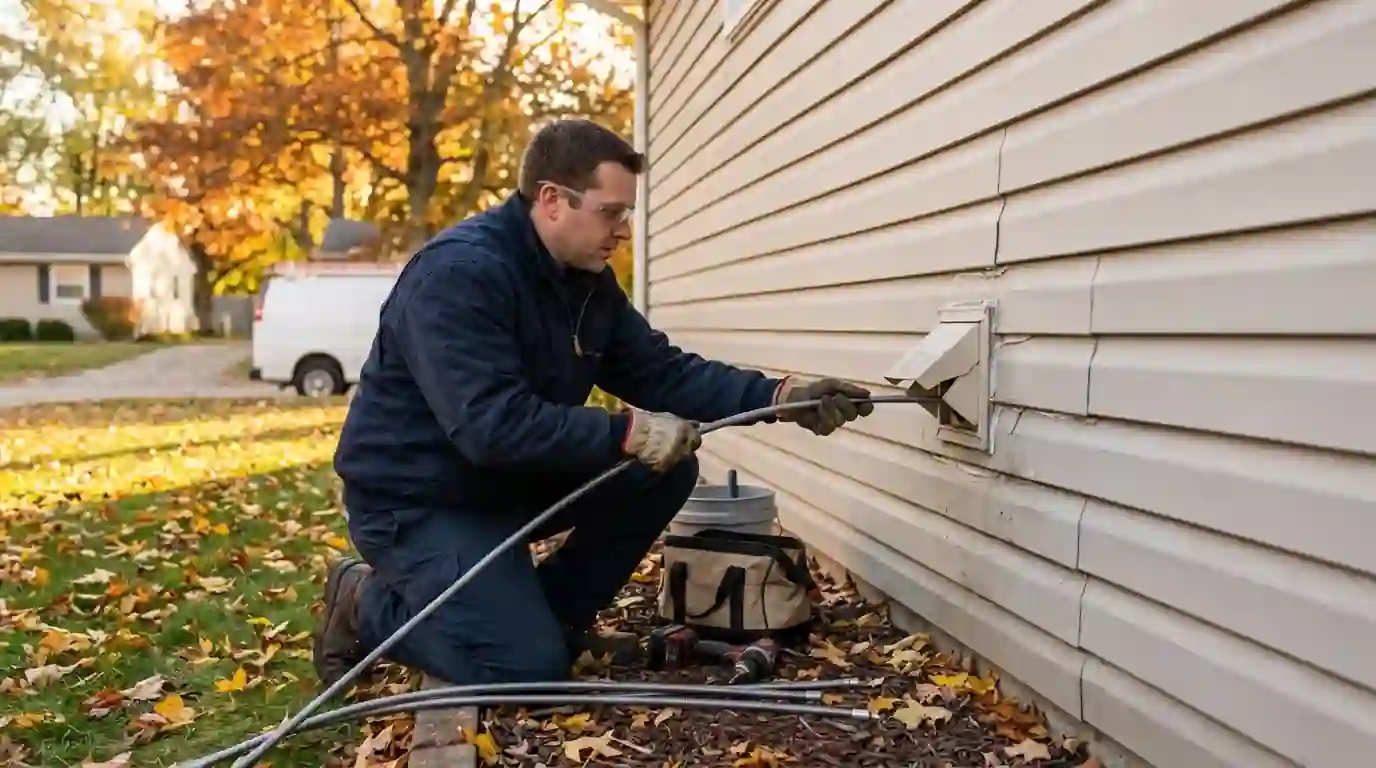
Dryer vent cleaning removes packed lint from the entire run, from the dryer outlet to the exterior hood, and checks for crushed or sagging sections. We usually find lint plugs at elbows, a flattened foil connector and a stuck hood flap. A typical cleaning runs $119 to $229 and takes about an hour.
Every load sends a little lint past the screen. Over a year or two that lint settles at elbows, low spots and the exterior hood until the dryer is pushing hot, damp air against a near-closed pipe. Drying times stretch, the cabinet gets hot to the touch, and the high-limit thermostat starts cycling the heat on and off. Lint is also very flammable, which is why a clogged vent is a real fire concern and not just a nuisance.
Our technician cleans the full run with rotary brushes and a high-volume vacuum, working from both ends where we can reach them. Then we look at what caused the buildup. Long runs, too many elbows, plastic or foil flex and screws that poke into the duct all trap lint. Where the layout is the problem, we reroute it with 4 inch rigid metal duct, sealed with foil tape instead of screws.
Dryer vent habits that keep lint from building up
These small habits make a clean vent last much longer.
- Clean the lint screen before every load, not every few loads.
- Wash the lint screen with warm soapy water every few months to clear dryer sheet film.
- Keep the dryer at least a few inches from the wall so the connector is not crushed.
- Replace any white vinyl or thin foil connector with semi-rigid or rigid metal.
- Check the outside flap while the dryer runs a couple of times a season.
- Clear snow away from a low wall hood after big storms.
- Never leave the dryer running when nobody is home or everyone is asleep.
- Have the vent cleaned once a year if it runs longer than about 15 feet.
Signs your dryer vent needs cleaning now
If two or more of these sound familiar, the vent is the first place to look.
Loads take more than one cycle
A regular load of jeans or towels should dry in one normal cycle. Needing a second or third run usually means the air has nowhere to go.
The laundry room feels hot and humid
Moist air leaking from a loose or blocked vent turns the room muggy. You may notice condensation on a nearby window.
Clothes come out hot but damp
Heat is getting in, but the moisture is not getting out. That is classic restricted airflow.
A burning smell during a cycle
Lint touching the heating element or packed near the outlet can scorch. Stop using the dryer and call us.
The outside flap barely moves
With the dryer running, the exterior hood flap should push open firmly. A weak puff or a flap glued shut with lint signals a blockage.
Lint around the outside hood
Gray fuzz collecting on the siding or in the grass near the vent means lint is backing up at the exit.
The dryer shows a vent warning
Many newer dryers measure exhaust temperature and flash a restricted vent code. Take that warning seriously.
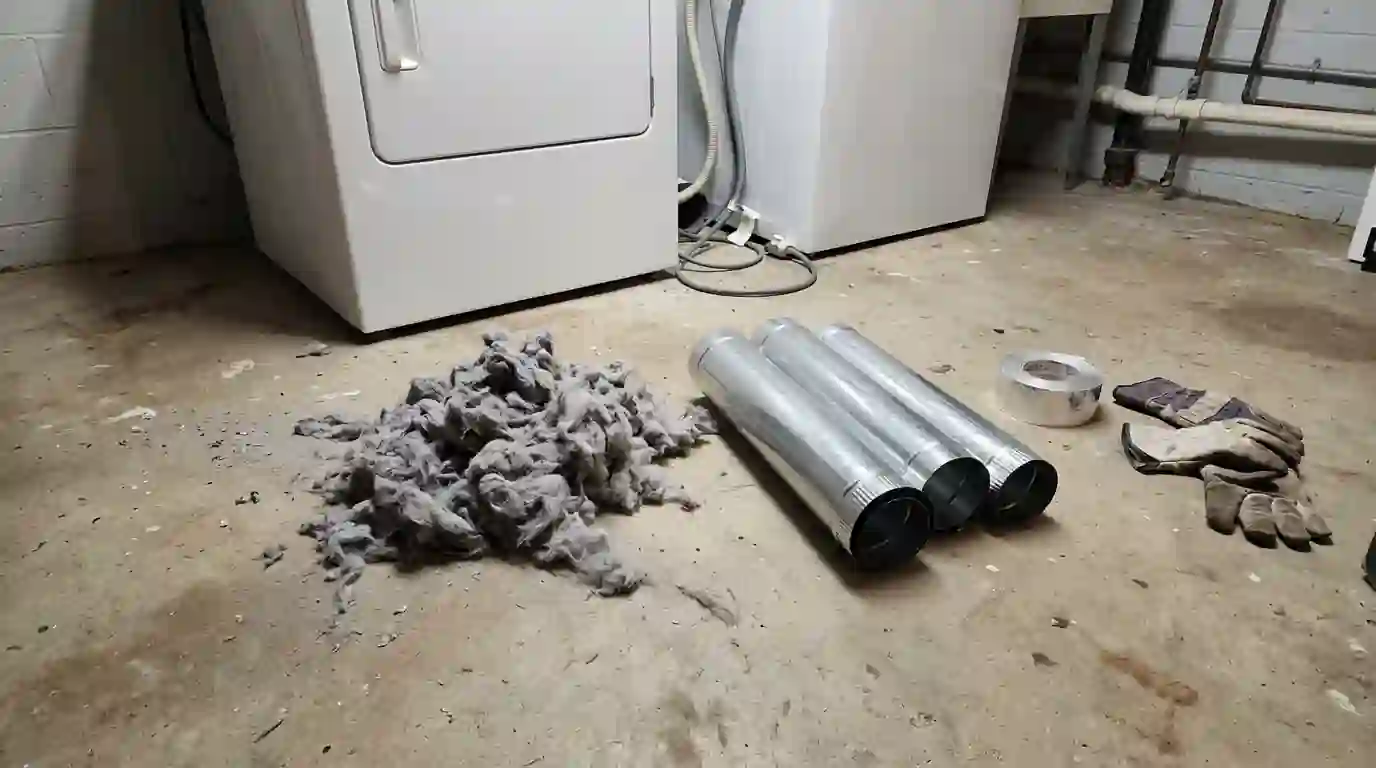
What happens during a dryer vent cleaning visit
Most visits take about an hour, longer if the vent needs rerouting.
Measure airflow first
We check the exhaust at the exterior hood with an anemometer before we touch anything. That gives a baseline to compare after cleaning.
Pull the dryer and inspect the connector
We slide the dryer out, disconnect the transition duct and look for crushing, kinks and foil or vinyl material. Vinyl and thin foil get replaced.
Brush and vacuum the full run
Rotary brushes run through the wall duct while a vacuum collects what comes loose. On long runs we work from the outside hood inward as well.
Clear the exterior hood
We clean the hood, check that the flap swings freely and remove any screen. Screens on dryer hoods catch lint and are not allowed by most codes.
Fix layout problems
Sagging sections, screws through the duct and excess length get corrected. Where needed we install new 4 inch rigid metal pipe with foil tape at the joints.
Retest and show you
We measure airflow again at the hood and run the dryer briefly. You see the before and after readings and the lint we removed.
Typical dryer vent cleaning prices
Most homes fall in the first row; reroutes and roof exits add to it.
| Item | Typical range |
|---|---|
| Standard vent cleaning with airflow check | $119 to $229 |
| Long run or roof exit cleaning | $185 to $329 |
| New transition duct and exterior hood | $89 to $189 |
| Reroute with new 4 inch rigid metal duct | $285 to $695 |
What moves the price
- Vent length and the number of elbows between the dryer and the outside.
- Whether the vent exits through a wall, the roof or a soffit.
- Access in finished basements, closets and stacked laundry units.
- How much damaged duct needs to be replaced.
- A bird nest or animal blockage at the hood.
These are typical ranges. Our technician gives you the actual price after looking at the vent and its route. See every range in one place in our HVAC price guide.
How Fort Wayne winters and house layouts clog dryer vents
A lot of laundry rooms in this area sit in the basement, which means the vent has to climb up to a rim joist before it exits. That vertical rise plus a couple of elbows is where lint drops out and piles up. In the colder months, warm exhaust meets cold metal near the exterior wall and condensation forms, which turns loose lint into a damp paste. When January nights fall to around 17°F, we also see hood flaps frozen partly shut by that moisture. Clearing the hood and adding a slight downward pitch toward the outside lets that water drain instead of pooling.
Newer homes in Huntertown, Aboite and the north side subdivisions often moved the laundry to the second floor or a mudroom on an interior wall. Those vents can run 20 feet or more through a ceiling or attic before they reach the roof or a side wall. Long runs with roof caps clog faster and are harder to clean, and roof caps tend to collect bird nests in spring. If your dryer sits far from an outside wall, plan on cleaning the vent at least once a year. We also check that the attic section is not sagging between supports, since every low spot holds lint.
Which dryer duct material belongs in your wall
The material inside the wall matters as much as how often you clean it.
| Option | Best for | Keep in mind |
|---|---|---|
| 4 inch rigid metal duct | The run inside walls, ceilings and joist spaces | Smooth inside, so lint has little to grab; joints get foil tape, not screws |
| Semi-rigid aluminum connector | The short link between dryer and wall | Keep it short and avoid crushing it behind the dryer |
| Vinyl or thin foil flex | Nothing; we replace it | Ridges trap lint, crushes easily and is a known fire concern |
Brands we work on
We service Carrier, Trane, Lennox, Goodman, Rheem and every other major make, plus WaterFurnace geothermal units built here in Fort Wayne.
Areas we cover for this service
We run this work across Fort Wayne and the towns around it. These are the places we are called to most; if your town is not listed, call and ask.
Dryer Vent Cleaning questions we hear often
How often should dryer vent cleaning be done in a busy household?
For a family running several loads a day, once a year is a good rule. A short, straight vent through a basement rim joist can sometimes go longer. A long run to the roof, a vent with several elbows or a home with pets that shed should be cleaned every year and checked between visits.
Can a clogged dryer vent cause carbon monoxide problems?
With a gas dryer, yes. A blocked vent can push combustion gases back into the laundry room. That is one more reason to keep it clear and to have a working carbon monoxide alarm nearby. If your alarm sounds, leave the house and call NIPSCO or 911 first.
Is dryer vent cleaning messy inside the house?
Not when it is done right. We lay down floor protection, keep the vacuum running while the brushes work and seal the open end inside the house. Most of the lint comes out at the exterior hood. We clean up before we leave and show you what came out of the vent.
Does a cleaned dryer vent really save energy?
It usually shortens drying time, so the dryer runs fewer minutes per load. How much you save depends on how bad the blockage was. The bigger benefits are less wear on the heating element and blower, and less heat building up around lint inside the cabinet.
Can you move my dryer vent to a better spot?
Often, yes. If the current route is long or full of elbows, we can sometimes reroute it to a closer outside wall with rigid metal duct. We check the joist direction, the siding and the clearance from windows and the gas meter before suggesting a new exit.