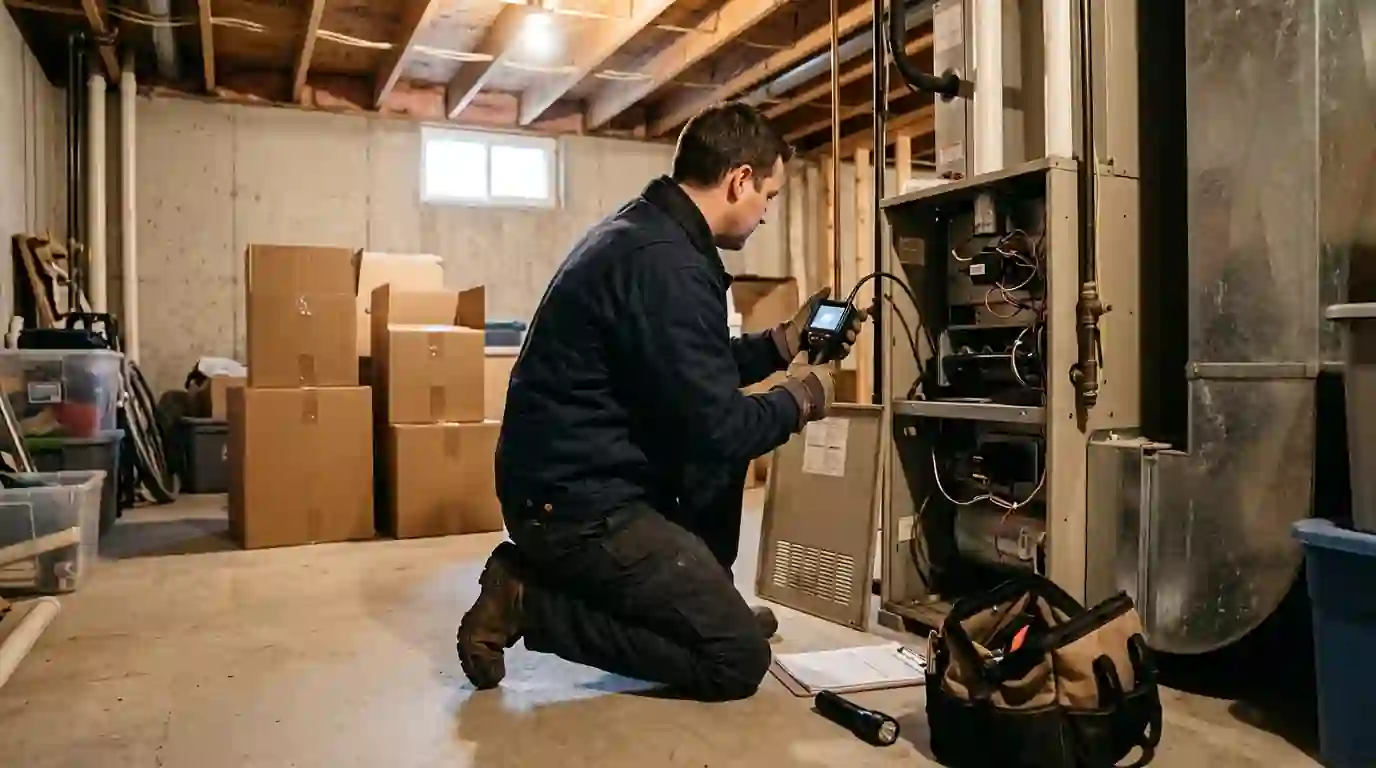
An HVAC inspection is a detailed check of the furnace, air conditioner or heat pump, ductwork and venting, done for a buyer before closing or a seller before listing. We usually find aging equipment, cracked or rusted heat exchangers, venting problems and dirty coils. A typical inspection with a written report runs $159 to $289 and takes 60 to 120 minutes.
Home inspectors cover the whole house, so they usually confirm the furnace lights and the AC blows cool air, then note the age and recommend an HVAC professional. That recommendation is where we come in. Our technician opens the equipment, checks the parts that actually fail, measures combustion and refrigerant performance where the weather allows, and writes up what we found in plain language with photos. We also look at the parts a quick check skips: the blower wheel, the condensate drain, the flue connection and the filter rack.
For buyers, the report shows what you are inheriting and roughly how much life is left, so you can negotiate or plan a budget. For sellers, an inspection before listing lets you fix small problems on a calendar you control instead of under the pressure of a buyer's repair request. Either way, the report records equipment ages, model numbers, readings and a clear list of items that need attention now versus items to watch.
How to prepare for the HVAC inspection
A little prep makes the report more useful.
- Confirm the gas, electric and water are on at the property.
- Make sure the furnace, air handler and outdoor unit are reachable.
- Gather any service receipts, warranty paperwork or permit records.
- Know your inspection contingency deadline so we can time the report.
- Let us know about any finished ceilings that hide ductwork.
- Ask the seller whether the system was ever converted from oil, propane or a gravity design.
- Plan to be there for the last 15 minutes so we can walk through findings.
When an HVAC inspection makes sense
These are the situations where buyers and sellers usually call us.
The furnace or AC is over 12 years old
Older equipment can still have years left, or it can be one cold night from failing. An inspection helps you tell the difference before you commit.
The home inspector flagged the system
Rust, odd noises, missing service records or a note to have it evaluated are all good reasons to get a closer look.
The house sat empty
Vacant homes and estate sales often have systems that have not run in months. Mice, dried-out seals and seized motors are common.
You are listing and want no surprises
Sellers who inspect first can fix minor items, gather records and price the home with confidence.
The home has an older boiler or converted system
Radiator systems and gravity conversions need someone who knows them. A general inspection rarely tests them fully.
There is a geothermal or heat pump system
These systems have more parts to check, and replacement costs are higher. A detailed look protects a bigger number.
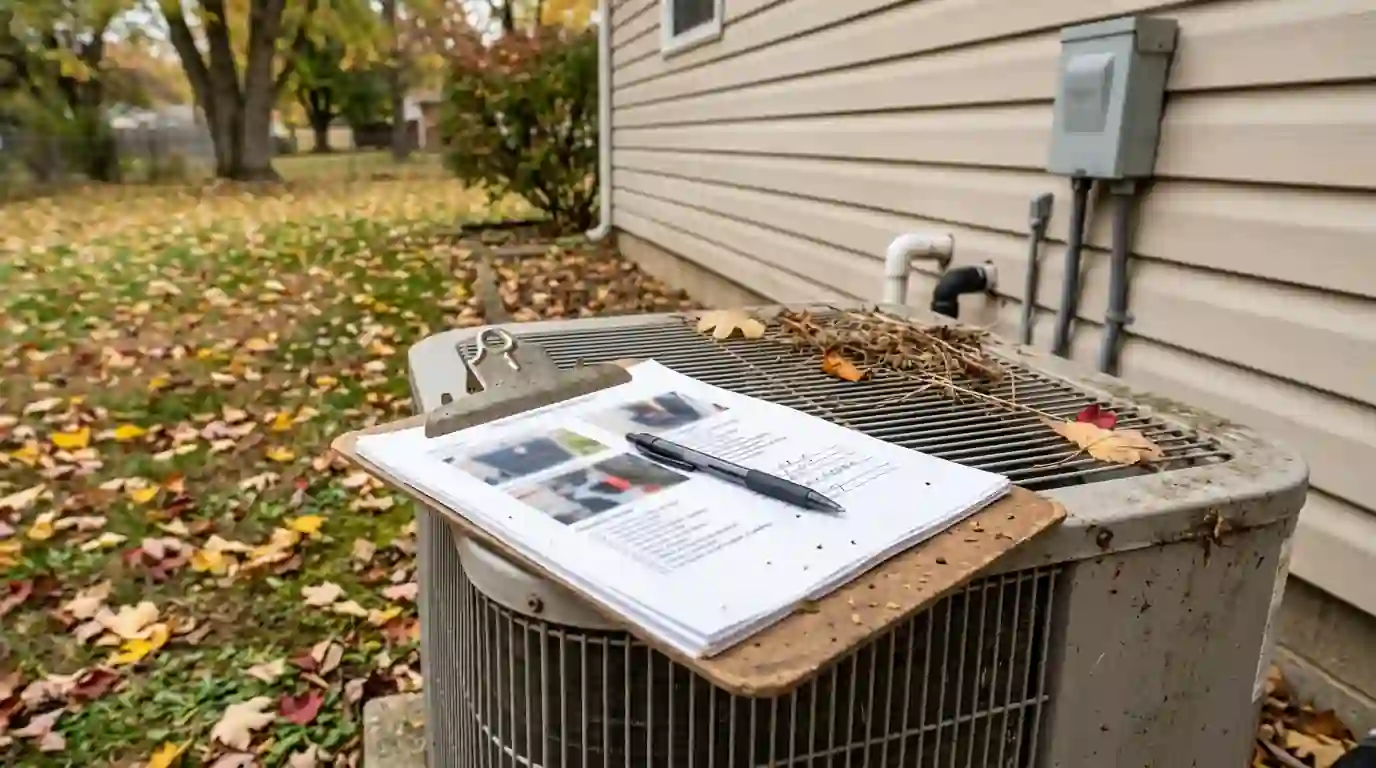
What our HVAC inspection covers
Every inspection follows the same checklist, adjusted for the equipment in the home.
Record the equipment
We note make, model, serial number, age, fuel type and capacity for every furnace, AC, heat pump, boiler and water heater. Age alone tells a buyer a lot.
Inspect the heat exchanger and burners
On gas furnaces we look at the heat exchanger with a camera where access allows and check flame behavior with the blower running. Cracks and heavy rust go in the report with photos.
Measure combustion and carbon monoxide
A combustion analyzer reads CO and draft at the flue. We also check ambient CO near the appliances.
Test cooling performance
When the outdoor temperature allows, we run the AC or heat pump and measure temperature split and refrigerant readings. In cold weather we note why a full cooling test could not be done and what we checked instead.
Check ducts, venting and drains
We look at visible ducts, flue pipes, chimney connections, condensate drains and the filter setup. Disconnected ducts and improper venting come up often.
Deliver the written report
You get a report with photos, readings, and a list sorted into safety items, repairs to plan for and items to watch.
HVAC inspection pricing for buyers and sellers
Price depends on how many systems the home has.
| Item | Typical range |
|---|---|
| One furnace and one AC with written report | $159 to $229 |
| Heat pump, boiler or geothermal system | $189 to $289 |
| Additional system in the same home | $79 to $139 |
| Camera inspection of heat exchanger where accessible | $89 to $149 |
| Rush report for a tight closing date | $49 to $89 |
What moves the price
- The number and type of systems in the home.
- Attic or crawlspace equipment that takes longer to reach.
- How quickly the report is needed before the inspection deadline.
- Whether a seller is present to show us equipment and records.
These are typical ranges. We confirm the inspection price by phone once we know the home and its equipment. See every range in one place in our HVAC price guide.
What we find most in Fort Wayne home sales
Homes come up for sale across every era in this city, and each era has its own patterns. Post-war ranches in Waynedale, Northcrest and Georgetown often have their second or third furnace, sometimes installed without updating the original ductwork or chimney. When a mid-efficiency furnace was swapped for a 95% unit, the water heater may have been left alone in an oversized masonry chimney, which we flag every time. In the historic districts we see old boilers that still run well and gravity conversions with almost no return air. Those systems are not automatically bad, but they need a clear description so a buyer knows what to expect.
In the 1990s and 2000s subdivisions of Aboite, Pine Valley and Huntertown, the original builder-grade furnace and AC are reaching the end of their first life. Buyers deserve to know whether the AC still uses R-22, which ended production in 2020 and makes refrigerant repairs costly. Winter closings bring their own issue: with nights near 17°F, the AC cannot be fully tested, so we explain what we could check and what to watch for in the first summer. We also note whether the outdoor unit and indoor coil are a matched pair, since mismatched replacements cut efficiency and cooling.
HVAC inspection, general home inspection or a tune-up
These three visits are often confused, but they answer different questions.
| Option | Best for | Keep in mind |
|---|---|---|
| HVAC inspection with report | Buyers and sellers who need documented condition and age | Focused on HVAC only, not the rest of the house |
| General home inspection | A broad look at the whole property | HVAC coverage is brief and usually ends with a note to have a specialist look closer |
| Seasonal tune-up | Owners keeping a system running well | Cleans and adjusts, but no formal written condition report for a sale |
Brands we work on
We service Carrier, Trane, Lennox, Goodman, Rheem and every other major make, plus WaterFurnace geothermal units built here in Fort Wayne.
Areas we cover for this service
We run this work across Fort Wayne and the towns around it. These are the places we are called to most; if your town is not listed, call and ask.
HVAC Inspections questions we hear often
How long does a pre-purchase HVAC inspection take?
Most homes with one furnace and one AC take about an hour to an hour and a half. Homes with a boiler, geothermal system or two systems can run two hours. The written report usually follows within one business day, and sooner when a closing deadline is tight.
Can you do an HVAC inspection in winter when the AC cannot run?
Yes, but with limits. Running an AC below about 60°F outdoors can damage the compressor and gives misleading readings. In winter we inspect the coil, wiring, refrigerant lines and age, and the report notes that a full cooling test should follow in warm weather.
Will an HVAC inspection tell me how many years the furnace has left?
No one can promise an exact number, but the report gives a clear picture: the age from the serial number, the condition of the heat exchanger and key parts, and how the readings compare to normal. That is usually enough to plan a budget or negotiate.
Should a seller get an HVAC inspection before listing?
It often pays off. Small items like a dirty flame sensor, a rusty drain pan or a missing filter cover look bad in a buyer's report. Fixing them ahead of time, with a clean report and service records to show, takes one negotiating point off the table.
Does the HVAC inspection report include repair prices?
The report lists what we found and sorts it by urgency. If you want repair pricing for the items listed, we can include typical ranges or give an actual quote after a closer look. Many buyers use those numbers in their repair request.