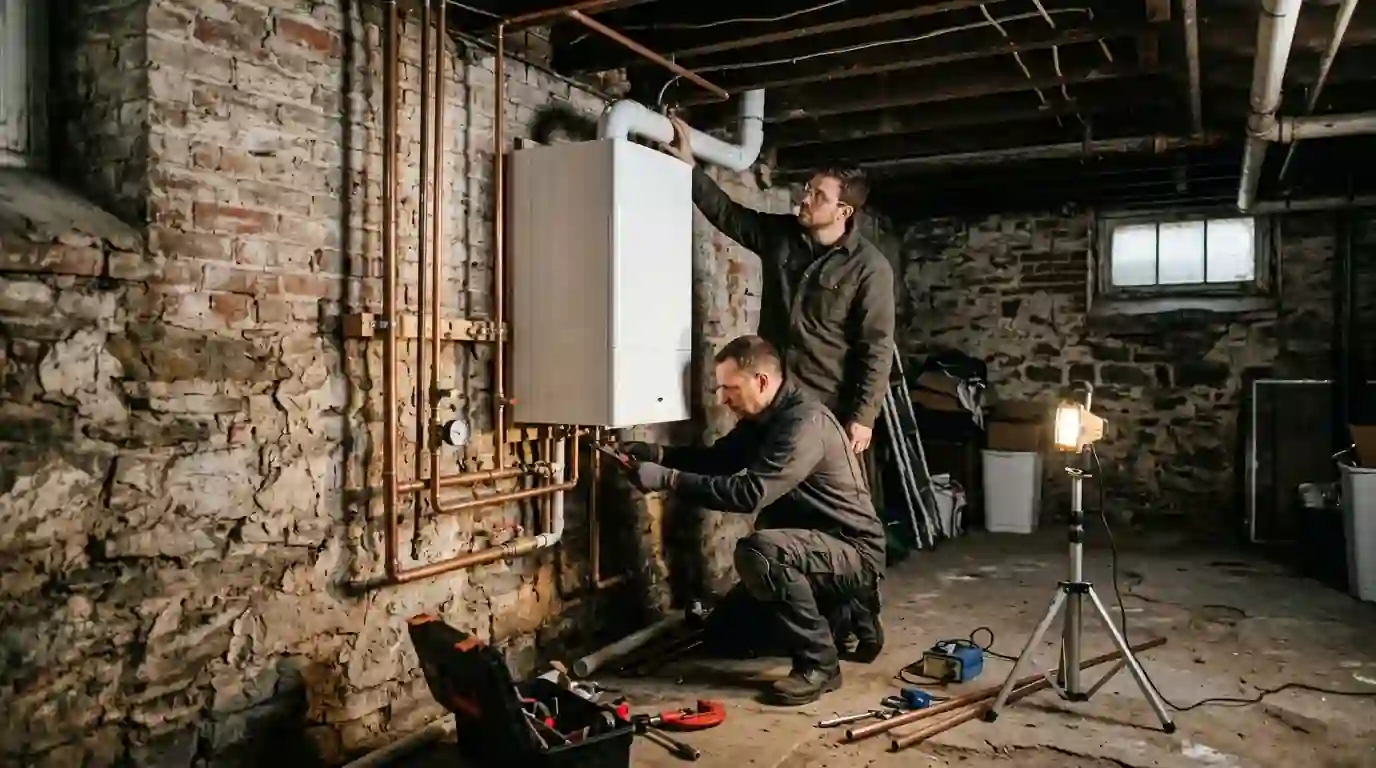
Boiler installation means removing the old boiler and installing a new one sized by a heat loss calculation and a radiator survey, then piping, venting and controlling it correctly. Typical installed prices here run $6,985 to $14,495. Condensing boilers reach 95% AFUE and higher; cast iron models suit some steam and high-temperature systems. Most installs take two to three days.
Many older boilers were sized generously, and over the decades homes gained insulation, storm windows and new siding. That means the boiler being replaced is often much larger than the house needs. We start with a heat loss calculation, then count and measure your radiators or baseboard to find the actual heat they can deliver. Matching the boiler to both numbers lets it run longer, steadier cycles, which is better for comfort and for efficiency.
The type of boiler matters as much as its size. Modern condensing boilers, often called mod-con boilers for modulating and condensing, adjust their flame to match demand and squeeze extra heat out of exhaust by condensing water vapor. They work best when return water stays below about 130°F, which radiators and well-sized baseboard often allow on milder days. Steam systems are different: a steam home needs a steam boiler, almost always cast iron, and the near-boiler piping must be done exactly to the manufacturer's diagram or the system will bang and spit water.
Comparing boiler types for older homes
Here is how the main boiler choices compare for homes in the area.
| Option | Best for | Keep in mind |
|---|---|---|
| Condensing mod-con boiler | Hot water radiators and baseboard with room to run cooler water | Needs outdoor reset, PVC venting and clean system water |
| Cast iron hot water boiler | High-temperature systems or homes with chimney venting | Lower efficiency, heavier, longer lifespan expectations |
| Cast iron steam boiler | Homes with original steam radiators | Near-boiler piping must be exact; regular water level checks |
| Combi boiler | Smaller homes wanting heat and on-demand hot water | Limited hot water flow for larger households |
When it is time for a new boiler
Boilers can last a long time, but these conditions usually mean replacement is the better investment.
A cracked section or leaking heat exchanger
Water seeping from between cast iron sections or from a heat exchanger cannot be patched reliably. Once the boiler body itself leaks, replacement is the realistic option.
The boiler is 25 to 30 years old or older
Older boilers often run at 60% to 70% efficiency, wasting a large share of fuel. Many also use standing pilots and outdated controls.
Frequent repairs on major components
Repeated circulator, burner or control failures add up, and older parts become harder to source.
Gas bills high for the size of the home
An oversized, low-efficiency boiler in a home that has since been insulated can cost far more to run than a properly sized modern unit.
You are adding zones, radiant floors or an indirect water heater
A new boiler can be designed around new zones, radiant heat in a basement or bath, and an indirect tank for domestic hot water.
Heavy rust or soot in the combustion chamber
Corrosion and soot signal poor combustion or long-term moisture problems. They lower efficiency and raise carbon monoxide risk.
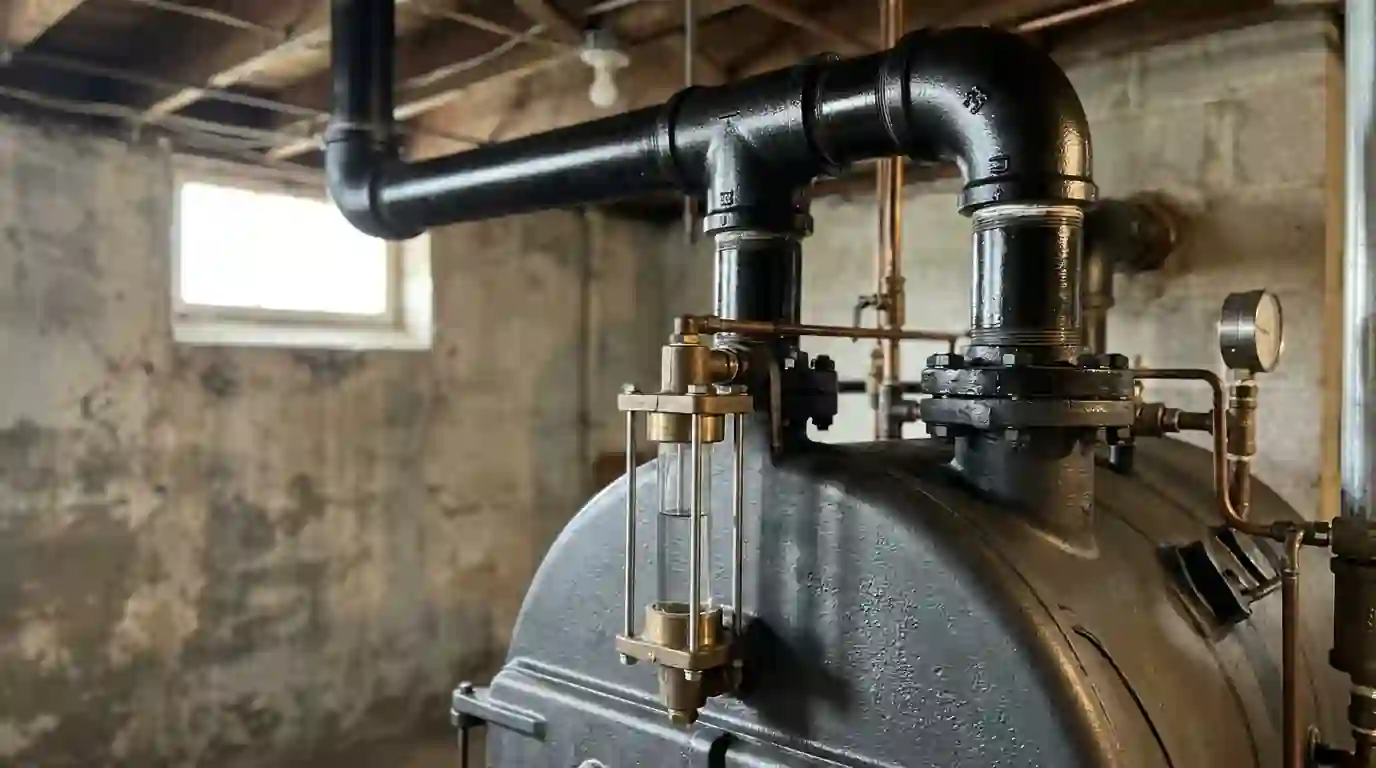
How a boiler replacement is planned and installed
A boiler replacement takes more planning than a furnace swap. Here is the order we work in.
Heat loss and radiator survey
We calculate the home's heat loss and measure every radiator or baseboard run to determine the real load. On steam systems, the radiator survey sets the boiler size more than anything else.
Choose the boiler and venting
Condensing boilers vent through PVC, CPVC or polypropylene, usually out a sidewall. Cast iron boilers often vent into a chimney, which may need a liner sized for the new appliance.
Remove the old boiler
We drain the system, disconnect gas, venting and piping, and remove the old boiler. Older cast iron units are heavy and are broken down for removal when needed.
Pipe the new boiler
Hot water boilers get primary-secondary piping or a hydraulic separator, new circulators, an expansion tank and air separator. Steam boilers get near-boiler piping with the proper header and equalizer as the manufacturer specifies.
Controls, outdoor reset and fill
Condensing boilers are set up with outdoor reset, which lowers water temperature on mild days to keep the boiler condensing. We fill, purge air and, where needed, treat the water to protect the heat exchanger.
Startup and combustion test
We fire the boiler, set gas pressure, run a combustion analysis and check every zone. Then we show you the controls, pressure gauge and what normal operation looks like.
Follow-up after the first cold spell
Old systems sometimes release more air or sediment in the first weeks. We check back after the first cold stretch to fine-tune the outdoor reset curve and confirm every room is comfortable.
Replacing boilers in historic and older area homes
Boilers are concentrated in the city's older neighborhoods. Homes in West Central, Forest Park, Lakeside, Southwood Park and Wildwood Park often have their original radiators, and many owners want to keep them for their even, quiet heat. Those systems may be steam or hot water, sometimes converted from steam decades ago. We look closely at what the house actually has before recommending equipment, since a hot water boiler cannot run a steam system and some converted systems have quirks from the conversion.
Venting is a common local consideration. Many older homes vent the boiler and water heater into a shared brick chimney. Switching to a condensing boiler moves the boiler to PVC venting, which can leave the water heater alone in a chimney too large for it. We plan for that with a properly sized liner or a vent change. With January nights near 17°F, we also schedule replacements to keep heat interruptions short, and we can talk with you about pairing the boiler with an indirect water heater. NIPSCO rebate programs for high-efficiency boilers change year to year, and we will tell you what is current.
Boiler replacement prices in this area
Most boiler replacements fall within the main range below. Venting, chimney and piping changes are the biggest variables.
| Item | Typical range |
|---|---|
| Boiler replacement, installed | $6,985 to $14,495 |
| Circulator pump, added zone or replacement | $485 to $945 |
| Radiant floor heating zone added | $9 to $19 per square foot |
| Gas line work for the new boiler | $285 to $1,195 |
| Smart thermostat for a boiler zone | $189 to $549 |
What moves the price
- Condensing boilers cost more than standard cast iron models but use much less gas.
- Steam boilers require careful near-boiler piping, which adds labor.
- Chimney liners or new sidewall venting affect the total.
- Adding zones, indirect water heaters or radiant loops increases cost.
- Removing very heavy old cast iron boilers from tight basements takes extra time.
These are typical ranges for the area, not quotes. The written price follows our heat loss calculation and radiator survey. See every range in one place in our HVAC price guide.
What to confirm before you choose a new boiler
These questions help make sure the new boiler matches your home and system.
- Is the home's system hot water or steam, and was it ever converted?
- Was the boiler sized by a heat loss calculation and radiator survey?
- Will the new boiler use outdoor reset control?
- How will the boiler vent, and does the water heater need a chimney liner?
- Is the system water treated or filtered to protect the new heat exchanger?
- Does the quote include new circulators, an expansion tank and air separator?
- Is an indirect water heater a good fit for your hot water use?
- What manufacturer warranty applies to the heat exchanger?
Brands we work on
We service Carrier, Trane, Lennox, Goodman, Rheem and every other major make, plus WaterFurnace geothermal units built here in Fort Wayne.
Areas we cover for this service
We run this work across Fort Wayne and the towns around it. These are the places we are called to most; if your town is not listed, call and ask.
Boiler Installation questions we hear often
How long does boiler installation take in an older Fort Wayne home?
Most boiler installations take two to three days. Draining the system, removing the old boiler, new piping, venting and startup all take time, and steam systems need careful near-boiler piping. On cold days we plan the work to keep heat interruptions as short as possible.
Can a condensing boiler installation work with my old cast iron radiators?
Often yes. Cast iron radiators hold a lot of surface area, so on most days they can heat the home with cooler water, which is what a condensing boiler needs to run efficiently. Outdoor reset control raises the water temperature only on the coldest nights. Steam radiators, however, require a steam boiler.
Should I add an indirect water heater during boiler installation?
If your water heater is near the end of its life, an indirect tank heated by the new boiler is worth considering. It uses the boiler's efficiency for domestic hot water and has no separate burner to maintain. It works best for households with steady hot water demand.
Does boiler installation require a new chimney liner?
It depends on the boiler. Condensing boilers vent through plastic pipe and do not use the chimney, which may leave a water heater needing a smaller liner. Cast iron boilers that still use the chimney may need a liner if the existing flue is cracked, oversized or unlined. We inspect the chimney before quoting.
Can I switch from a boiler to forced air instead of a boiler installation?
You can, but in older homes it usually means installing ductwork through finished walls, which is costly and disruptive. Many owners keep the boiler for heat and add central air with small-duct high-velocity or ductless systems for cooling. We price both paths so you can compare.