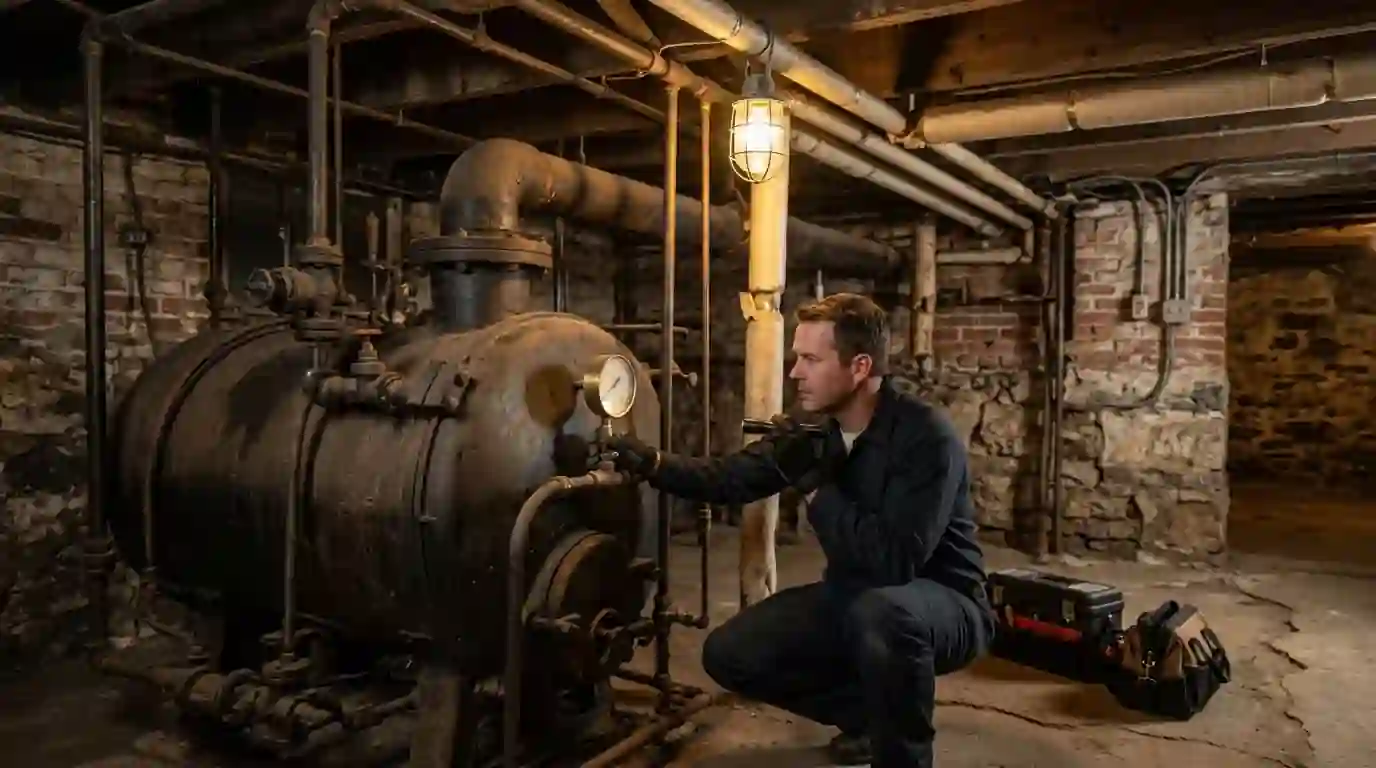
Boiler repair covers hot water and steam systems: circulator pumps, zone valves, expansion tanks, pressure relief valves, low-water cutoffs, ignition and burner faults. Most repairs here range from $185 to $945, with circulator pump replacement typically $485 to $945. We test system pressure, water level, burner operation and venting before recommending any part.
Boilers fail differently than furnaces. A forced-air furnace has one airflow path, while a boiler system has water or steam moving through pipes, radiators or baseboard loops, plus pumps, valves and tanks that keep pressure and temperature in balance. A cold radiator upstairs might be air trapped in the line, a stuck zone valve, a failed circulator, or on a steam system, a radiator vent clogged with mineral deposits. The burner side can still fail like a furnace, with igniters, flame sensors and gas valves, but the water side is where most boiler calls start.
Our technicians work on both hot water (hydronic) boilers and the older one-pipe and two-pipe steam systems still found in historic homes across the region. On hot water systems we check fill pressure, expansion tank charge, circulator operation and zone valve end switches. On steam, we look at water level in the sight glass, pressuretrol settings, the low-water cutoff, main vents and radiator vents, and the pitch of the piping. Getting those basics right fixes a large share of boiler complaints without replacing major components.
Boiler problems that need a technician
Some of these are comfort problems and some are warnings about pressure or water level. Do not ignore the last two.
Some radiators or baseboard loops stay cold
On hot water systems, trapped air, a stuck zone valve or a failed circulator are the usual causes. On steam, clogged radiator vents or water pooling in a sagging pipe can block steam from reaching the radiator.
Banging, hammering or gurgling pipes
In steam systems, water hammer usually means condensate is trapped in pipes that lost their pitch, or the boiler water level is too high. In hot water systems, gurgling usually means air in the loop.
Pressure gauge climbing above 25 to 30 psi
A residential hot water boiler normally runs around 12 to 20 psi. Rising pressure usually points to a waterlogged expansion tank or a leaking fill valve, and the relief valve may start dripping.
Water on the floor around the boiler
Leaks can come from a relief valve, a circulator flange, a fitting or, more seriously, the boiler sections. Small leaks grow, and a cracked section is a replacement-level problem.
Steam boiler sight glass empty or flooding
Steam boilers need a steady water level. A low level trips the low-water cutoff, and running dry can crack the boiler; a constantly high level means a leaking feed valve or condensate return problem.
Boiler short cycling or never shutting off
Bad aquastat or pressuretrol settings, oversized equipment or a stuck thermostat relay can all cause erratic cycling, which wastes gas and wears parts.
Soot, rust flakes or a strong odor near the burner
Poor combustion produces soot and carbon monoxide. Shut the boiler off and call if you see soot around the burner door or smell exhaust in the basement.
How we work through a boiler repair call
We separate the water side from the burner side, since each has its own failure points.
Check system type and pressure
We identify whether it is a hot water or steam system, then read the gauge, sight glass and controls. For hot water, we verify cold fill pressure; for steam, we check the pressuretrol setting, which is usually very low.
Test the water-side components
We test circulator pumps for amp draw and flow, check zone valves and their end switches, and measure expansion tank air charge. On steam, we check the low-water cutoff, main vents and radiator vents.
Purge air and correct water level
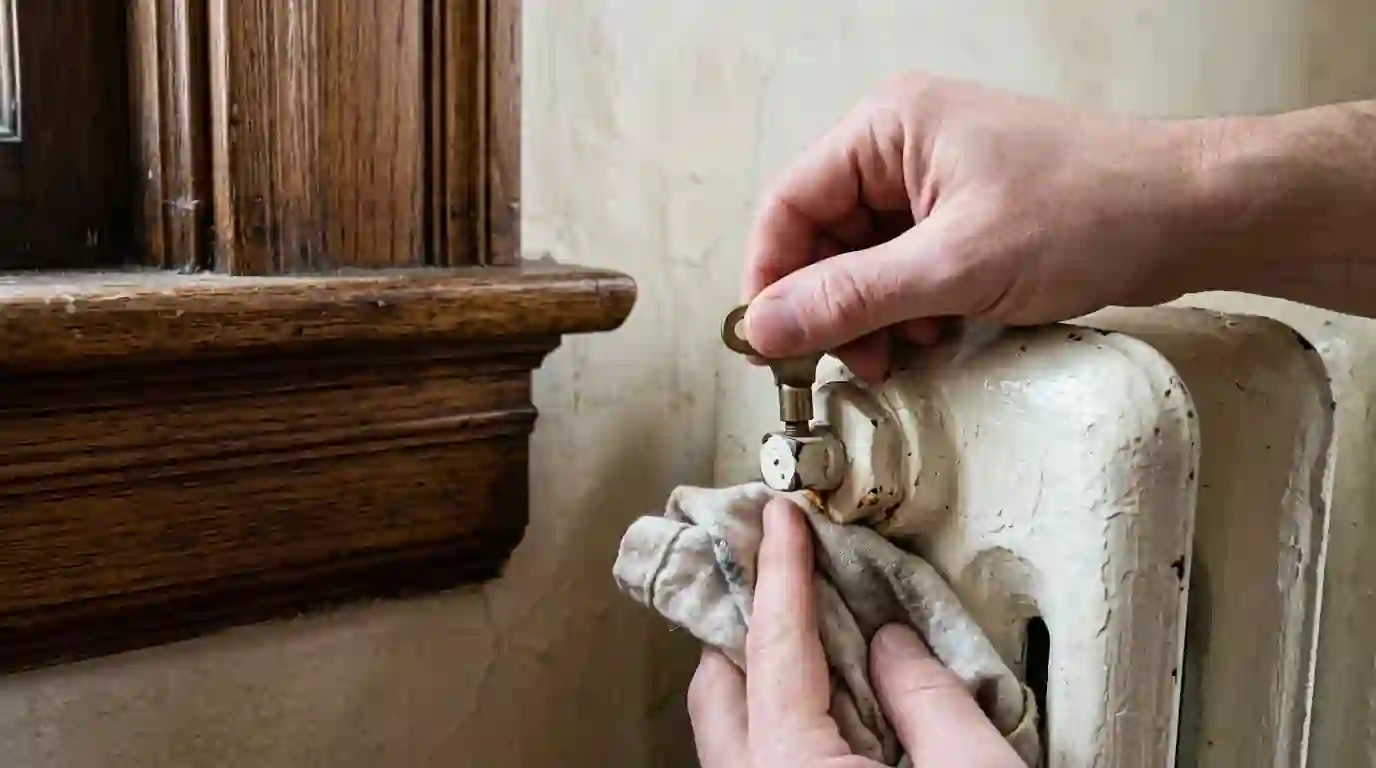
Air trapped in hot water loops is purged at the valves, and steam boiler water levels are reset to the correct mark. Many cold-radiator problems end here.
Burner and ignition checks
We inspect the burner, igniter or pilot, flame sensor or thermocouple, and gas valve, and measure gas pressure. Combustion is checked with an analyzer for carbon monoxide.
Repair and run a full cycle
After repairing the failed part, we run the system through a full heating cycle, watching temperatures, pressures and every zone. You get a clear explanation of what failed and any other wear we noticed.
Typical boiler repair costs
These are installed ranges for common boiler parts and services. A cracked boiler section is usually a replacement discussion, not a repair.
| Item | Typical range |
|---|---|
| Diagnostic visit, weekday | $89 to $149 |
| Circulator pump replacement | $485 to $945 |
| Igniter or ignition component | $189 to $345 |
| Gas valve replacement | $395 to $745 |
| After-hours diagnostic, nights and weekends | $149 to $229 |
| Carbon monoxide and combustion test | $89 to $169 |
What moves the price
- Steam system parts such as low-water cutoffs and main vents differ in cost from hot water components.
- Older boilers may need parts that are harder to source, adding time.
- Repairs involving draining and refilling the system take longer.
- Access in tight or cluttered basements affects labor time.
These are typical ranges for the area. The technician tests the system and gives you a price before starting any repair. See every range in one place in our HVAC price guide.
Boiler systems in historic Fort Wayne homes
Many of the region's older homes still heat with boilers. West Central, Forest Park, Southwood Park, Lakeside and Wildwood Park all have pre-1940 houses with cast iron radiators and either hot water or steam systems, often original or close to it. Many of those systems have outlived two or three boilers, and the piping has been modified over the decades. A previous owner may have added a zone for an addition or swapped a radiator, which can unbalance the whole system. Understanding the original design is often the key to fixing a cold room.
Winter adds pressure. With January nights near 17°F, a boiler failure in a plaster-walled historic home means pipes on exterior walls can freeze quickly, and a frozen radiator line can crack cast iron. If your boiler is down on a cold night, call us, and while you wait keep cabinet doors open and avoid draining the system. Basements near the rivers also run damp, which corrodes burner components, so a yearly cleaning and inspection is worth it on these older systems. Many of them still vent through the original brick chimney, so we check the flue and draft on every repair visit.
Safe boiler checks before you call
Do these only if you are comfortable, and never open a relief valve or drain a hot boiler yourself.
- Make sure the thermostat is calling for heat and has fresh batteries.
- Check that the boiler emergency switch, often at the top of the basement stairs, is on.
- Read the pressure gauge on a hot water boiler and note the number.
- On a steam boiler, look at the sight glass and note whether water is visible.
- Look for water around the boiler, especially under the relief valve.
- Check that radiator valves in cold rooms are fully open.
- Note any banging, gurgling or hissing and when it happens.
Brands we work on
We service Carrier, Trane, Lennox, Goodman, Rheem and every other major make, plus WaterFurnace geothermal units built here in Fort Wayne.
Areas we cover for this service
We run this work across Fort Wayne and the towns around it. These are the places we are called to most; if your town is not listed, call and ask.
Boiler Repair questions we hear often
Why is only one radiator cold when I need boiler repair?
On hot water systems, a single cold radiator usually has trapped air, which bleeding at the radiator valve often fixes. On steam systems, the radiator vent may be clogged or the radiator may be pitched wrong, trapping water. If bleeding or a new vent does not solve it, the piping or a zone valve needs a closer look during boiler repair.
Is it safe to keep using my boiler if the relief valve is dripping?
A dripping relief valve means system pressure is too high or the valve is worn. It is a safety device, so never cap or plug it. Usually the expansion tank or fill valve is the cause. The boiler can run for a short time if pressure stays below the valve rating, but schedule boiler repair promptly.
Do you handle boiler repair on old steam systems?
Yes. We work on one-pipe and two-pipe steam systems found in many historic Fort Wayne homes. Steam boiler repair often involves water level, radiator vents, main vents, pressure settings and piping pitch, not just the boiler itself. Many banging and cold-radiator problems are solved without major parts.
How do I know if boiler repair or replacement makes more sense?
If the boiler has a cracked section, a leaking heat exchanger or a corroded combustion chamber, replacement is usually the right call. If the issue is a pump, valve, control or ignition part, repair is often worth it even on an older boiler. We give you both options when the decision is close.
Why does my boiler pressure gauge keep rising?
The most common cause is a waterlogged expansion tank that has lost its air charge, so the system has no room for water to expand as it heats. A fill valve leaking extra water into the system is the second cause. Both are standard boiler repair items and are usually fixed in one visit.