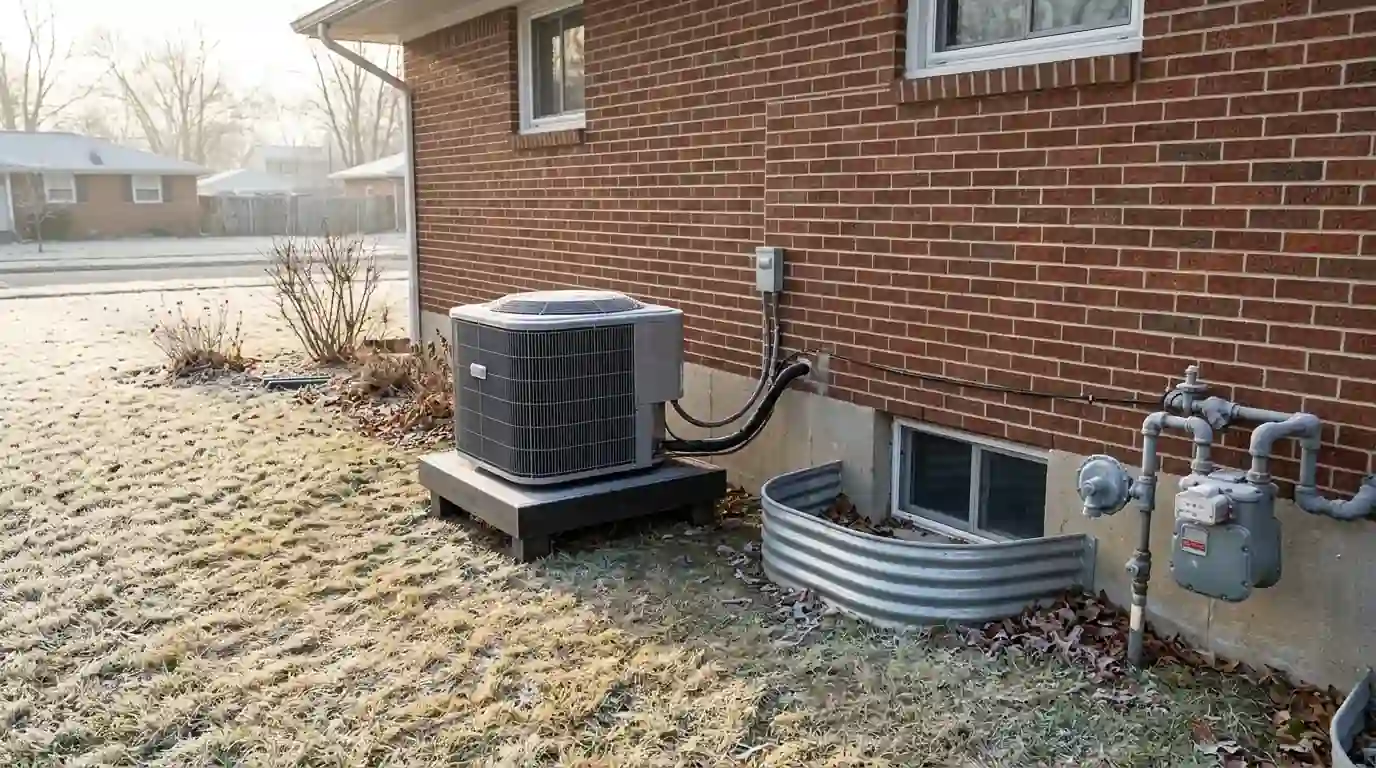
A dual fuel system pairs an electric heat pump with a gas or propane furnace. The heat pump heats in mild and moderate weather, and the furnace takes over below a set outdoor temperature, called the switchover point. Adding a heat pump to a working furnace typically runs $5,885 to $11,495 here. Installation usually takes one day.
A dual fuel system is not two separate heating systems fighting each other. It is one coordinated setup: an outdoor heat pump replaces the air conditioner, an indoor coil sits on top of the furnace just like an AC coil, and a thermostat or control board with an outdoor temperature sensor decides which heat source runs. Above the switchover temperature, the heat pump heats the house. Below it, the heat pump shuts off and the furnace burns gas or propane. In summer, the heat pump cools exactly like a central air conditioner.
The appeal is cost and comfort. Through fall and spring, and on milder winter days, a heat pump delivers heat at a lower cost than most furnaces, especially propane. On the coldest January nights, the furnace delivers strong, hot air and keeps up easily. The furnace also covers the heat pump's defrost cycles, so you never get a blast of cool air during a defrost. For many homes in the area with a sound furnace and an aging AC, it is the most practical upgrade available.
Dual fuel compared with other heating setups
How dual fuel stacks up against the setups homeowners usually compare it to.
| Option | Best for | Keep in mind |
|---|---|---|
| Gas furnace plus central AC | Lowest upfront cost on gas homes | No heating savings from electricity in mild weather |
| Dual fuel: heat pump plus furnace | Gas or propane homes with a healthy furnace | Two systems to maintain; settings need tuning |
| All-electric cold-climate heat pump | Homes leaving gas or propane entirely | Strip backup heat costs more on the coldest nights |
Signs a dual fuel system fits your home
Dual fuel works best when one part of your system is due and the other still has years left.
Your AC is old but your furnace is not
If the furnace is under about 12 years old and the AC is near the end, replacing the AC with a heat pump gives you dual fuel for a modest step up in cost.
You heat with propane
Propane is often expensive per unit of heat. Letting a heat pump cover the shoulder seasons can cut propane deliveries significantly.
You want backup if one system fails
With dual fuel, a furnace problem in October or a heat pump problem in January still leaves you with heat from the other source.
Shoulder-season bills feel too high
October, November, March and April are long stretches of mild heating here. A heat pump covers those weeks at a lower cost than running the furnace for short, inefficient cycles.
You like strong, hot air on cold nights
Some homeowners dislike the gentler air of an all-electric heat pump. The furnace takes over when outdoor temperatures drop so the air feels warm again.

How we set up a dual fuel system
The equipment is simple to install. The setup and control settings are where the value is.
Check the furnace and ducts
We confirm the furnace is in good shape, its blower can handle heat pump airflow, and the ducts are not restricting it. A tired furnace makes a poor partner and is better replaced at the same time.
Size the heat pump to the cooling and heating loads
Dual fuel heat pumps are often sized to the cooling load, with the furnace covering deep cold. We check that the size also gives useful heating capacity down to your planned switchover point.
Install the coil, outdoor unit and line set
The indoor coil mounts on the furnace supply, the outdoor unit goes on a raised pad, and we run or reuse a properly sized line set. Brazed joints get a nitrogen pressure test and a deep vacuum before charging.
Wire the controls and outdoor sensor
We install a dual-fuel capable thermostat or furnace control with an outdoor temperature sensor, and wire it so the heat pump and furnace never fire against each other.
Set the switchover temperature
We set the balance point using your fuel prices, the heat pump's capacity and how you like the house to feel. Many homes in this area end up switching somewhere between 25°F and 40°F, and we adjust it with you as rates change.
Setting the switchover point for NIPSCO gas, I&M power and propane
Here the furnace still matters in winter. January nights average about 17°F, and a heat pump paired with a furnace lets each fuel do what it is best at. For homes on NIPSCO natural gas, the economic switchover is usually higher, because gas is relatively inexpensive, so the heat pump handles fall, spring and mild winter days. For homes on propane, common on rural properties outside the city, the heat pump earns its keep across more of the winter, and the switchover can be set much lower. Either way, the furnace stays ready for subzero stretches.
Electricity comes from Indiana Michigan Power across most of the region, and both I&M and NIPSCO run rebate programs that change from year to year. When you call, we will tell you what is currently offered for heat pumps or high-efficiency furnaces. Dual fuel also suits the many basements here, where the furnace and trunk duct already sit in a convenient spot for the new coil. In older homes with original masonry chimneys, we confirm the furnace venting is sound before tying a new heat pump to it.
Dual fuel system pricing in this area
Cost depends on whether we keep your furnace or replace both pieces at once.
| Item | Typical range |
|---|---|
| Heat pump added to a working furnace | $5,885 to $11,495 |
| New 95%+ AFUE furnace, if replacing both | $4,385 to $8,945 |
| Evaporator coil replacement alone | $1,485 to $2,995 |
| Dual-fuel thermostat installed | $189 to $549 |
| Furnace tune-up before pairing | $89 to $159 |
What moves the price
- Heat pump capacity and efficiency tier, including variable-speed inverter models, drive most of the price.
- A furnace with an old PSC blower may need a control upgrade to handle heat pump airflow.
- Line set replacement adds cost when the existing set is undersized or contaminated.
- Electrical work for the outdoor unit depends on panel capacity and distance.
- Current utility rebates from I&M or NIPSCO can offset part of the cost when available.
- Replacing the furnace at the same time raises the total but avoids a second install later.
These are typical ranges for the area, not quotes. We set the real price after checking your furnace, ducts and electrical service. See every range in one place in our HVAC price guide.
Questions to settle before you go dual fuel
Answer these with your technician during the estimate.
- How old is the furnace, and what is its AFUE rating?
- Can the furnace blower provide the airflow the heat pump needs?
- What switchover temperature makes sense for your fuel price?
- Will the thermostat use an outdoor sensor or a fixed setting?
- Does the quote include a new line set or reuse the old one?
- Is the outdoor unit placed above snow and roof runoff?
Brands we work on
We service Carrier, Trane, Lennox, Goodman, Rheem and every other major make, plus WaterFurnace geothermal units built here in Fort Wayne.
Areas we cover for this service
We run this work across Fort Wayne and the towns around it. These are the places we are called to most; if your town is not listed, call and ask.
Dual Fuel Systems questions we hear often
What switchover temperature should a dual fuel system use in Fort Wayne?
It depends on your fuel prices and heat pump capacity. On natural gas, many homes switch to the furnace somewhere around 30°F to 40°F. On propane, it often makes sense to let the heat pump run down to the mid 20s or lower. We set it during installation and adjust it if rates or comfort preferences change.
Can a dual fuel system use my existing furnace?
Usually, if the furnace is in good condition and its blower and controls can work with a heat pump. Most furnaces from the last 15 years can. If yours is older, has a failing heat exchanger, or uses a basic blower that cannot handle the airflow, replacing both together may be the better move.
Does a dual fuel system blow cold air during defrost?
No. That is one of its advantages. When the heat pump goes into defrost, the furnace briefly fires so the air stays warm. All-electric heat pumps rely on strip heat during defrost, which is more expensive. With dual fuel, defrost cycles are barely noticeable inside the house.
Is maintenance more involved with dual fuel systems?
Slightly. You have a furnace and a heat pump to look after, so we service the furnace in fall and the heat pump in spring, or both on one visit. A maintenance plan covers both. The work is similar to maintaining a furnace and central AC, which is what most homes have anyway.
Will dual fuel systems work with a propane furnace on a rural property?
Yes, and propane homes often benefit most. The heat pump handles much of the heating season, which reduces how many propane deliveries you need, and the propane furnace covers the deep cold. We confirm the furnace's propane conversion and venting are correct before pairing it.