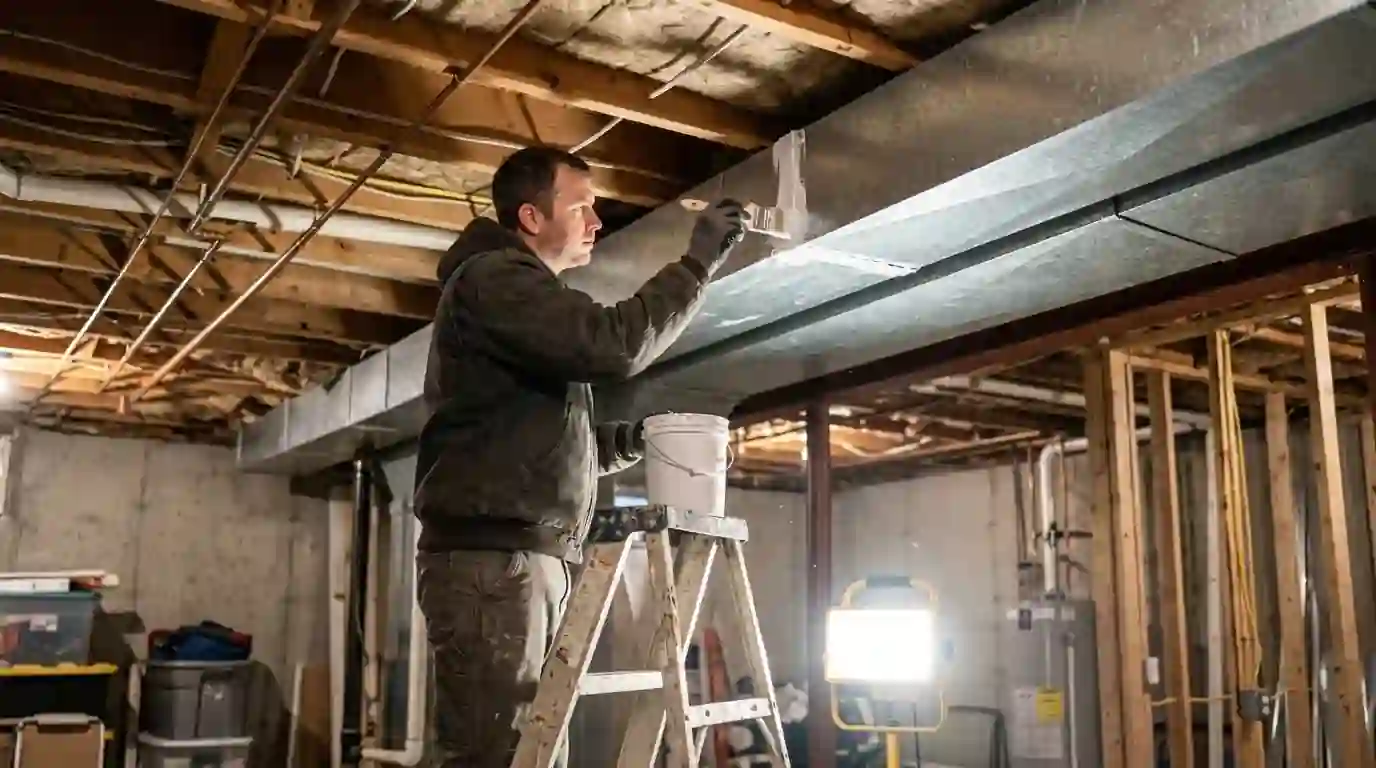
Duct sealing closes the gaps at seams, joints, boots and takeoffs so conditioned air reaches the registers instead of the basement or attic. We usually find loose trunk seams, unsealed panned returns and cloth tape that dried out years ago. Sealing accessible ducts typically runs $685 to $2,495 and most homes take one day.
Most forced-air systems in this area lose a real share of their air through leaks in the duct system. Some of that air spills into a basement you are not trying to heat, and some of it, in an attic or crawlspace, simply leaves the house. Leaky returns are just as costly, because they pull in dusty, damp air from places the filter was never meant to handle. The furnace or AC then runs longer to make up the difference.
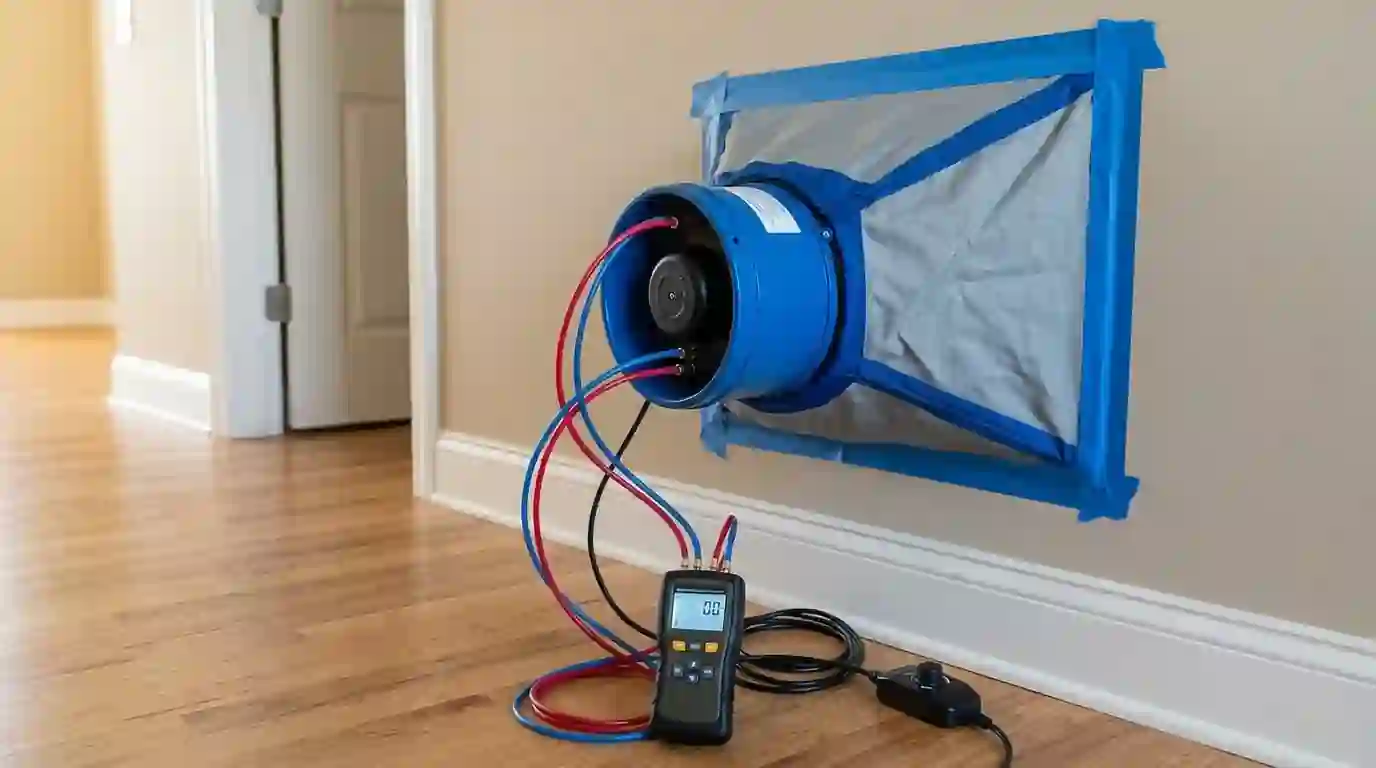
We seal ducts two ways. Hand sealing with water-based mastic and fiberglass mesh tape works on every joint we can reach, and it lasts for decades. Aerosol sealing pressurizes the closed duct system and sprays a fine sealant mist that builds up at the leak edges from the inside, which reaches runs buried behind drywall. Before and after either method, our technician runs a duct leakage test so you get numbers, not a guess.
Mastic sealing or aerosol sealing: which fits your house
Both methods work; the right one depends on where the leaks are and how much of the system you can see.
| Option | Best for | Keep in mind |
|---|---|---|
| Mastic and mesh tape by hand | Unfinished basements where the trunk and takeoffs are exposed | Only reaches joints we can physically touch |
| Aerosol sealing from inside | Finished basements and runs buried behind drywall | Seals small gaps well; big disconnections must be repaired first |
| Foil tape on small joints | Quick fixes on clean metal joints | Cloth duct tape fails; only listed foil tape holds up |
| Mixed approach | Homes with both exposed and hidden ductwork | Two methods mean a longer visit and a higher price |
Clues that your ducts are leaking air
Leaks rarely announce themselves, but the house usually drops hints. Here are the ones we hear about most.
One room is always off
A bedroom at the end of a long run stays several degrees warmer or cooler than the rest. Air escaping along the trunk never makes it that far.
Dust comes back fast
You dust on Saturday and the shelves are gray again by Wednesday. Leaky return ducts pull in basement and attic dust that bypasses the filter.
Weak air at the far registers
Hold your hand over a register near the furnace and then one upstairs. A big difference often points to leaks or crushed sections between them.
A warm, unfinished basement
If the basement stays comfortable in January with no supply registers down there, heat is escaping from trunk seams and taps.
Bills that climb without a reason
The equipment checks out, the thermostat is set the same, yet the gas or electric bill keeps creeping up. Lost air means longer run times.
Whistling or rattling ducts
A thin whistle at a joint is air forcing its way through a gap. You can sometimes hear it right after the blower starts.
How we test and seal your duct system
Every sealing job starts and ends with a measurement, so you can see what changed.
Baseline leakage test
We seal off the registers, connect a calibrated fan to the system and pressurize it. The reading tells us how many cubic feet per minute leak out at a set pressure.
Find the worst leaks
Using a smoke pencil and the pressurized system, we trace where air escapes. Panned returns between floor joists, boot-to-floor gaps and loose takeoffs are common culprits.
Repair before sealing
Disconnected runs, crushed flex and collapsed returns get fixed first. Sealing a duct that is falling apart only hides the bigger problem.
Seal by hand or by aerosol
Reachable joints get mastic and mesh tape. When most leaks are buried behind finished ceilings or walls, we recommend aerosol sealing, which coats leaks from the inside while the system is pressurized.
Retest and record
We run the same leakage test again and write down both numbers. You keep the before and after readings with your home records.
Why basement ducts in Fort Wayne homes leak so much
Nearly every house we visit in Allen County has its furnace and main trunk in the basement. Post-war ranches on the north and east sides often use the space between floor joists as a return, with a sheet of metal nailed across the bottom. Those panned returns were never sealed, and after sixty or seventy winters the gaps are wide enough to slide a finger in. They pull damp, musty basement air straight into the system, which shows up as dust and odors upstairs. Sealing those panned returns with mastic and a few strips of mesh tape is often the single biggest improvement we can make in a house of that age, and it takes a few hours rather than days.
Newer two-story homes in Aboite and Huntertown have a different problem: long runs to a bonus room or second floor that travel through unconditioned space. When January nights sit near 17°F, a leaky supply run in a cold chase loses heat fast and the upstairs never catches up. In humid July, the same leaks pull warm, moist air into return ducts. Sealing those runs is one of the cheapest comfort fixes in a newer house. Builder ductwork from the 1990s and 2000s was often put together quickly with cloth tape at the boots, and the attic sections are where we see the widest gaps once we pressurize the system.
What duct sealing typically costs
Price depends mostly on how much of the system we can reach and which sealing method fits.
| Item | Typical range |
|---|---|
| Duct leakage test with written readings | $189 to $345 |
| Mastic sealing of accessible basement trunk and takeoffs | $685 to $1,395 |
| Sealing panned joist returns | $385 to $895 |
| Aerosol sealing of the full duct system | $1,485 to $2,495 |
| Duct repair found during testing | $245 to $1,185 |
What moves the price
- Finished basements hide trunk lines and push the job toward aerosol sealing.
- Homes with ducts in attics or crawlspaces need more labor to reach every joint.
- Crushed or disconnected runs have to be repaired before sealing makes sense.
- Larger homes with two systems mean two tests and two sets of ductwork.
These are typical ranges for this area. The real price comes from the leakage test and what our technician finds during the visit. See every range in one place in our HVAC price guide.
What you can check before we arrive
A few minutes of looking around helps us plan the visit.
- Note which rooms run hot or cold and at what time of day.
- Look at visible duct joints in the basement for old cloth tape that has peeled or dried.
- Check that every supply register is open and not blocked by furniture or rugs.
- Replace the furnace filter so the airflow readings are fair.
- Clear a path to the furnace and the main trunk lines.
- Tell us about any remodeling where ducts were moved or covered.
- Find any earlier duct test or energy audit results you may have.
Brands we work on
We service Carrier, Trane, Lennox, Goodman, Rheem and every other major make, plus WaterFurnace geothermal units built here in Fort Wayne.
Areas we cover for this service
We run this work across Fort Wayne and the towns around it. These are the places we are called to most; if your town is not listed, call and ask.
Duct Sealing questions we hear often
Is duct sealing worth it if my furnace is old?
Usually yes. A sealed duct system helps whatever equipment sits at the end of it, and the work carries over when you replace the furnace later. If replacement is a year or two away, we sometimes suggest sealing during the replacement so the new unit is sized against the tighter system rather than the leaky one.
How long does aerosol duct sealing take?
Most homes take most of a day. We cover registers, protect the furnace and coil, run the sealant for a few hours while watching the leakage reading drop, then clean up and retest. The sealant cures quickly and the system can run again the same evening in nearly every case.
Will duct sealing fix my cold upstairs bedroom?
It often helps, but not always on its own. If the room is at the end of a long, leaky run, sealing gets more air there. If the run is undersized or the room has no return, we may also suggest a duct change, a damper adjustment or zoning. The leakage test helps us tell the difference.
Can I seal my own ducts with duct tape?
Standard cloth duct tape dries out and lets go within a few years, especially on warm supply ducts. If you want to tackle reachable joints yourself, use water-based duct mastic or listed foil tape on clean metal. Leave the furnace connections and anything near the flue to us.
Does duct sealing help with radon or basement odors?
Sealing return ducts stops the system from pulling basement air through gaps, which can cut down musty odors upstairs. It is not a radon fix. Allen County sits in EPA radon zone 1, so test separately and use a proper mitigation system if the levels are high.