In Foster Park we mostly work on older boilers and furnaces in homes built between the 1920s and 1950s, plus whole-home dehumidifiers for basements that stay damp near the St. Marys River. Common calls are no heat, leaking boiler valves, rusted burners and summer humidity. We answer the phone 24/7 and send a technician out from downtown.
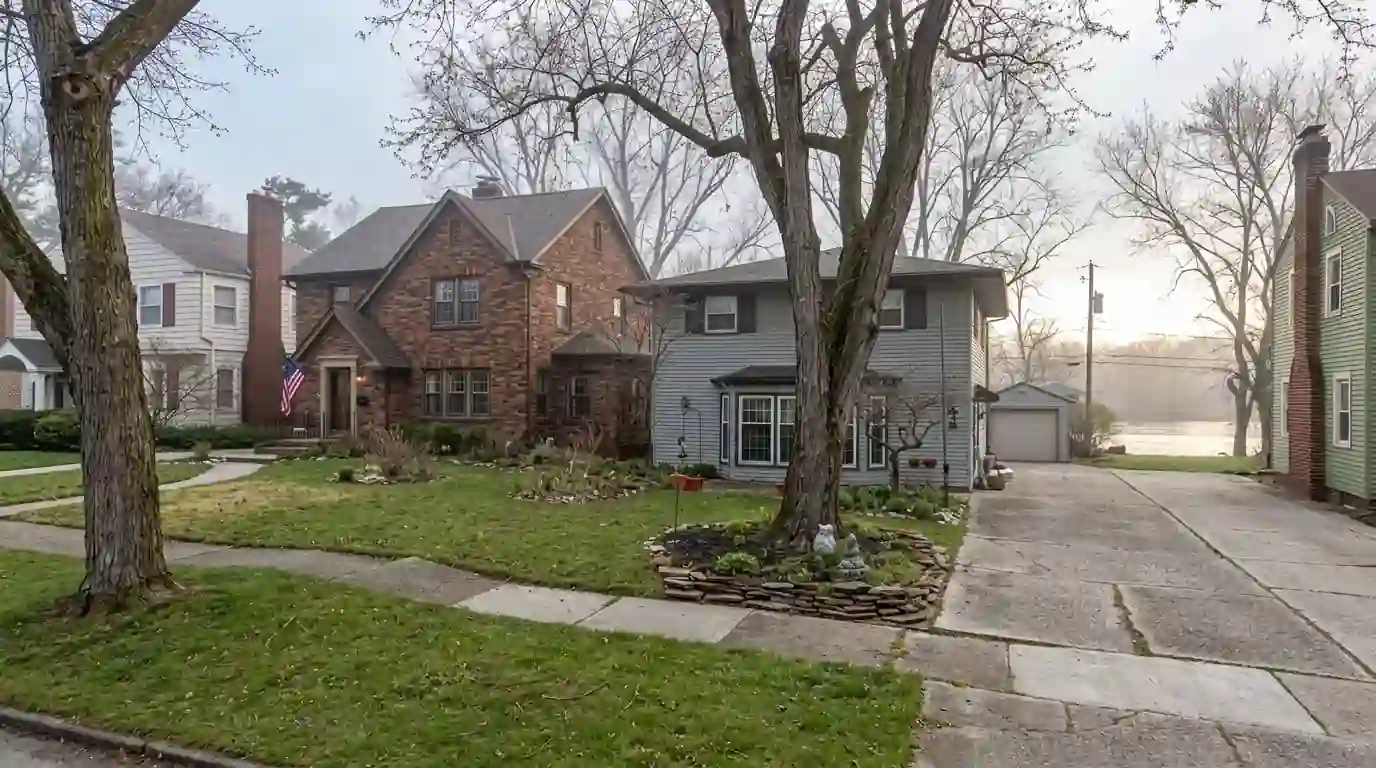
Foster Park is one of the south side's quieter pockets, with houses lining the edges of the park and the river bending past. Most of these homes went up between the 1920s and the 1950s, which means a lot of them have been through two or three heating systems already. Some still run the hot water boiler that came with a mid-century update. Others traded radiators for forced air decades ago and are now on a second or third furnace.
What ties the neighborhood together is moisture. A basement a few blocks from the St. Marys holds water vapor all summer, and the mechanical equipment lives right in that air. We see corroded gas valves, flaking flue pipe and blower motors with rusted bearings far more often here than in drier parts of Allen County. Landcons takes those calls day and night, and we explain what we find in plain terms before any work starts.
What river damp does to boilers and furnaces in Foster Park basements
A furnace in a dry basement can run 20 years without much rust. Put that same unit in a basement where the relative humidity sits near 70 percent from June to September and the story changes. Burner tubes scale over, the flame sensor picks up a film that stops it from proving flame, and sheet metal at the bottom of the cabinet starts to pit. Boilers suffer in their own way: relief valves weep, circulator flanges seep, and the pressure tank loses its air charge sooner than it should.
The houses themselves add to it. Many have stone or block foundations that wick ground moisture, small basement windows that were never meant for airflow, and floor drains that dry out and let sewer gas and dampness in. A portable dehumidifier helps, but most of them are undersized and full by noon. A ducted whole-home unit pulls water out of the entire lower level and drains on its own, which is why it has become one of our most common installs in this part of the south side.
The service calls Foster Park homeowners make most
These are the problems that bring us to houses around the park year after year.
Boiler losing pressure
The gauge drops below 12 psi, upstairs radiators go cold and the boiler short cycles. We usually trace it to a weeping relief valve, a failed expansion tank or a slow leak at an old union.
Furnace lights, then shuts off
Damp air coats the flame sensor and the furnace locks out after three tries. Cleaning the sensor buys time, but we also look at why the cabinet is wet in the first place.
Musty basement all summer
Homeowners call about the smell before they notice the numbers. A whole-home dehumidifier set near 50 percent usually ends the odor and protects the furnace, ducts and anything stored down there.
Water on the floor near the furnace
A clogged condensate trap on a high-efficiency furnace or a cracked drain line from the AC coil both leave puddles. We clear the line, add a pump if the drain is far away, and check the coil pan.
Rusted flue and vent connectors
Older single-wall vent pipe rots from the inside when flue gas condenses in a cool basement. We check draft, look for spillage at the draft hood and replace the connector before it becomes a carbon monoxide problem.
Keeping a south side home near the St. Marys dry and warm
Spring is the hard season for these houses. Snowmelt and rain push the river up, the water table rises with it, and basements that were fine in February start to feel clammy by April. That is a good time to have us look over the boiler or furnace, because we can catch corrosion before the heating season ends and plan any replacement for summer instead of a January night.
If your basement has ever taken water, mention it when you call. We will check whether the burners, controls or blower sat in water, since flooded gas controls should be replaced rather than dried out and restarted. On the cooling side, we look at the dehumidifier and the AC coil together so the two are not fighting each other.
Foster Park questions
Is a whole-home dehumidifier worth it for a Foster Park basement?
For most houses near the river, yes. A ducted unit removes far more water than a portable one, drains on its own and protects the furnace and ductwork from rust. A typical install runs about $1,895 to $3,245 depending on capacity and how the drain is routed, and we confirm the real price after seeing the basement.
Can my old Foster Park boiler be repaired, or does it need replacing?
Many older cast iron boilers can keep going for years if the heat exchanger is sound. We check for cracks, leaks at the sections and the condition of the burner. Valves, circulators and expansion tanks are normal repairs. If the block itself is leaking, replacement is usually the better spend.
Why does my Foster Park furnace keep locking out in summer and fall?
Basement humidity near the St. Marys leaves a film on the flame sensor and rusts the burners, so the furnace cannot prove flame and shuts itself down. Cleaning or replacing the sensor fixes the symptom. Lowering basement humidity and checking the condensate drain keeps it from coming back.
Do you answer emergency heating calls in Foster Park at night?
Yes. We answer 24/7, including weekends and holidays, and dispatch from our downtown office a short drive north on the south side routes. Call (260) 283-0173, tell us what the boiler or furnace is doing, and we will walk you through any safety steps while a technician heads out.