A quick rule of thumb: multiply the equipment's age by the repair cost. If the result tops roughly 5,000, replacement usually deserves a serious look. Then weigh safety, efficiency, refrigerant type and how often it has failed. A repair often makes sense on equipment under about 10 years old; past 15, bigger repairs rarely pay off.
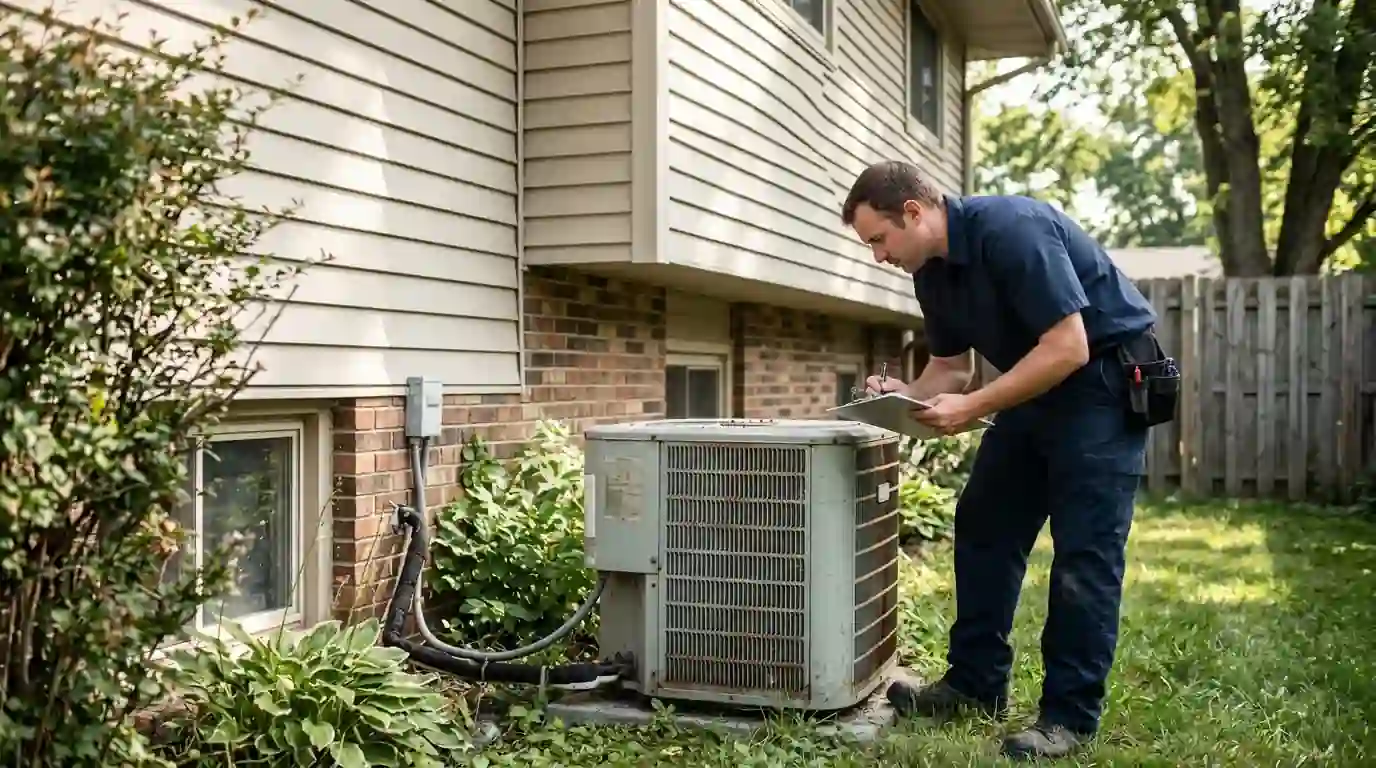
The age times repair cost rule of thumb
Multiply the age of the furnace or AC in years by the repair price. If the number comes out above about 5,000, many in the trade suggest replacing rather than repairing. It is a quick filter that keeps you from pouring money into a unit near the end of its life.
Treat it as a starting point, not a verdict. A $345 igniter on an 18-year-old furnace multiplies to 6,210, over the line, but a cheap repair that buys a couple of good winters may still be sensible while you plan. A $1,185 blower motor on that same furnace multiplies to more than 21,000, and that is a different conversation.
- 6-year-old AC, $395 capacitor and fan work: repair
- 12-year-old furnace, $795 control board: usually repair, then plan
- 17-year-old AC, $2,995 coil replacement: usually replace
- 20-year-old furnace, cracked heat exchanger: replace
Safety problems settle the question
Some findings end the debate regardless of cost math. A cracked or corroded heat exchanger, a furnace that fails combustion testing or a unit with scorched wiring or melted components should not be patched to get through the season. We will explain what we found and show you where we found it.
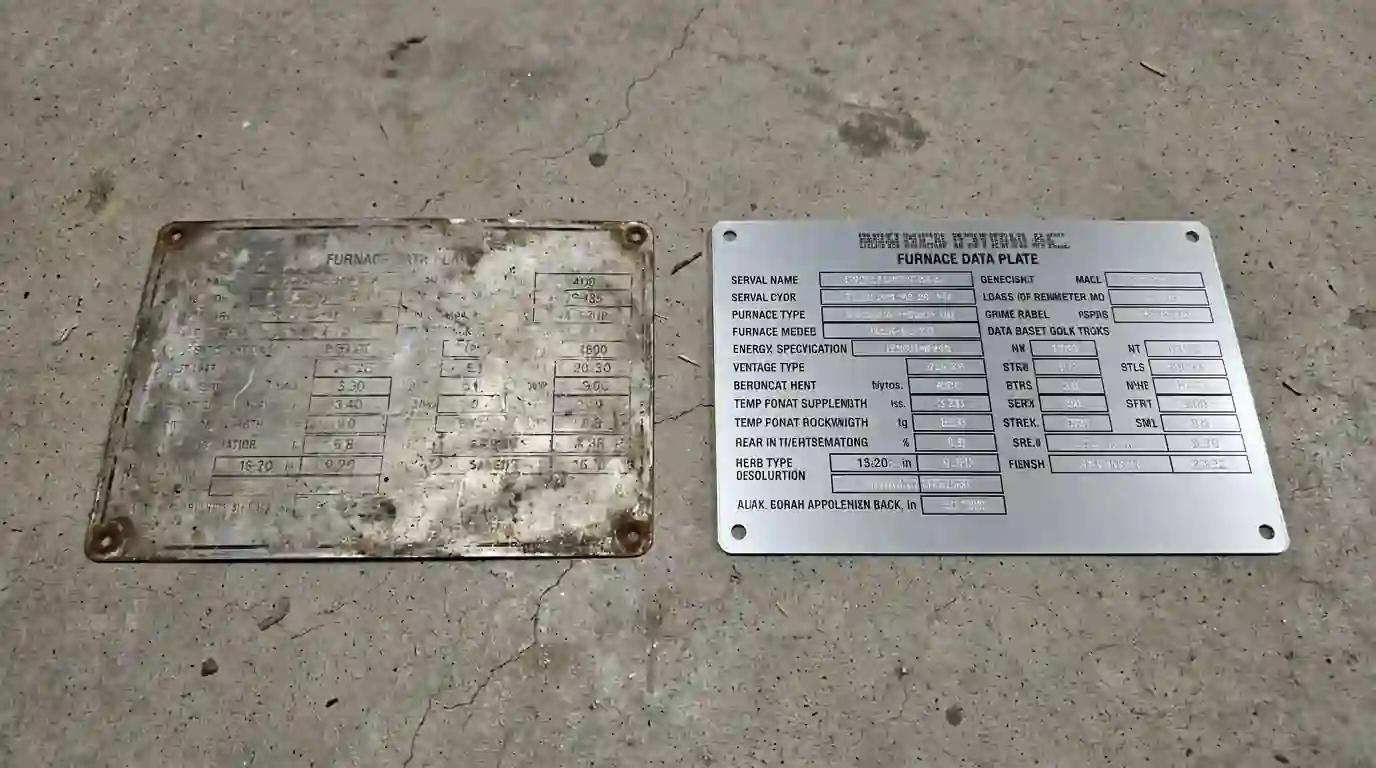
If a heat exchanger crack is confirmed, the furnace should be shut down. On most furnaces past their warranty years, replacing the heat exchanger costs close enough to a new furnace that replacement is the better value. Some manufacturers cover heat exchangers for longer than other parts, so it is worth checking the registration and data plate before deciding.
How refrigerant type changes the AC decision
Many older air conditioners and heat pumps use R-22, and its production ended in 2020. What is left comes from recovered and stockpiled supply, so recharging an R-22 system is expensive and a leak usually means replacement. If your outdoor unit's data plate says R-22, a major refrigerant repair rarely makes sense.
Systems from roughly the last 15 years mostly use R-410A, which is still serviceable; refrigerant runs a typical $89 to $159 per pound for it. New equipment now uses R-454B or R-32. A leaking R-410A system that is otherwise sound can be worth repairing, but an evaporator coil replacement at $1,485 to $2,995 on a 14-year-old system often tips the math toward replacing the whole match.
Efficiency gains you can actually expect
An older 80% furnace turns about 80 cents of every gas dollar into heat, and some furnaces from the 1990s and earlier are lower than that, especially after years of wear. A 95% or higher furnace turns 95 cents or more into heat. In a market where the furnace carries most of the year's comfort load, that difference shows on NIPSCO bills.
Older central air units in the 10 SEER range use noticeably more electricity than current equipment. We will not promise a dollar figure without seeing your bills and your house, because insulation, ductwork and how you set the thermostat matter as much as the equipment. Indiana Michigan Power and NIPSCO run rebate programs that change year to year, and we will tell you what is current.
Repair history and comfort problems
One repair is not a pattern. Two or three repairs in two years, especially on different parts, suggest the whole unit is wearing out. Keep your service receipts so you can see the trend instead of judging each repair alone. A furnace that needed an inducer last winter and a control board this winter is telling you something, even if each bill looked reasonable on its own.
Comfort counts too. If rooms are uneven, upstairs bedrooms never cool, or the house feels clammy in summer, a like-for-like repair will not change that. A replacement is the chance to correct sizing with a load calculation, add a variable-speed blower, fix duct problems or consider a heat pump or dual fuel setup.
Timing matters as well. A furnace that limps through a mild November may not survive a week of nights near zero in January, when demand for service and equipment is at its peak. If the numbers already point toward replacement, doing it in early fall or late spring gives you more choice of equipment and installation dates, and you are not deciding in a cold house.
Should you replace the furnace and AC together?
The indoor coil sits on top of the furnace, and the coil and outdoor unit need to be matched. When an AC dies on a furnace that is also old, replacing both at once usually costs less than two separate jobs and gets you matched equipment. When the furnace is only a few years old, replacing just the AC and coil is often sensible.
Typical ranges in this market are $3,285 to $5,495 for an 80% furnace, $4,385 to $8,945 for a 95%+ furnace and $4,285 to $9,795 for central AC replacement. These are typical ranges, and the real price depends on the visit, venting changes and ductwork.
Getting an honest answer on your system
When we diagnose an older system, we give you the repair price, our read on the condition of the rest of the equipment and, if it is close, a replacement range so you can compare. You decide. A diagnostic visit typically runs $89 to $149 on weekdays and $149 to $229 on nights, weekends and holidays.
If you are buying or selling a home and want to know where the equipment stands, an HVAC inspection with a written report typically runs $159 to $289. Landcons answers 24/7, every day, including holidays. Call (260) 283-0173.
- Have the age of the furnace and AC from the data plates handy
- Note the refrigerant type on the outdoor unit
- Gather recent repair receipts and a year of utility bills
More questions on this topic
Is it worth repairing an R-22 air conditioner that is low on refrigerant?
Usually not. R-22 production ended in 2020, so recharging is costly, and a system low on refrigerant has a leak that will keep leaking unless it is found and fixed. On an R-22 unit that is already well into its life, the money is generally better spent on a new matched system. A small, easily fixed leak on an otherwise healthy unit can be an exception.
How old is too old to repair a gas furnace instead of replacing it?
There is no hard cutoff. Many furnaces run 15 to 20 years, and small repairs past 15 can still be reasonable. Once a furnace is approaching 20 years and needs a major part like a blower motor, inducer or control board, replacement usually makes more sense. A cracked heat exchanger at any older age points to replacement.
Can I replace only my AC condenser and keep the old indoor coil?
Usually not with new equipment. New condensers use R-454B or R-32 and are designed to work with a matched indoor coil, so a mismatched coil can hurt efficiency and void manufacturer warranties. In most cases the coil and condenser are replaced together, and if the furnace is also old, it may make sense to replace the furnace at the same time.