If your central air runs but the house will not cool, check the thermostat setting, the filter, the breakers for both the indoor and outdoor units, the outdoor coil and the condensate drain switch. If the outdoor fan is not spinning, the coil or copper line is iced, or you hear buzzing or humming, shut the system off and call a technician.
Start at the thermostat
It sounds too simple, but a lot of no-cooling calls start here. Make sure the system is set to Cool, the fan is on Auto rather than On, and the setpoint is a few degrees below the room temperature. With the fan set to On, the blower keeps running between cooling cycles and pushes room-temperature air that can feel like the AC is not working.
Replace the batteries if the screen is dim or blank. If you have a smart thermostat, check that a schedule, an eco mode or a utility demand program is not holding the temperature up. Give the system 15 minutes after any change before deciding whether it worked.
Check the filter and the airflow inside
A clogged filter starves the indoor coil of airflow. With too little warm air moving across it, the coil gets too cold and can freeze into a block of ice, and then almost no air comes out of the registers. This is one of the most common causes of weak cooling we see in July.
Pull the filter at the furnace or return grille and replace it if it is gray and packed. Then walk the house and make sure supply registers are open and that furniture, rugs or curtains are not blocking the return grilles. In older homes with a single central return, keeping interior doors open helps air get back to the system.
- Replace a dirty filter with the correct size and a moderate MERV rating
- Open closed supply registers, especially upstairs
- Clear anything sitting in front of return grilles
- Feel for air at several registers to compare strength
Look at the outdoor unit, carefully
Go outside while the system is calling for cooling. You should hear the compressor humming and see the fan on top spinning, pushing warm air up and out. If the fan is still while the unit hums or buzzes, turn the system off at the thermostat and call us; a failed capacitor or fan motor is likely, and running it that way can damage the compressor.
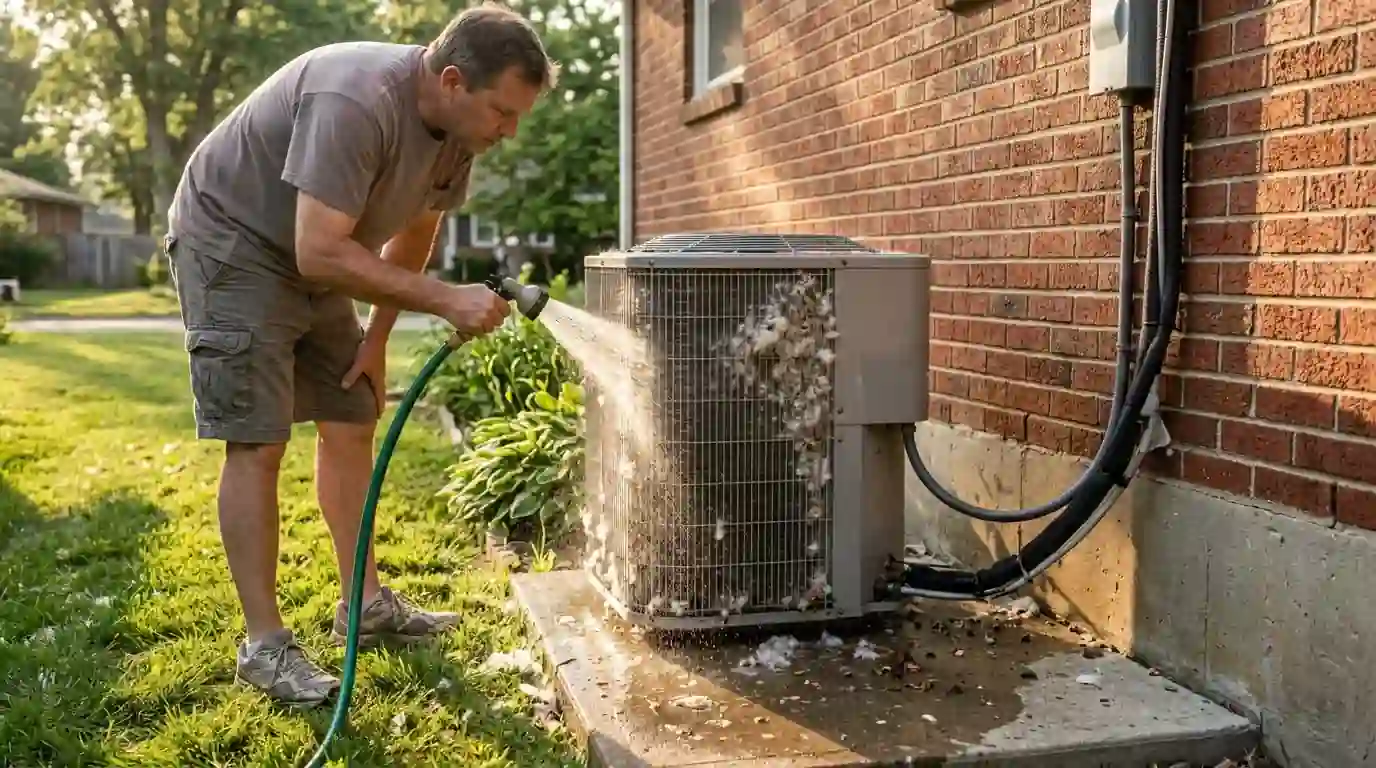
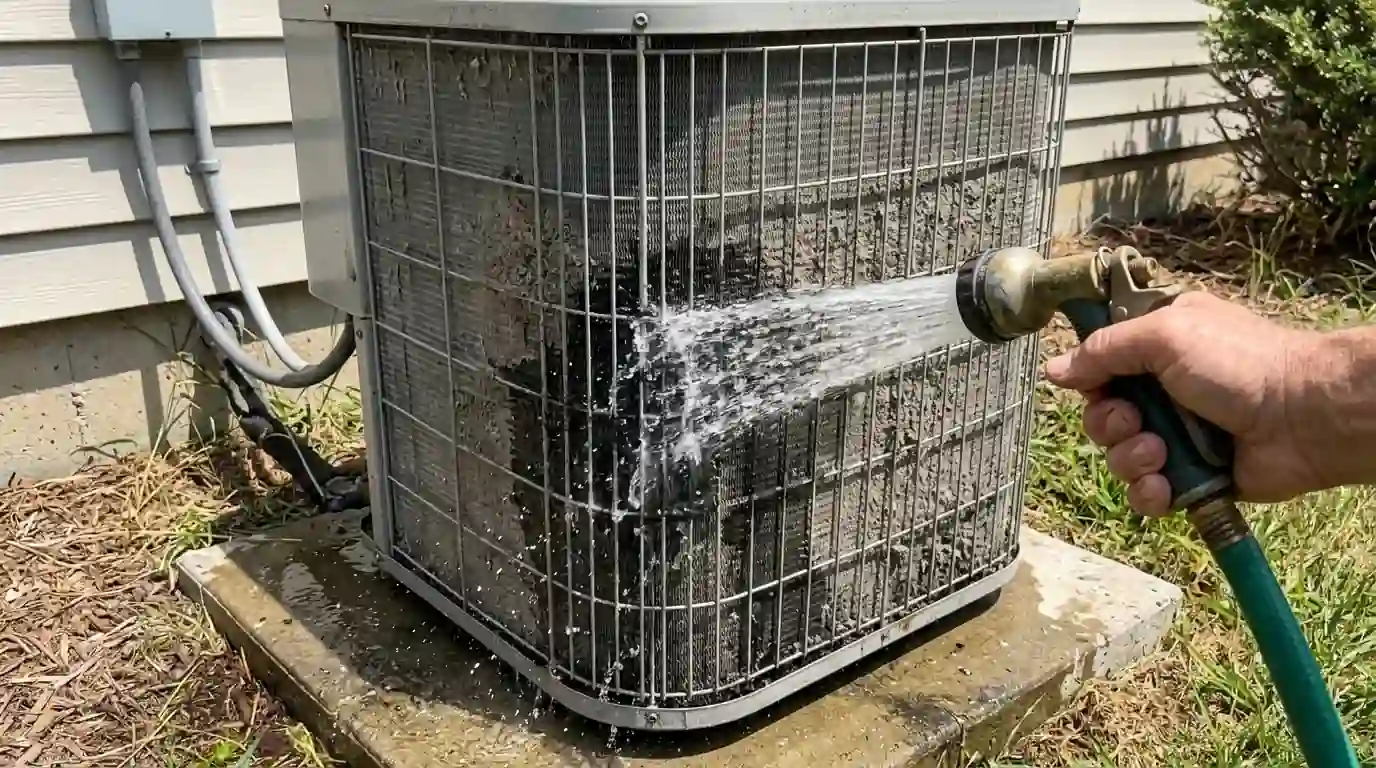
Look at the fins around the outside of the unit. Cottonwood fluff, grass clippings and leaves can coat the coil and trap heat, which hits homes on wooded lots in Covington and along the rivers hardest every June. With power off at the outdoor disconnect, you can gently rinse the coil with a garden hose on a soft spray, aimed straight in so the fins do not bend. Never use a pressure washer, and never open the electrical panel on the unit.
Breakers, the outdoor disconnect and the drain safety switch
Central AC usually has two power sources: a breaker for the indoor furnace or air handler and a separate breaker for the outdoor unit, plus a disconnect box mounted on the wall near the condenser. If the indoor blower runs but the outdoor unit is silent, check that the outdoor breaker has not tripped and that the disconnect is in the on position.
You can reset a tripped breaker once. If it trips again, leave it off and call, because repeated trips point to an electrical fault or a failing compressor. Also check the condensate drain: many systems have a float safety switch that shuts cooling off when the drain line backs up. Standing water in the pan under the coil is the giveaway.
- Reset a tripped AC breaker only once
- Confirm the outdoor disconnect is fully seated and on
- Look for water in the drain pan or a wet floor near the furnace
- Check for a condensate pump that hums but does not empty
If the coil or copper line is frozen
Ice on the large copper line at the outdoor unit or frost on the indoor coil means the system is not working right. Turn cooling off at the thermostat, set the fan to On, and let the ice melt completely, which can take several hours. Put towels down near the furnace, since a lot of water will drain at once.
If a new filter and open registers fix it, keep an eye on it. If the ice comes back, the cause is usually low refrigerant from a leak, a weak blower or a dirty coil. Refrigerant work falls under EPA Section 608 rules, and simply topping off a leaking system is not a real repair. A refrigerant leak search typically runs $245 to $495, and the real price depends on the visit.
Why it struggles on the hottest, stickiest days
July afternoons here average in the mid 80s with real humidity, and a properly sized central air system is usually designed to hold about a 20 degree difference from outdoors to indoors. On a 95°F day, a house at 75°F to 77°F may be doing exactly what the system can manage. Sunny west-facing rooms and upstairs bedrooms will run warmer than the thermostat.
A good test is the temperature split: air entering the return should be roughly 15 to 20 degrees warmer than air coming out of a nearby supply register once the system has run a while. A much smaller split points to a problem a technician should diagnose. Keeping blinds closed on sunny sides and setting the thermostat back gradually helps a healthy system keep up.
When to stop checking and call us
Call if the outdoor fan is not spinning, if the unit hums or buzzes, if breakers trip twice, if ice returns after thawing, if you smell burning or if water is leaking into finished space. Those need tools and training, and some involve high voltage or refrigerant you should not handle. Landcons answers 24/7, every day, including holidays.
A diagnostic visit typically runs $89 to $149 on weekdays and $149 to $229 on nights, weekends and holidays. Common fixes include a capacitor at $165 to $395, a contactor at $175 to $385 and a condenser fan motor at $395 to $845. These are typical ranges, and the real price depends on what we find. Call (260) 283-0173.
More questions on this topic
Why is my AC outdoor fan not spinning but the unit is humming?
That pattern usually means a failed run capacitor, a seized fan motor or a stuck contactor. The compressor may be trying to start without the fan pulling air through the coil, which overheats it quickly. Turn the system off at the thermostat and call. Do not push the fan blades with a stick, since the unit carries high voltage and capacitors store a charge.
How long should I let a frozen AC coil thaw before turning cooling back on?
Plan on several hours, sometimes most of a day, with cooling off and the blower on to speed melting. Make sure every bit of ice is gone from the indoor coil and the copper line before restarting. If it freezes again within a day or two after a filter change, the system likely has a refrigerant or airflow problem that needs a technician.
Can I add refrigerant to my central AC myself?
No. Handling refrigerant falls under EPA Section 608 rules, and adding it without finding the leak only delays the next breakdown. Overcharging can also damage the compressor. If your system is low, a technician should locate and repair the leak, pull a vacuum where needed and charge it by weight or by measured readings.