For most homes, a MERV 8 to MERV 11 filter balances clean air and good airflow. Change a 1 inch filter every one to three months, more often in heating and cooling season, and a 4 inch media filter every six to twelve months. Read the exact size printed on the old filter's frame and match the airflow arrow.
What a furnace filter actually protects
The filter's first job is protecting the equipment, not the people. It keeps dust and debris off the blower wheel, the AC evaporator coil and the heat exchanger. A clean coil and blower move air efficiently and run cooler, which helps everything last longer.
A better filter also helps indoor air, catching pet hair, dust, pollen and some finer particles. But every filter adds resistance to airflow, and a filter that is too restrictive or too dirty can cause more trouble than it solves. The goal is the best filtration your system can handle without starving it of air.
MERV ratings in plain terms
MERV stands for Minimum Efficiency Reporting Value, a scale that measures how well a filter catches particles of different sizes. Higher numbers catch smaller particles. Some store brands use their own rating scales, so look for the MERV number on the package to compare fairly.
- MERV 1 to 4: thin fiberglass, catches large dust and lint, little protection for the coil
- MERV 5 to 8: pleated, good everyday choice for equipment protection and household dust
- MERV 9 to 12: finer pleats, better for pets and pollen, check airflow on 1 inch sizes
- MERV 13 and up: catches finer particles, usually best in a 4 inch or deeper cabinet
1 inch filters versus 4 inch media filters
A standard 1 inch filter slides into a slot beside the furnace or behind a return grille. It is cheap and easy to find, but it has limited surface area, so a high-MERV 1 inch filter clogs quickly and restricts airflow. That is why we often suggest MERV 8 for a 1 inch slot.
A 4 inch or 5 inch media filter sits in a cabinet between the return duct and the furnace. Its deep pleats give it several times the surface area, so it can filter at MERV 11 to 13 with less resistance and last much longer between changes. Adding a media filter cabinet typically runs $385 to $795, and the real price depends on the visit and how much room there is around the furnace.
Finding the right size
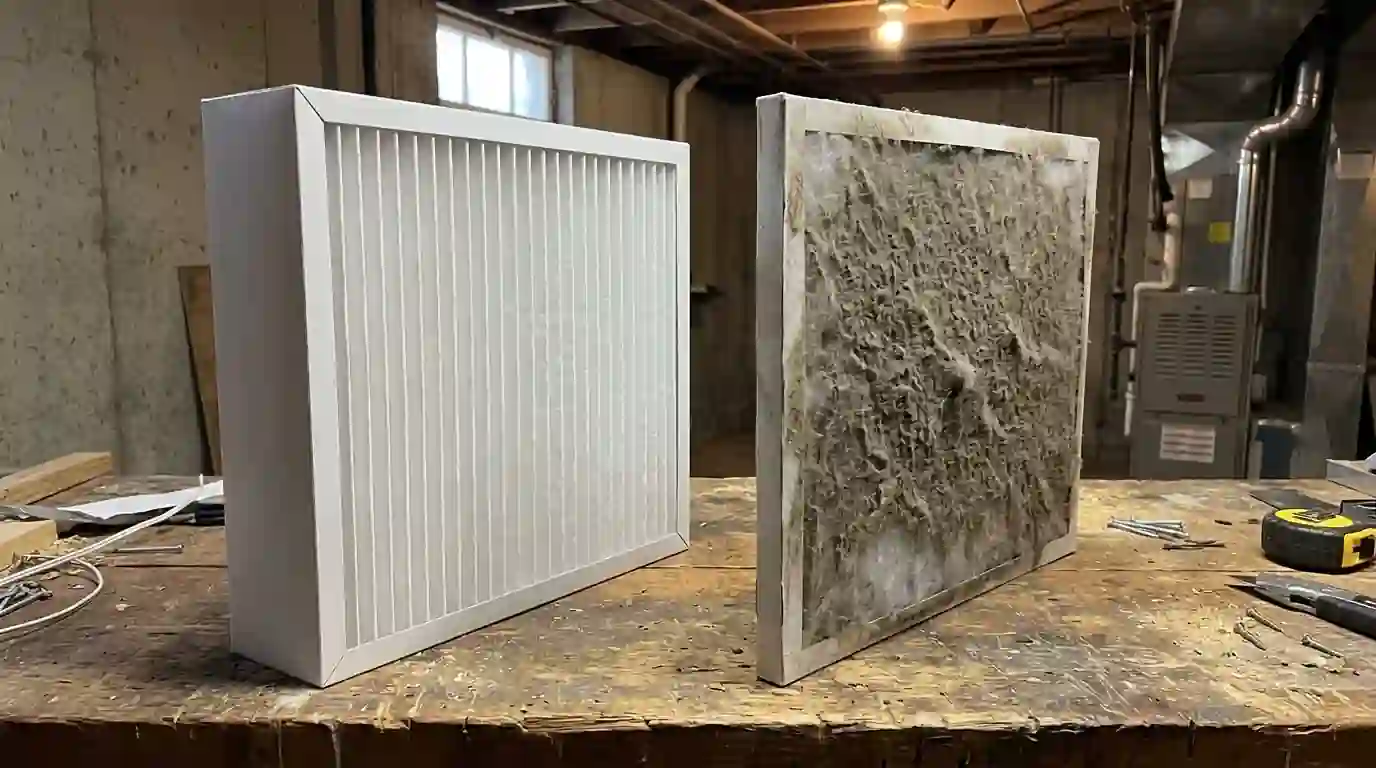
The size is printed on the edge of the old filter, for example 16x25x1 or 20x25x4. That printed number is the nominal size; actual dimensions run a little smaller so the filter fits the slot. Buy the same nominal size, not one you measured with a tape and rounded up.
Some homes have filters in more than one place: at the furnace, behind a large return grille in a hallway, or both. If you have filters in both locations, the system usually only needs one, and doubling up can choke the airflow. If you are not sure which is which, ask us at your next visit.
- Common 1 inch sizes include 16x20x1, 16x25x1, 20x20x1 and 20x25x1
- Media cabinets often take 16x25x4 or 20x25x4, but brands vary
- Point the airflow arrow toward the furnace, away from the return
- A filter that slides in loose leaves gaps where dust bypasses it
A change schedule that matches how your house lives
Package labels often say three months, but that assumes light use. In a market where the furnace runs hard from October through April and the AC carries July and August, a 1 inch filter often needs changing every month or two during those seasons. Homes with pets, ongoing remodeling or several people at home usually need more frequent changes.
The honest test is to look. Pull the filter once a month in heavy seasons. If it is gray and you cannot see light through it, change it, whatever the calendar says.
- 1 inch pleated, peak heating or cooling season: every 1 to 2 months
- 1 inch pleated, mild spring and fall weeks: every 2 to 3 months
- 4 inch or 5 inch media: every 6 to 12 months
- After drywall sanding, flooring work or a basement remodel: check weekly
How to change a furnace filter safely in a few minutes
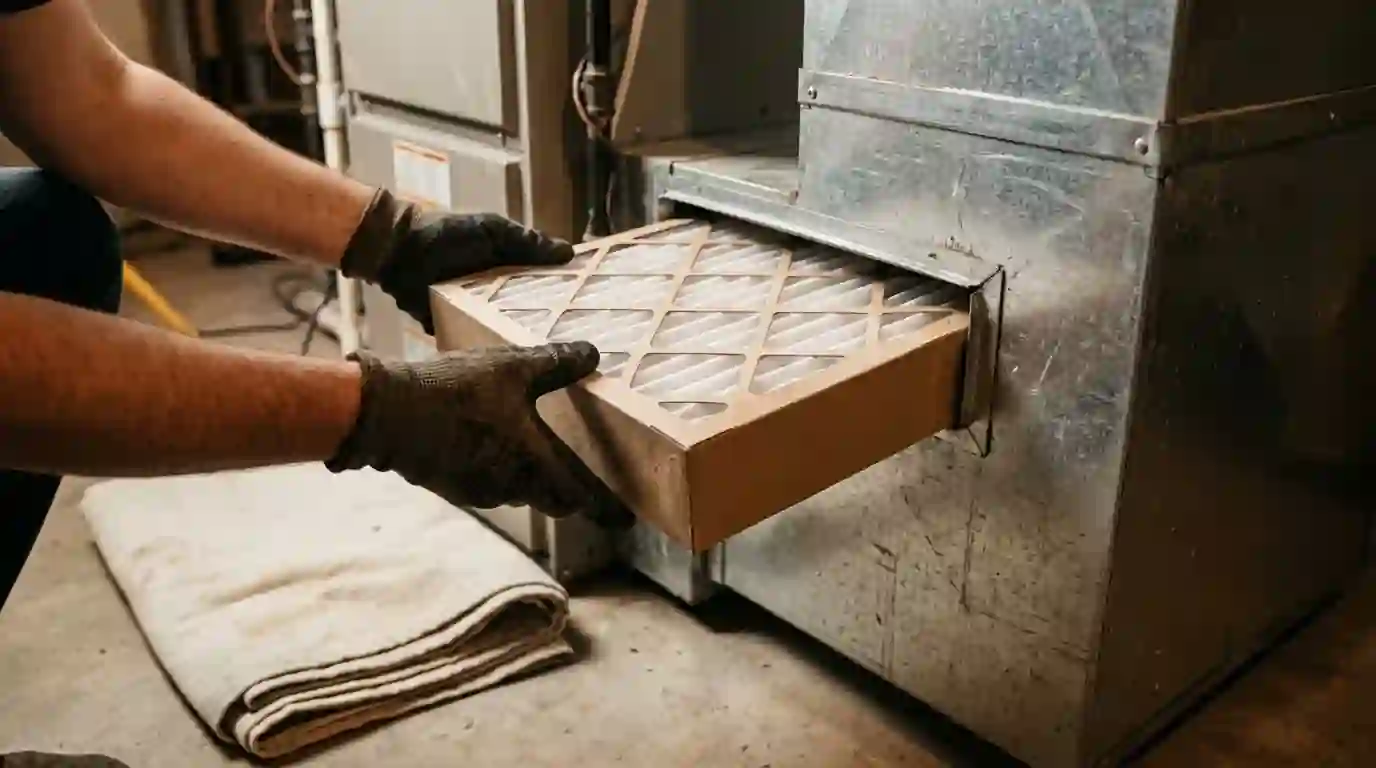
Set the thermostat to off so the blower is not running while the filter is out. Slide the old filter straight out, keeping the dirty side facing up so dust does not fall into the furnace. Note the size and the direction of the arrow before you throw it away.
Slide the new filter in with the arrow pointing toward the furnace, close any cover or door on the filter slot, and turn the system back on. Many Fort Wayne basements have the filter slot right where the return duct meets the furnace, and a missing slot cover lets the furnace pull in unfiltered basement air. If the cover is lost or broken, we can replace it.
When a filter is too much for your system
Some furnaces, especially older units with small return ducts, struggle with high-MERV 1 inch filters. Signs include the furnace shutting off on the high limit switch, short cycling, a whistling return grille, weak airflow at registers or an AC coil that freezes in summer. Older homes and post-war ranches with a single small return are common places to see this.
If those symptoms started after you switched filters, go back to a lower MERV 1 inch filter and see whether they clear up. For better filtration without the restriction, a deeper media cabinet or added return capacity are the lasting fixes. We can measure static pressure to tell you exactly how much filter your system can handle.
Filters, allergies and other air quality add-ons
A good filter changed on time is the foundation of indoor air quality, but it does not fix humidity, odors or radon. Allen County sits in EPA radon zone 1, and radon needs its own test and mitigation; no furnace filter removes it. Basements that run damp in summer may need dehumidification more than a better filter.
If someone in the house has allergies or asthma, a media filter at MERV 11 to 13, sealed ductwork near the furnace and controlled humidity usually help more than an expensive gadget. Landcons can measure airflow, humidity and particulates at an indoor air quality testing visit, which typically runs $189 to $395. Call (260) 283-0173 any time; we answer 24/7.
More questions on this topic
Is a MERV 13 furnace filter too restrictive for a 1 inch slot?
Often it is. A MERV 13 filter in a 1 inch size packs fine material into a small area, and many residential blowers cannot push enough air through it, especially once it loads with dust. If you want MERV 13 filtration, a 4 inch or 5 inch media cabinet is usually the better way to get it without stressing the furnace.
Do washable furnace filters work as well as disposable pleated filters?
Most washable filters catch large dust but perform closer to a low-MERV filter than a good pleated one. They also need thorough cleaning and complete drying before going back in, or they can grow mold. For most homes, a disposable pleated filter changed on schedule protects the equipment better and is less work.
Why does my new furnace filter turn black so fast?
Dark filters often come from candle and fireplace soot, cooking smoke or a leaky return duct pulling dirty air from a basement or crawlspace. Fast loading can also follow remodeling dust. If the filter turns black quickly with no obvious source, have the return ductwork and the furnace burners checked, since poor combustion can also cause soot.