Short cycling means the furnace starts, runs a few minutes and shuts off before the house warms up, then repeats. The most common causes are a clogged filter, a dirty flame sensor, a blocked vent or condensate drain, a badly placed thermostat or an oversized furnace. Check the filter and thermostat yourself first; anything beyond that is a job for a technician.
What short cycling looks like on a cold night
A healthy gas furnace on a cold night runs in fairly long cycles, often 10 to 15 minutes or more, then rests. When a furnace short cycles, you hear the inducer start, the burners light, the blower may come on, and then everything shuts down after a minute or a few minutes. Sometimes it tries again right away, and sometimes it locks out for an hour.
The house may still feel warm near the registers but never quite reaches the thermostat setting. Short cycling also wears out igniters, inducer motors and relays because each start is the hardest moment in a furnace's cycle. In a heating season as long as ours, that extra wear adds up quickly.
Safe checks you can make before you call
A few causes are things you can look at yourself without opening the furnace cabinet. Do these first, then give the furnace an hour to see whether the pattern changes. If it does not, stop there and call.
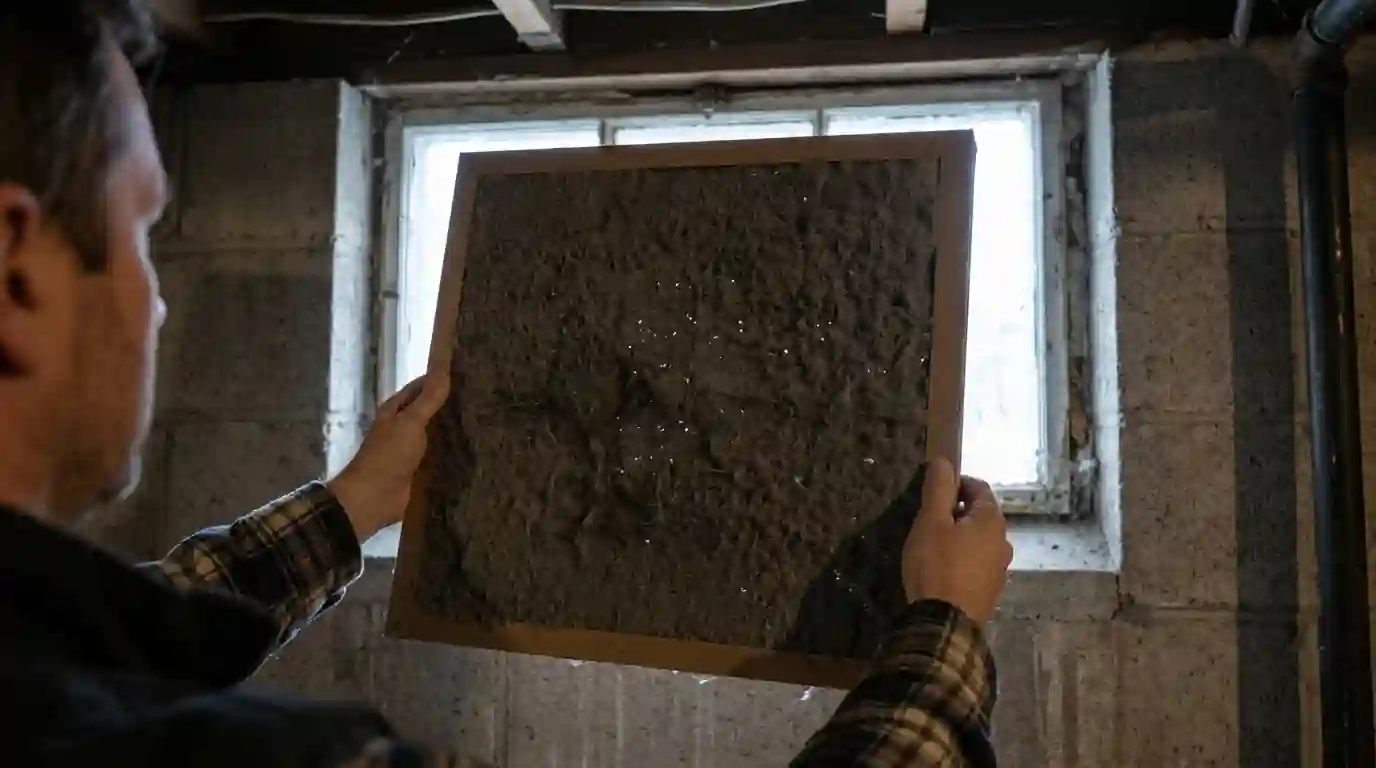
- Pull the filter and hold it up to a light; replace it if you cannot see through it
- Make sure supply registers and the main return grille are open and not blocked by furniture
- Check the thermostat batteries and make sure it is not in direct sun or above a heat register
- Look outside at the white PVC pipes of a high-efficiency furnace for snow, ice or nests
- Look at the furnace's status light through the small window and note the blink pattern
A dirty filter or blocked airflow trips the limit switch
The most common cause we find is overheating. When air cannot move through the furnace fast enough, the heat exchanger gets too hot and the high limit switch shuts the burners off to protect it. Once things cool, the furnace restarts, overheats again, and the cycle repeats.
A clogged filter is the usual culprit, but closed registers, a crushed return duct, a dirty blower wheel or a failing blower motor do the same thing. If a fresh filter fixes the problem, you are done. If not, we check temperature rise across the furnace, blower speed settings and duct static pressure to find where the airflow is being choked.
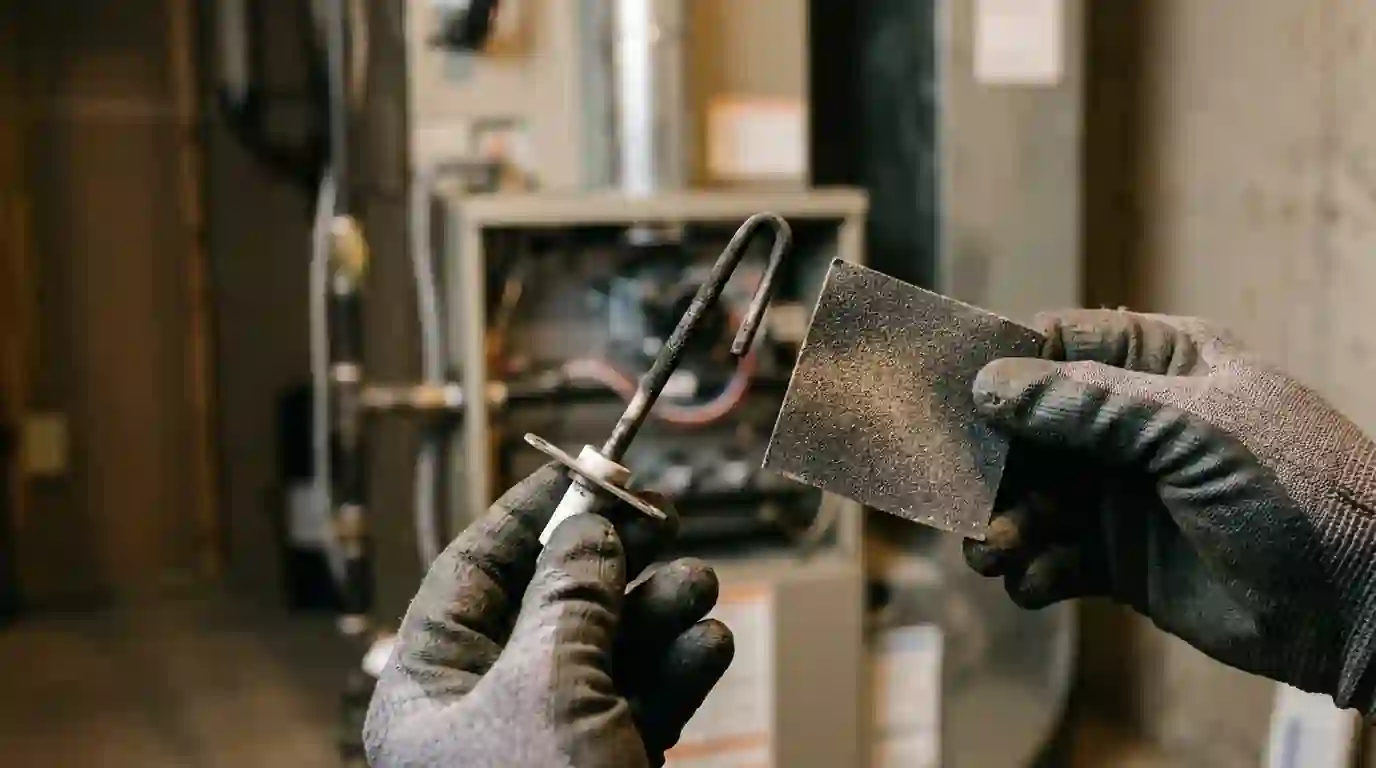
Flame sensor faults: burners light, then shut off
If the burners light for only a few seconds before shutting off, the flame sensor is a strong suspect. This thin metal rod sits in the burner flame and tells the control board the gas is actually burning. A light coat of oxidation from normal use weakens that signal, and the board shuts the gas off as a safety measure.
Cleaning or replacing a flame sensor runs a typical $119 to $235, and the real price depends on the visit. We do not recommend that homeowners pull and sand the sensor themselves. It means working inside the burner compartment near the gas valve and wiring, and a sensor that keeps fouling can point to a combustion problem that needs a proper look.
Venting, pressure switches and condensate drains
Every modern furnace proves its venting before it lights. The inducer motor pulls air through the heat exchanger and a pressure switch confirms the draft. If the vent is partly blocked, the condensate drain is backing up or the switch is weak, the furnace may start and then drop out partway through a cycle.
In Allen County winters we see this most on high-efficiency furnaces with sidewall vents that drift over with snow, and on condensate lines that freeze where they run through a cold spot. A pressure switch replacement typically runs $185 to $365, but replacing the switch without finding why it opened is just guessing.
You can safely brush loose snow away from a sidewall vent and intake with a gloved hand or a soft broom. Do not chip at ice with a shovel or anything sharp, because cracked PVC can leak exhaust. If the drain line or the trap inside the furnace is the problem, leave that to us.
- Keep at least a foot of clearance around outdoor vent terminations after every storm
- Watch for water pooling under the furnace, a sign of a backed-up drain
- Listen for gurgling in the condensate line just before the furnace shuts off
Thermostat location and an oversized furnace
A thermostat placed near a supply register, on an outside wall, near a kitchen or in afternoon sun can read the room wrong. It reaches the setting too soon, shuts the furnace off, and then calls again a few minutes later when the rest of the house is still cool. Moving the thermostat or adjusting its cycle settings can solve this outright.
An oversized furnace is a different problem. It heats the air near the thermostat so fast that cycles stay short even when everything works perfectly. We find this often in post-war ranches where a replacement was sized by the old unit's label rather than a load calculation. A two-stage or modulating furnace, or correct sizing at the next replacement, is the real fix.
Some thermostats also have a cycle rate or swing setting that controls how many times per hour the furnace may run. If someone set it for a different type of system, the furnace may run in short bursts by design. We check those settings on every short cycling call before replacing any parts.
When short cycling means call now
Call us right away if short cycling comes with a carbon monoxide alarm, a gas smell, headaches or nausea in the house, soot near the furnace, or a burning smell. Also call if the furnace has locked out and the house is cooling on a bitter night. Landcons answers 24/7, every day, including holidays.
A diagnostic visit runs a typical $89 to $149 on weekdays and $149 to $229 on nights, weekends and holidays. We read the error code history, measure temperature rise and gas pressure, test the flame signal and pressure switch, and tell you what failed and what it costs before any repair. Call (260) 283-0173.
More questions on this topic
Is it dangerous to keep running a furnace that is short cycling?
Often it is not immediately dangerous, because short cycling is usually a safety switch doing its job. But overheating stresses the heat exchanger, and a blocked vent can mean combustion gases are not leaving properly. Keep a working carbon monoxide alarm near sleeping areas, change the filter, and have it diagnosed promptly rather than letting it cycle for weeks.
How short is too short for a furnace heating cycle?
As a rough guide, cycles under about five minutes on a cold day, especially several per hour, point to short cycling. On mild fall days cycles are naturally shorter because the house needs less heat. What matters is the pattern: if the furnace keeps starting and stopping while rooms stay below the setting, something is cutting the cycle off.
Can a new furnace filter cause furnace short cycling?
It can if the new filter is much more restrictive than the system was designed for. A thick, high-MERV 1 inch filter can choke airflow on some furnaces and trip the high limit switch. If short cycling started right after a filter change, try a lower MERV 1 inch filter or ask us about a 4 inch media cabinet that filters well without the restriction.