A gas furnace that gets a yearly tune-up and clean filters usually lasts 15 to 20 years in northeast Indiana, and some run longer. Long heating seasons, dirty filters, poor venting and oversized equipment wear them out sooner. Past about 15 years, start budgeting, watch for the warning signs below, and have the heat exchanger checked every fall.
What a realistic furnace lifespan looks like here
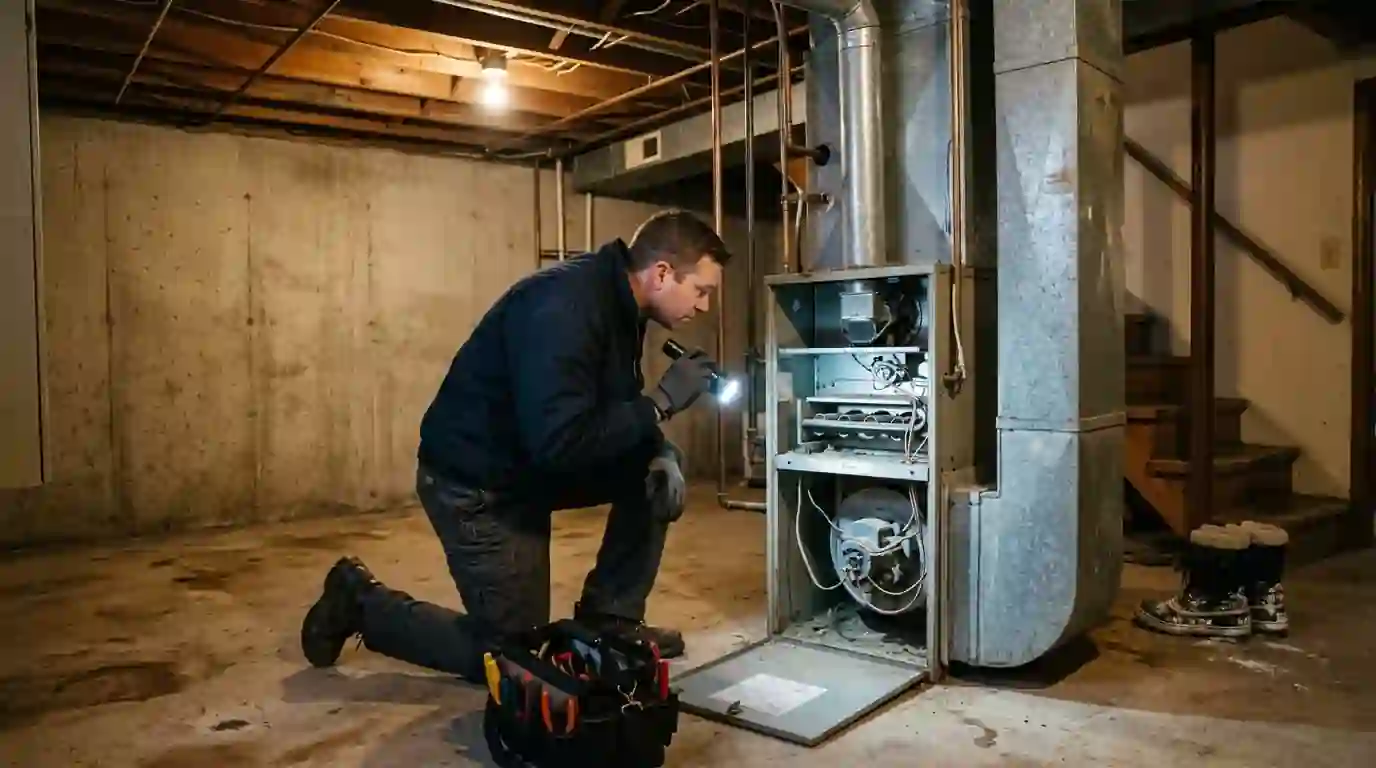
Most gas furnaces we see in Allen County basements last somewhere between 15 and 20 years. Well-kept units in homes with good ductwork sometimes pass 25, and neglected ones can give out before 12. The number on the data plate matters less than how hard the furnace has worked and how it was cared for.
Our heating season runs roughly October through April, with January nights averaging about 17°F. That means a furnace in this market logs far more run hours each year than one in a southern state. More hours means more heat cycles on the heat exchanger, more starts on the igniter and inducer, and more wear on the blower motor bearings.
Which parts wear out first, and which ones end the furnace
Most furnace repairs are wear parts, and replacing them does not mean the furnace is finished. Igniters, flame sensors, pressure switches and capacitors are normal maintenance items over a furnace's life. Bigger parts like inducer motors, blower motors and control boards cost more but are still often worth fixing on a younger unit.
The part that usually ends a furnace is the heat exchanger. It is the metal chamber that keeps combustion gases separate from the air you breathe, and it expands and contracts every time the burners fire. Over the years that stress can open cracks or holes. A failed heat exchanger is a safety problem, and on most older furnaces the repair cost is close enough to replacement that replacing makes more sense.
- Igniter: typical range $189 to $345
- Flame sensor clean or replace: $119 to $235
- Inducer motor: $485 to $945
- Blower motor: $445 to $1,185
- Control board: $385 to $795
Habits that add years to a furnace in Allen County
The biggest single factor is airflow. A clogged filter makes the heat exchanger run hot, trips the high limit switch and shortens the life of the blower. Check a 1 inch filter every month during winter, and change it whenever you cannot see light through it.
A yearly fall tune-up catches small problems before they become no-heat calls on the coldest night of the year. We clean the flame sensor, check gas pressure and temperature rise, test safety switches, inspect the heat exchanger and measure combustion. A tune-up runs a typical $89 to $159, and the real price depends on the visit.
- Keep the area around a basement furnace clear of storage and laundry lint
- Keep high-efficiency intake and exhaust pipes clear of snow drifts
- Do not close more than a couple of supply registers in unused rooms
- Have a technician look at any new noise or smell rather than waiting for spring
Signs your furnace is near the end
Age alone is not a reason to replace a furnace that runs safely and keeps the house warm. It is the combination of age and these signs that tells you the end is near. If you notice two or three of them on a furnace older than 15 years, it is time to start planning instead of reacting.
- Repairs every winter, often more than one
- Rooms that never quite reach the thermostat setting on cold nights
- Rising NIPSCO gas bills with no change in how you set the thermostat
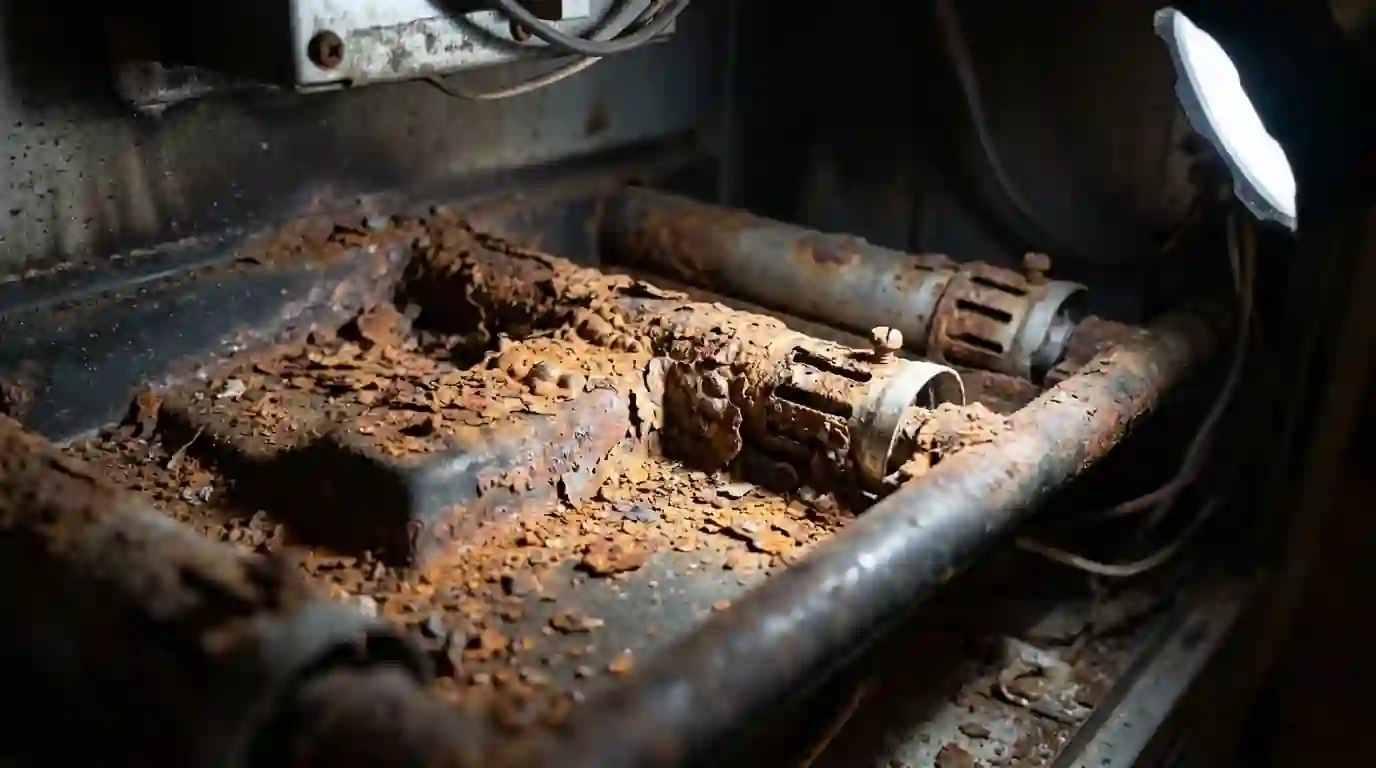
- Rust, soot or scorching around the burner area
- A yellow or lazy burner flame instead of a steady blue one
- A technician has noted cracks or corrosion on the heat exchanger
Why planning a replacement beats an emergency swap
When a 20-year-old furnace quits in January, you end up choosing equipment in a cold house under time pressure. Planning ahead gives you room to get a proper load calculation, compare an 80% furnace with a 95% unit, look at duct problems and check current Indiana Michigan Power and NIPSCO rebate programs, which change from year to year.
Typical replacement ranges in this market are $3,285 to $5,495 for an 80% AFUE furnace and $4,385 to $8,945 for a 95% or higher unit, with venting changes extra. Those are typical ranges and the real price depends on what we find at the visit. Moving from an 80% furnace to a 95% unit often means new PVC venting and, in some older homes, a chimney liner for the water heater that used to share the flue.
Older furnaces in post-war ranches and historic districts
In the 1950s and 1960s ranches on the north, east and south sides, many homes are on their second or third furnace. The original ductwork was sized for older, lower-output equipment, and we sometimes find a replacement furnace that is larger than the house needs. An oversized furnace short cycles, and short cycling wears parts out faster.
In older central neighborhoods, many forced-air systems began life as gravity furnaces or replaced a coal boiler. Those houses often have undersized returns or ducts that only reach the first floor. If your furnace there is nearing the end of its life, replacement is a good moment to fix airflow problems instead of just dropping in a new box.
When to call us instead of waiting
Call right away if your carbon monoxide alarm sounds, if you smell gas, or if the furnace keeps shutting down and restarting. Those are not wait-until-spring problems. Landcons answers the phone 24/7, including holidays, and a diagnostic visit runs a typical $89 to $149 on weekdays and $149 to $229 on nights, weekends and holidays.
If nothing is urgent but your furnace is past 15 years, a fall tune-up with a heat exchanger inspection gives you a straight answer about how much life is left. We will tell you what we see, what it costs to fix, and whether replacement is worth planning for this year or a few years out. Call (260) 283-0173.
More questions on this topic
Can a 25-year-old furnace in Fort Wayne still be safe to run?
Yes, if the heat exchanger is intact, combustion readings are normal and the safety switches work. Age raises the odds of cracks and part failures, so a furnace that old should get a careful inspection every fall and a working carbon monoxide alarm nearby. We would also start budgeting, because parts for very old units can be harder to find and the efficiency gap with newer equipment is real.
Does a 95% furnace last as long as an 80% furnace?
Usually about the same, often 15 to 20 years with good care. A 95% furnace has a secondary heat exchanger, a condensate drain and PVC venting, so it has a few extra parts to look after, especially the drain and the vent pipes in snowy weather. With yearly maintenance, neither type has a clear lifespan advantage in our experience.
How much does furnace life expectancy change with yearly tune-ups?
We cannot put an honest number of years on it, but the pattern is clear: furnaces that get yearly service and clean filters tend to reach the long end of the 15 to 20 year range. Tune-ups catch dirty flame sensors, weak capacitors, loose wiring and drain clogs before those small faults stress bigger parts like the blower motor and heat exchanger.