A geothermal heat pump uses a buried loop to trade heat with the ground, which stays near the same temperature all year. A complete system with the loop typically runs $21,485 to $39,895 here. Payback depends on the fuel you replace, your lot, the loop type and how long you stay; it looks best against propane or electric heat.
Why the ground makes such a steady heat source
A few feet below the frost line, the soil in northeast Indiana stays at a fairly steady temperature all year, roughly in the low to mid 50s. That is much warmer than January air and much cooler than July air. A geothermal heat pump pumps water or an antifreeze solution through buried pipe to collect heat from that ground in winter and dump heat into it in summer.
Because the loop sees steady temperatures instead of swinging air temperatures, a geothermal system does not lose capacity on a 5°F night the way an air-source heat pump does. It heats, cools and can often help make hot water. Fort Wayne also happens to be home to WaterFurnace, one of the major geothermal heat pump makers, so the technology is familiar here.
Vertical loops versus horizontal loops
The loop is the biggest part of the cost and the part that lasts longest. Which type fits depends mostly on how much open ground you have, what is buried in it and what the soil is like. A good loop design is sized to the home's heating and cooling load, not to a rule of thumb.
- Horizontal loop: pipe laid in trenches, typically several feet deep, needs a large open area
- Horizontal loop: usually lower cost where land is available, common on rural lots
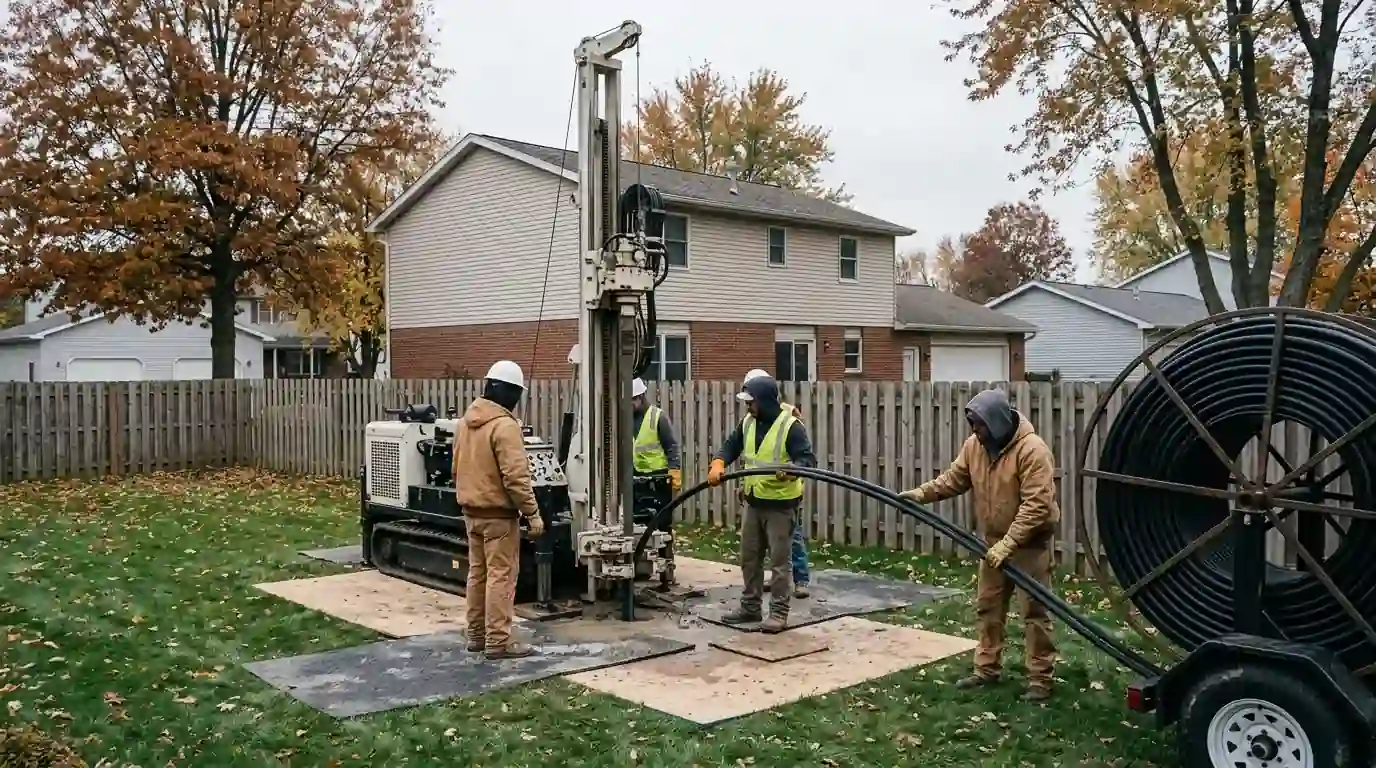
- Vertical loop: pipe in drilled bores that run deep into the ground, small footprint
- Vertical loop: suits suburban lots, costs more because of drilling
- Pond loop: coils sunk in a pond of enough size and depth, where one exists
- Open loop: uses well water and returns it, depends on well capacity and local rules
What geothermal costs here, and what drives the price
A complete geothermal system with the loop typically runs $21,485 to $39,895 in this market. That is a typical range, and the real price depends on the visit, the load calculation and the site. The indoor unit is only part of it; the loop, the drilling or trenching and the ductwork changes make up much of the total.
If you already have a working loop and only need a new indoor heat pump, the cost drops considerably. That is one of the quieter advantages of geothermal: a well-installed loop is generally expected to outlast several indoor units.
- Vertical drilling versus horizontal trenching on your lot
- Home size and the heating and cooling load
- Ductwork condition and whether it needs changes for geothermal airflow
- Adding a desuperheater to help heat domestic water
- Electrical service capacity and backup heat
Thinking honestly about payback
Payback is the number of years it takes for lower energy bills to cover the extra cost of geothermal over a conventional system. We do not quote a single payback figure, because it swings widely from house to house. The useful comparison is your current yearly heating and cooling cost against the estimated cost to run geothermal in the same house.
Geothermal tends to pay back fastest when it replaces propane, fuel oil or electric resistance heat, all common in rural homes around Allen County and the surrounding counties. Against natural gas at typical NIPSCO rates, payback is slower and leans more on comfort, long loop life and the cooling side. Indiana Michigan Power and NIPSCO run rebate programs that change from year to year; we will tell you what is current when we price your system.
Rural lots, lake homes and suburban yards
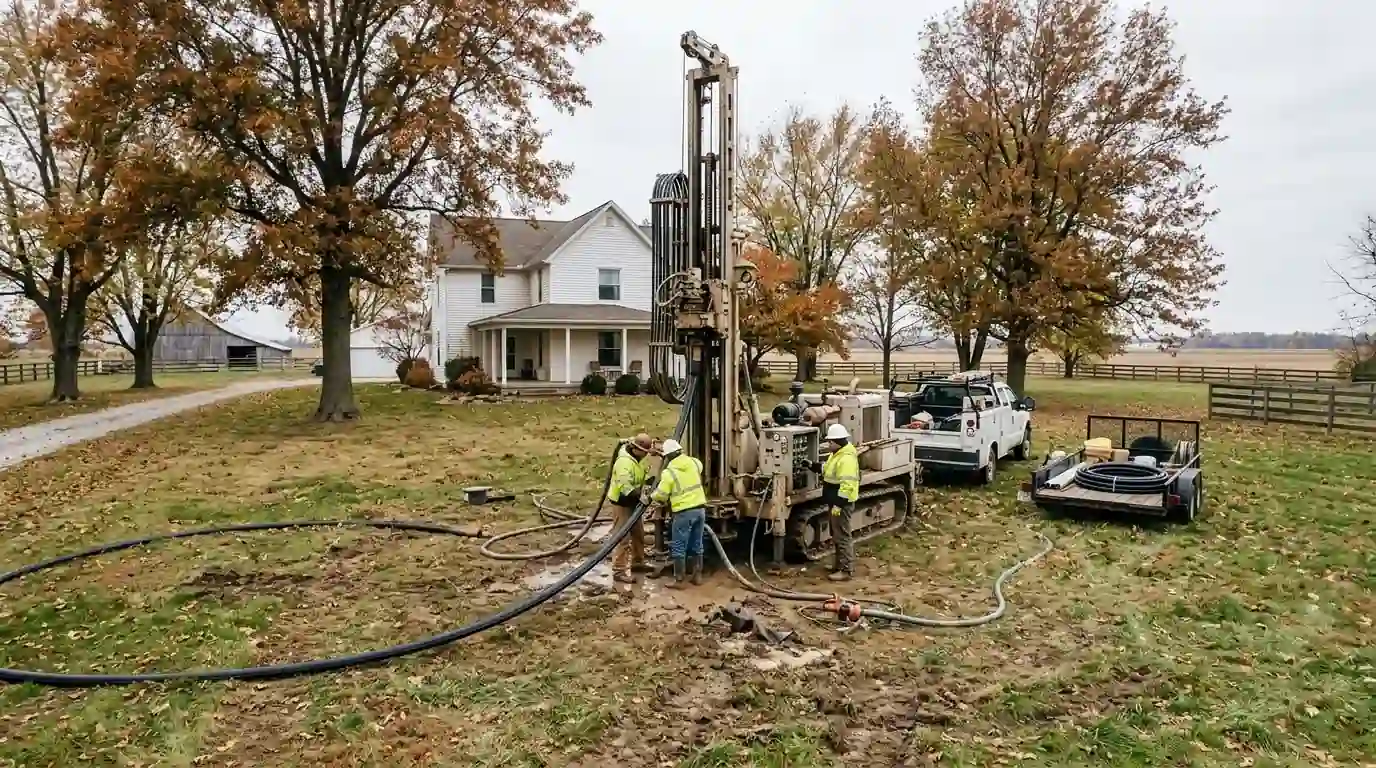
Geothermal is common on rural lots across Whitley, Noble, DeKalb and Adams counties because there is room for horizontal loops and propane is expensive. Lake homes with suitable water nearby sometimes use pond loops, though lake rules and ownership need checking first. Farmhouses with older ductwork usually need some duct work done at the same time.
In subdivisions like Aboite or Huntertown, lots are usually too small for a horizontal field, so vertical bores are the typical answer. Drilling equipment needs access to the yard, and we plan around septic fields, utilities, wells, trees and property lines before any ground is broken.
Expect some lawn disruption either way. Horizontal trenching opens long runs of yard that settle and green up again over a season, while vertical drilling leaves a smaller work area but brings heavier equipment. We talk through the access route, the timing and the cleanup before the project is scheduled.
Living with geothermal: maintenance and common service calls
A geothermal system has no outdoor unit to clog with leaves or cottonwood, and the closed loop needs little attention once it is properly installed and purged. The indoor unit still needs filter changes and a yearly check of loop pressure, antifreeze strength, entering and leaving water temperatures, refrigerant performance and electrical components.
The service calls we see most are low loop pressure, a failing loop circulator pump, dirty filters, desuperheater problems and controls. A geothermal service visit typically runs $139 to $289, and the real price depends on the visit. Many geothermal units also log fault codes that point us in the right direction quickly.
- Change the filter on the schedule for its thickness
- Note any lockout codes before resetting the unit
- Listen for a change in the loop pump sound
- Call if backup electric heat seems to run constantly
When to call about a geothermal system
Call us if the system locks out repeatedly, if backup heat seems to be carrying the house, if loop pressure drops, or if you hear a pump running dry. Landcons services geothermal units of all common brands, and we answer 24/7, including holidays.
If you are weighing a new system, we start with a site visit, a load calculation and a look at your current fuel bills. That gives you a realistic loop choice, a typical cost range and an honest view of payback before you decide anything. Call (260) 283-0173.
More questions on this topic
How long does a geothermal ground loop last compared with the indoor unit?
A properly installed closed loop made of high-density polyethylene pipe is generally expected to last for many decades, far longer than the indoor heat pump. Indoor geothermal units usually run about as long as a quality furnace or longer, since they sit indoors out of the weather. When the indoor unit wears out, the loop can usually be reused.
Does geothermal make sense on a small lot in Aboite or Huntertown?
It can, using a vertical loop drilled in a small area of the yard. Vertical loops cost more than horizontal trenches, so payback runs longer, especially against natural gas. We check drilling access, utilities and the home's load first, then give you a typical range so you can compare it honestly with a high-efficiency furnace or a dual fuel setup.
Can a geothermal heat pump heat my water too?
Many geothermal units can add a desuperheater, which sends some of the system's waste heat to your water heater tank. It helps most in summer, when the system is rejecting heat anyway, and less in deep winter. It does not replace the water heater, but it can reduce how often the water heater has to run.