Yes, modern heat pumps work here, but the type matters. A cold-climate heat pump keeps producing useful heat well below zero, while an older standard unit fades in the teens and leans on electric backup heat. Many homes with natural gas do best with dual fuel: a heat pump for mild days and the furnace for the coldest ones.
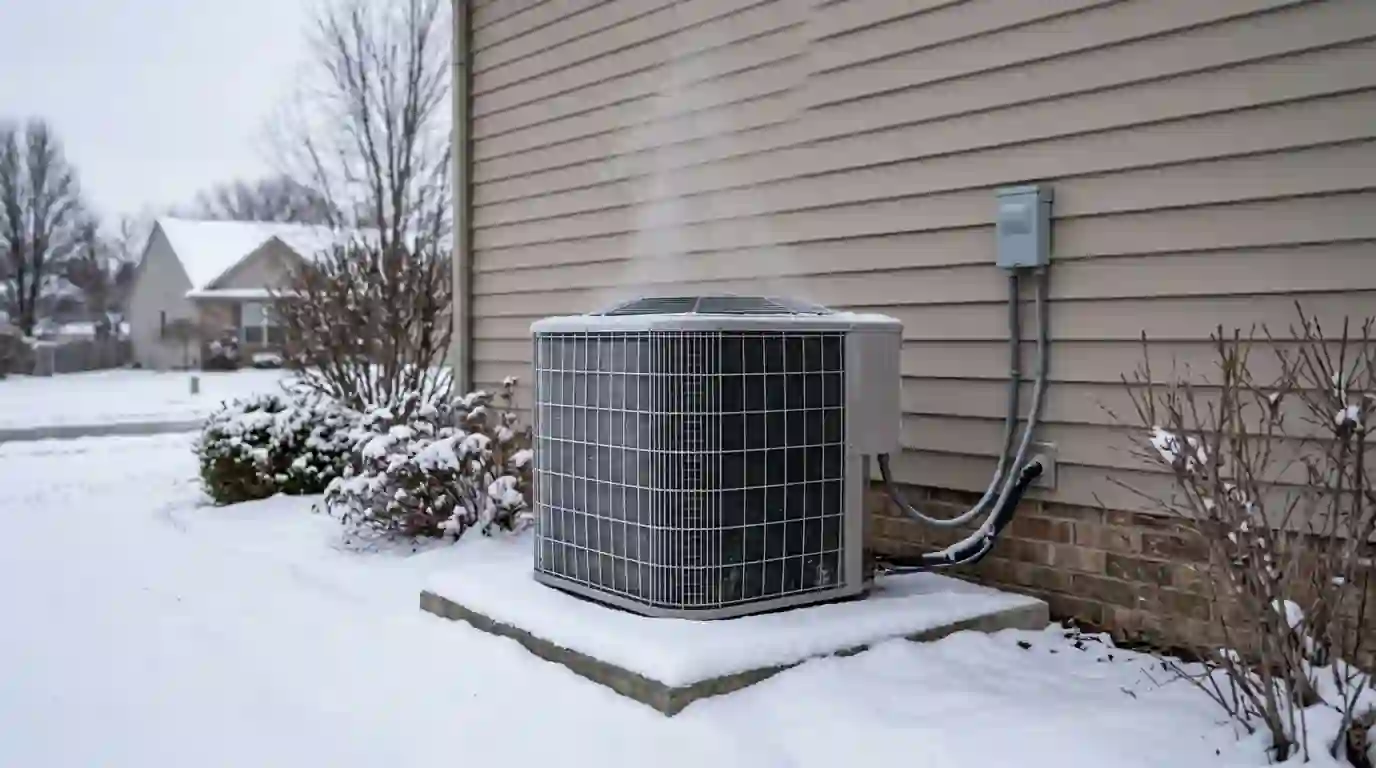
How a heat pump pulls heat out of cold air
A heat pump is an air conditioner that can run in reverse. In winter it moves heat from the outdoor air into the house using refrigerant, a compressor and two coils. Even air at 10°F holds heat energy, and the refrigerant is colder still, so it can absorb that heat outside and release it indoors.
Because it moves heat instead of making it, a heat pump can deliver more heat energy than the electricity it uses. That advantage shrinks as the outdoor temperature drops, because the compressor has to work harder to pull heat from colder air. How fast that drop happens is the main difference between older heat pumps and cold-climate models.
Standard heat pumps versus cold-climate models
Many heat pumps installed in this area 10 or 15 years ago were standard single-speed units. They work well in the 30s and 40s, start losing capacity in the 20s, and by the teens they often cannot keep up alone. That is when electric strip heat kicks in, and strip heat is expensive to run.
Cold-climate heat pumps use variable-speed compressors and refrigerant circuits designed for low temperatures. Many keep a large share of their rated capacity at 5°F and still run below zero. For a winter where January nights average about 17°F, that difference decides whether the heat pump carries most of the season or only the shoulder months.
- Look for published capacity at 5°F, not just the rating at 47°F
- Variable-speed or inverter-driven compressors handle cold far better
- Newer equipment uses R-454B or R-32 refrigerant
- Proper sizing matters more for heat pumps than for furnaces
What the balance point means for your house
The balance point is the outdoor temperature where your heat pump's output exactly matches the heat your house is losing. Above that temperature the heat pump handles everything. Below it, something else has to fill the gap, whether that is electric strip heat or a gas furnace.
Every house has its own balance point, set by its insulation, air leakage, window area and the heat pump's size. A tight 2000s home in Huntertown with a cold-climate unit might have a balance point near zero. A drafty 1950s ranch with a standard heat pump might hit its balance point in the mid 20s. We figure this out with a load calculation, not a guess.
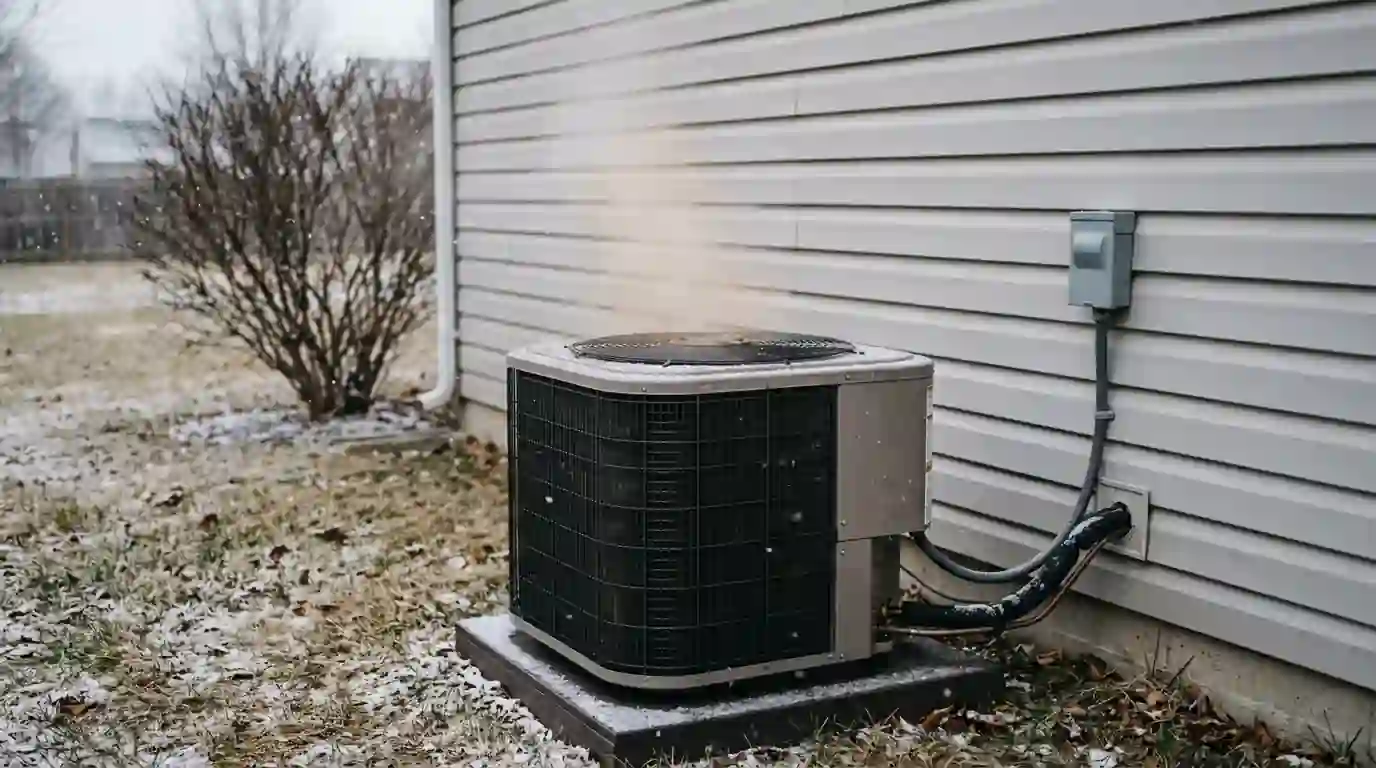
Dual fuel: a heat pump and a gas furnace working together
Dual fuel pairs an electric heat pump with a gas furnace. The thermostat runs the heat pump when it is efficient and switches to the furnace below a set outdoor temperature, called the changeover point. You get heat pump efficiency on the many mild fall and spring days and gas heat on the bitter January nights.
For homes with NIPSCO gas and a furnace that still has good years left, adding a heat pump in place of the AC is often the most practical upgrade. A typical range for adding a heat pump to a working furnace is $5,885 to $11,495, and the real price depends on the visit. Indiana Michigan Power and NIPSCO run rebate programs that change year to year, and we will tell you what is current.
Choosing a changeover temperature
The right changeover point depends on what you pay for electricity and natural gas, your heat pump's low-temperature performance and how comfortable you feel with the warm-but-not-hot air a heat pump delivers. Many homes here land somewhere between the low 20s and mid 30s, but that is a starting point, not a rule.
We set it at installation and explain how to change it. If gas or electric rates shift, you can move the changeover point a few degrees on most dual fuel thermostats. Some homeowners also prefer the furnace on very windy nights because furnace air feels warmer at the register.
Homes on propane, which is common on rural lots around the region, often see the strongest case for running the heat pump down to lower temperatures, since propane usually costs more per unit of heat than natural gas. We look at your actual fuel bills before suggesting a changeover point.
Defrost cycles, snow and other winter realities
In winter the outdoor coil gets colder than the air and collects frost. Every so often the heat pump runs a defrost cycle: it briefly switches to cooling mode to warm the coil, and you may see steam rising from the unit and hear a whoosh. That is normal and usually lasts a few minutes.
What is not normal is a unit encased in ice, a fan that will not turn or a coil that stays white for hours. Common causes include a failed defrost board, a bad sensor, low refrigerant or a reversing valve problem. A defrost board typically runs $345 to $695 and a reversing valve $1,185 to $2,495, as typical ranges.
- Mount the outdoor unit on a stand or brackets above typical snow depth
- Keep roof drip lines and downspouts from dumping water onto the unit
- Clear snow gently from around the base after storms
- Never chip ice off the coil with a tool; call us instead
Is a heat pump the right choice for your home?
A cold-climate heat pump on its own makes sense for well-insulated homes, all-electric homes, homes on expensive propane and additions where running gas is a hassle. Dual fuel suits most homes with natural gas and a good furnace. In very drafty older houses, sealing and insulation often need to come first, or the heat pump will spend too much time below its balance point.
Landcons designs and services both standalone heat pumps and dual fuel systems across Allen County and the surrounding counties. If yours is blowing cool air, running on emergency heat or icing up, call us 24/7 at (260) 283-0173. For a new system, we start with a load calculation and a straight talk about what your house needs.
More questions on this topic
What temperature is too cold for a heat pump in Allen County?
There is no single cutoff. Older standard heat pumps lose much of their capacity in the teens and rely on backup heat below that. Cold-climate heat pumps often keep working below zero, though with less output. The useful question is your home's balance point, which depends on the house and the specific heat pump.
Why does my heat pump blow lukewarm air in January?
Heat pump supply air is usually cooler than furnace air, often in the 90s rather than well above 100°F, so it can feel lukewarm near the register even when it is working. If rooms are falling below the setting, the unit may be past its balance point, low on refrigerant, iced up or stuck without backup heat. Those last few need a technician.
Can I add a cold-climate heat pump to my existing gas furnace?
Usually yes, if the furnace and ductwork are in decent shape. The heat pump replaces your outdoor AC unit and pairs with a new indoor coil and a dual fuel thermostat. We check that the furnace blower and coil are compatible and that the ductwork can move the airflow a heat pump needs.