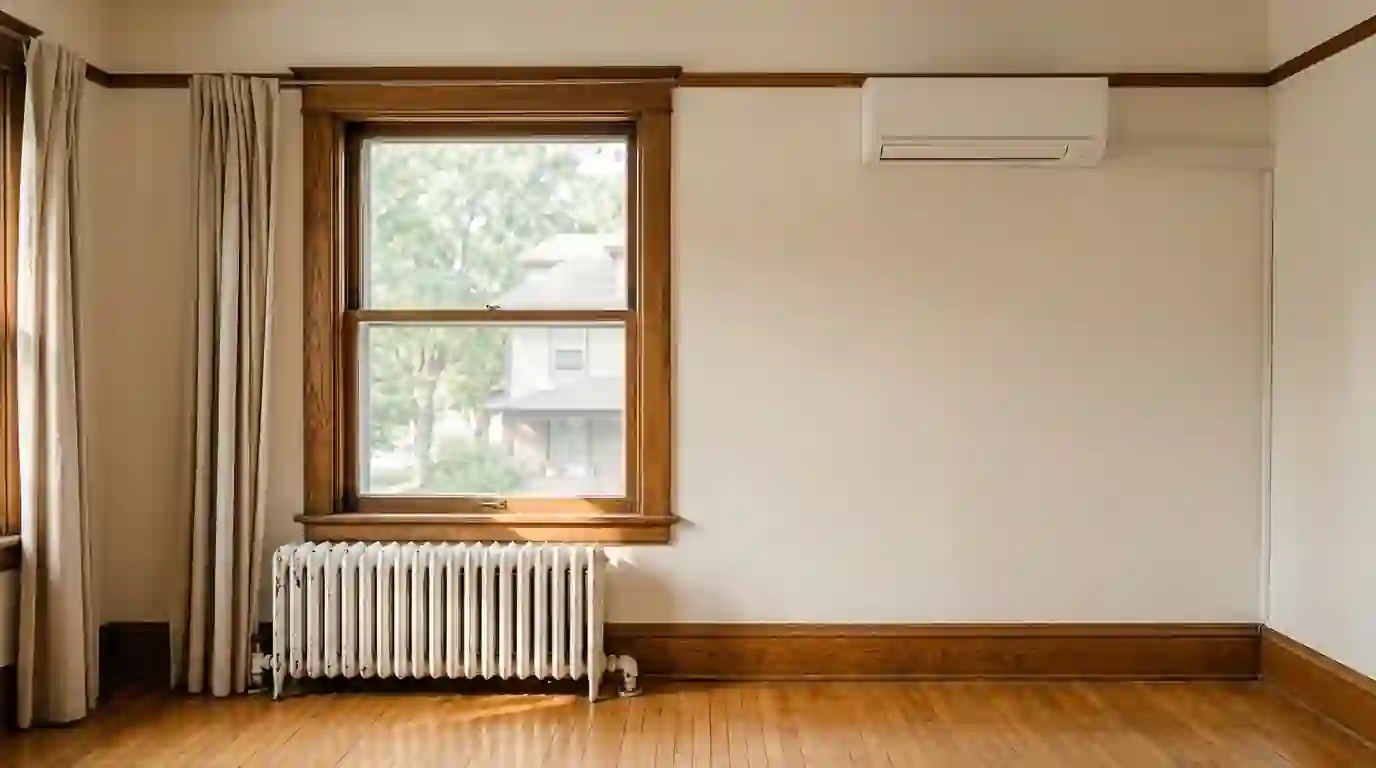
Older homes in West Central, Forest Park, Southwood Park and Lakeside often heat well with boilers and radiators but have no ducts for cooling. Keep a sound boiler running with yearly service, check chimney liners when equipment changes, and add cooling with ductless mini-splits or small-duct high-velocity systems that fit through closets and attics without tearing out plaster.
What you usually find in a pre-1940 house
The central historic districts hold homes from the 1840s through the 1930s: Italianate and Queen Anne houses in West Central, Craftsman and Prairie homes in Forest Park, Tudor and Colonial Revival homes in Southwood Park and early 1900s houses around Lakeside Park. Many still have plaster walls, tall ceilings and original woodwork that limit where new equipment can go.
Heating usually falls into one of three groups. Some homes still run hot water or steam boilers feeding cast iron radiators. Others had a gravity furnace, the large octopus-style unit with big round ducts, later converted to forced air. A few have a mix after additions, such as radiators in the original house and a separate furnace or baseboard in a newer wing.
Keeping a boiler and radiators healthy
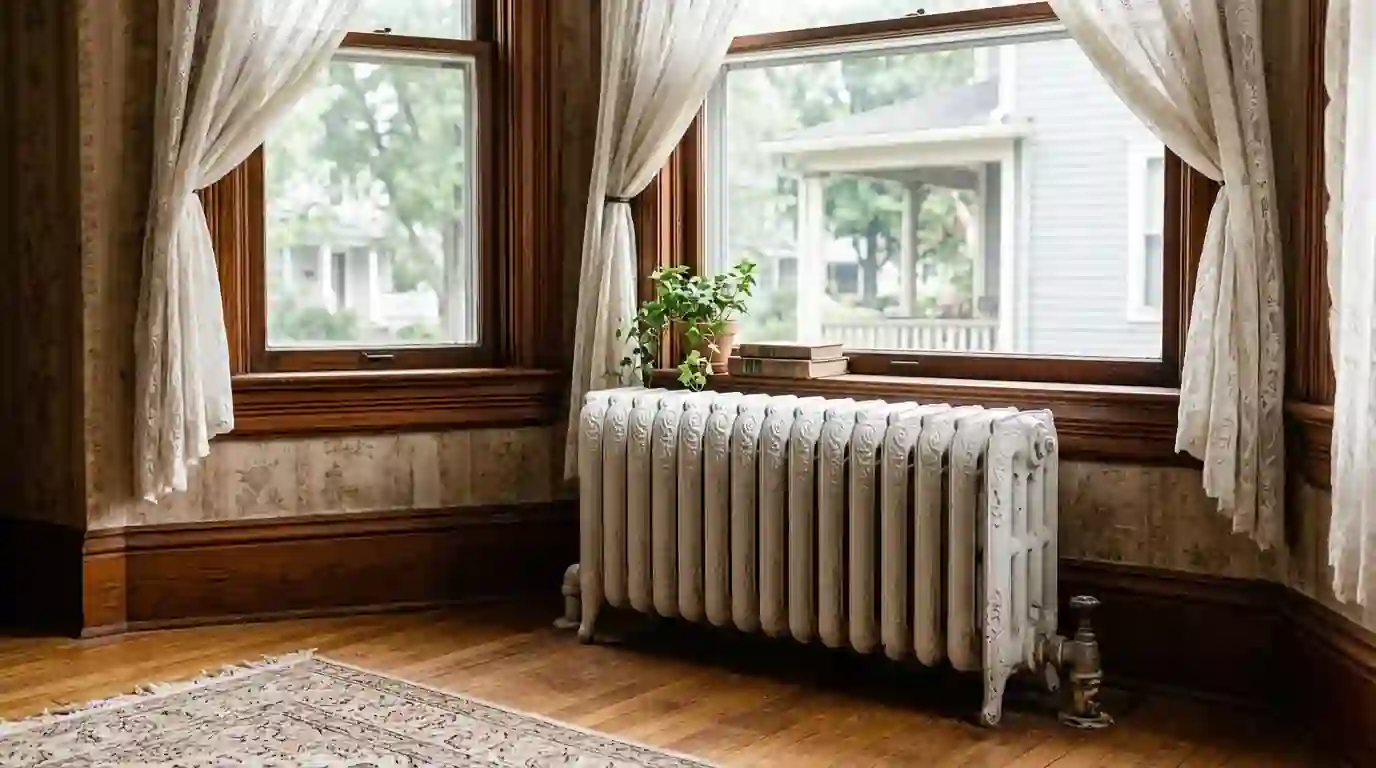
A well-kept hot water boiler gives quiet, even heat that many owners of older homes would not trade for forced air. The parts that need attention are the circulator pump, expansion tank, pressure relief valve, zone valves and the burner. Steam systems also need the water level, low-water cutoff and air vents on each radiator checked.
When a boiler finally wears out, a high-efficiency replacement keeps the radiators and piping you already have. A boiler replacement typically runs $6,985 to $14,495, and the real price depends on the visit, venting and whether the system is hot water or steam. Old boilers were often oversized for the house, so we size the new one from a heat loss calculation, not from the old nameplate.
If some radiators are cold at the top, they likely need bleeding. On a hot water system you can do this yourself with a radiator key and a rag: open the small valve until water replaces the hissing air, then close it. Steam radiators work differently and should not be bled this way. A circulator pump replacement typically runs $485 to $945, and the real price depends on the visit.
- Watch the boiler pressure gauge; most hot water systems run in a modest range set by the installer
- Call if the relief valve drips or water appears under the boiler
- Do not paint radiator vents or block radiators with heavy covers
- Book a yearly boiler service before the first cold week
Converted gravity systems and their airflow quirks
When gravity furnaces were replaced with forced-air units, installers often reused the original large ducts and ran a single big return. The result can be weak airflow upstairs, rooms that never warm, and a blower that struggles with mismatched duct sizes. Many of these old ducts were wrapped in asbestos-containing insulation, so do not disturb old white duct wrap yourself; it needs professional testing first.
Fixes can include adding return air paths, resizing a few supply runs, sealing the duct joints in the basement and setting blower speed correctly. Sometimes the honest answer is that a converted system will always struggle upstairs, and a ductless head in the worst room works better than chasing more duct through plaster.
Chimney liners when you change equipment
Many older homes vent the furnace or boiler and the water heater through a masonry chimney. When a high-efficiency furnace or boiler replaces the old one, it vents through PVC out a side wall and leaves the water heater alone in a large, cold chimney. That lone water heater may not draft well, which can cause condensation inside the chimney and backdrafting of exhaust.
The usual fix is a properly sized metal liner for the water heater, or switching the water heater to a power-vented or high-efficiency model. Chimneys in older homes along North Anthony and throughout the historic districts also tend to have deteriorated mortar or missing caps. We look at the chimney on every equipment change and tell you plainly what it needs.
Adding cooling with ductless mini-splits
Ductless mini-splits are often the simplest way to cool a home with radiators. An outdoor unit connects through a small hole in the wall to one or more indoor heads, mounted high on a wall or in a ceiling. Each head has its own control, which suits upstairs bedrooms and finished attics that window units used to cool.
A single-zone mini-split typically runs $3,485 to $6,295, and a multi-zone system $7,985 to $18,495. These are typical ranges, and the real price depends on the visit, the number of rooms and line set routing. Cold-climate mini-splits can also provide much of the heating on mild days, taking some load off an older boiler.
Small-duct high-velocity central air for homes without ducts
If you want whole-house cooling without visible wall units, small-duct high-velocity systems are designed for older homes. A compact air handler sits in the attic or a closet and feeds flexible tubes about the width of a soda can to small round outlets in ceilings or floors. The tubes can snake through closets, wall cavities and floor joists with far less plaster damage than conventional ductwork.
These systems remove humidity well, which helps in sticky July weather, and they cool the upstairs better than a converted gravity system usually can. A small-duct high-velocity system typically runs $11,485 to $21,995. Installation takes careful planning around woodwork, trim and plaster, and outlets are usually placed in corners where they barely show.
Working on a historic home the right way
Before any equipment goes in, we walk the house with you, measure rooms, look at the attic, basement and closets, and do a load calculation. Older homes often lose more heat than the size suggests, especially with original windows, so sizing by square footage alone gets it wrong. We protect floors and woodwork, plan every hole and patch, and tell you exactly where lines and outlets will run.
Landcons works on boilers, radiators, converted furnaces, mini-splits and small-duct systems throughout the city's historic districts, and we answer 24/7, including holidays. If your boiler is acting up or you are ready to retire the window units, call (260) 283-0173.
More questions on this topic
Can I add central air to a Southwood Park house heated by radiators?
Yes. The two most common routes are ductless mini-splits, with wall or ceiling heads in key rooms, and small-duct high-velocity systems that hide an air handler in the attic and run flexible tubes through closets and joists. Both leave the radiators in place for heat. Which fits depends on how many rooms you want cooled and how much attic access you have.
Should I replace an old boiler with a furnace in a West Central home?
Usually we would not, if the radiators and piping are in good shape. Converting means running ductwork through plaster walls, which is costly and disruptive, and radiator heat is comfortable. Replacing a worn boiler with a high-efficiency boiler keeps the radiators. Cooling can be added separately with ductless or small-duct systems.
Do converted gravity furnace ducts in Forest Park homes need replacing?
Not always. The large original ducts can work with a modern furnace if returns are added, joints are sealed and the blower is set correctly. The concern is old insulation wrap that may contain asbestos, which must be tested before anyone disturbs it, and upstairs rooms that the old layout never served well.